Hypertrophic Cardiomyopathy in Cats: Murmurs, Aortic Thromboembolism and Echocardiography
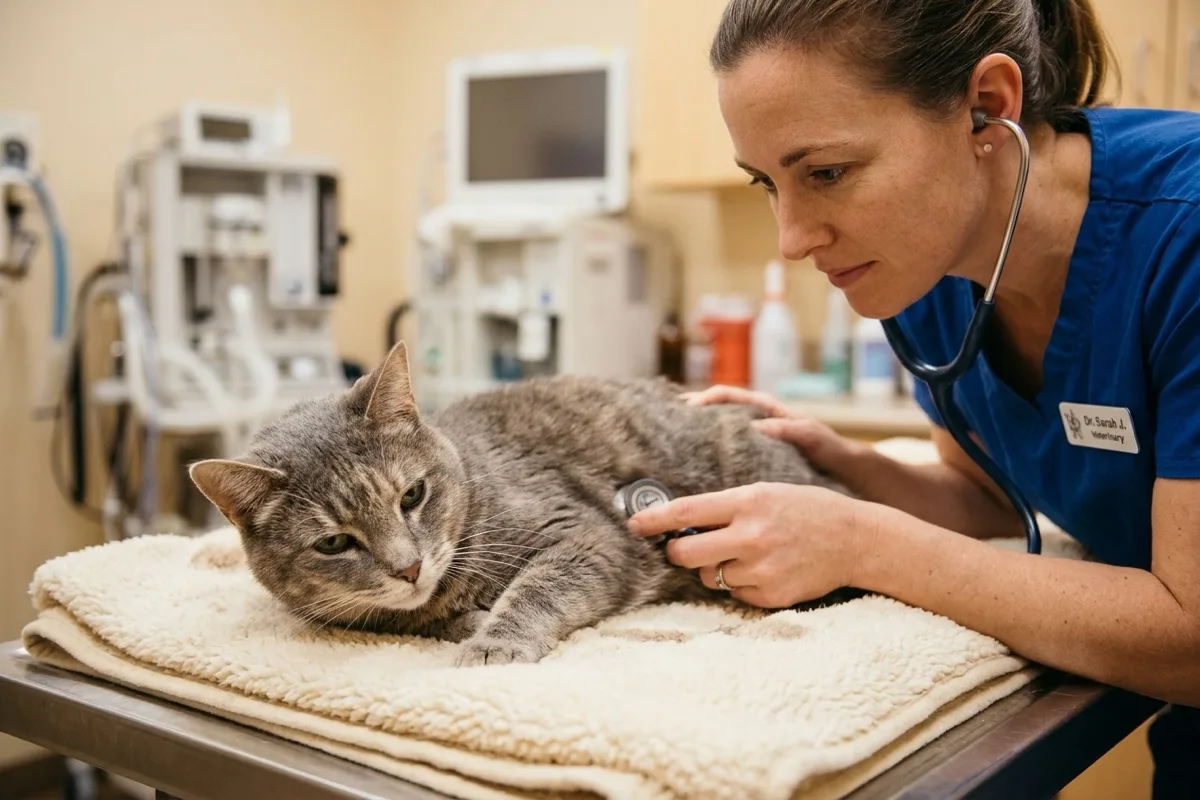
Hypertrophic Cardiomyopathy (HCM) is the most common cardiac condition in domestic cats, impacting approximately one in seven felines. It is characterized by abnormal concentric thickening of the left ventricular myocardium, impairing diastolic filling and elevating left atrial pressures.
This guide is not a substitute for a vet.
In this guide
1. The "5 Ps" of Feline Aortic Thromboembolism
- Pain: Severe distress and continuous vocalization.
- Paralysis: Inability to stand or bear weight on pelvic limbs.
- Pulselessness: Absence of femoral pulses.
- Pallor: Cyanotic or marble-white foot pads.
- Poikilothermia: Cold hind paws compared to the forelimbs.
---
2. Emergency Veterinary Care
Transport immediately to an oxygen-equipped emergency facility if you witness hind-limb paralysis or open-mouth breathing. Use our directory of emergency veterinary clinics.
---
Scientific Sources and Evidence
- ACVIM: Consensus Guidelines for the Classification, Diagnosis, and Management of Cardiomyopathies in Cats.
- ISFM: Feline Cardiomyopathy and Aortic Thromboembolism Protocols.
Nekolife Community
Caring for a cat? Keep their health in your pocket
Register your cat on Nekolife to track vaccination history, weight, and get advice from loving cat parents.
- Vaccine & weight records
- Supportive cat community
- Earn Meow Points & badges
Create free cat passport →100% free forever
Related pages
Know someone who needs this?