Burmese Cat Breed: Characteristics, Personality and Clinical Care
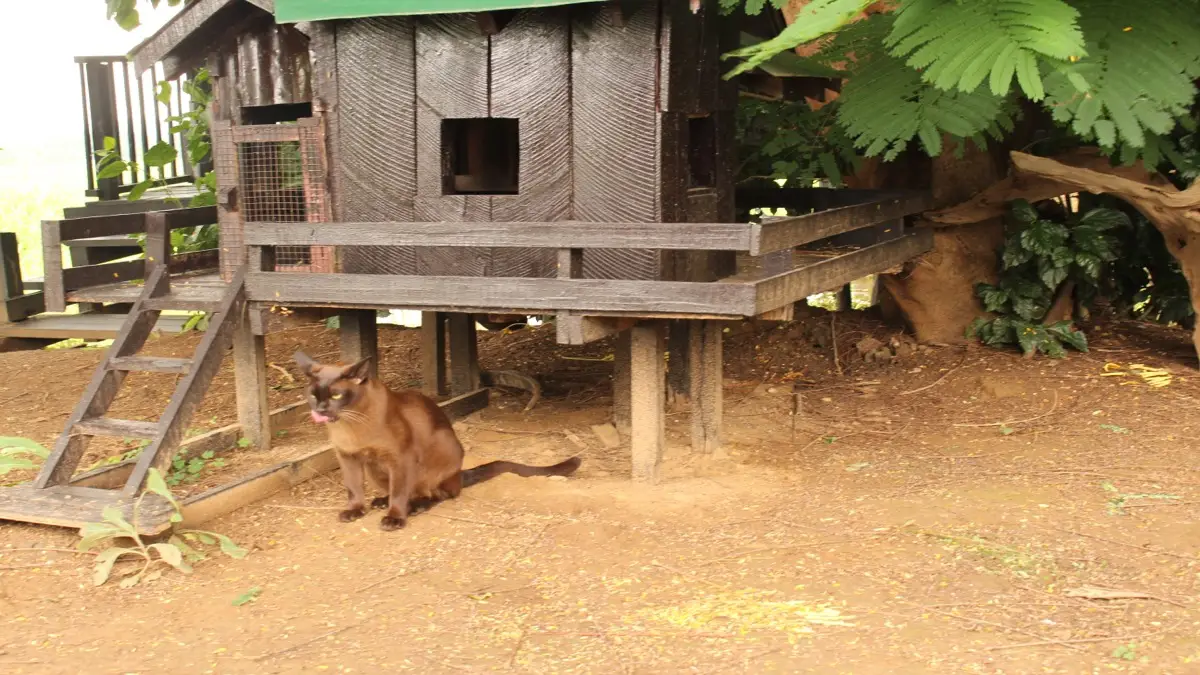
The Burmese cat is celebrated across the feline world by an enduring description that captures its essence: 'a brick wrapped in silk'. Possessing a surprisingly heavy, muscular body cloaked in an ultra-glossy, satin coat, the Burmese combines stout athleticism with an overwhelmingly affectionate, extroverted personality that behaves more like a loyal canine than a detached feline.
In this guide
1. History and Origins: The Legacy of Wong Mau
The development of the Burmese cat began in 1930 when Dr. Joseph C. Thompson, a US Navy physician, transported a brown female cat named Wong Mau from Burma (Myanmar) to San Francisco. Recognizing that her unique phenotype was distinct from standard Siamese, Dr. Thompson collaborated with geneticists to conduct test crosses with a seal point Siamese.
The breeding trials proved Wong Mau carried the Burmese gene (cb), an allele of the albino series that enhances pigment expression while maintaining warmth across the body points. The Cat Fanciers' Association (CFA) recognized the breed in 1936. Today, two major standards thrive globally: the American Burmese (more rounded, compact) and the European Burmese (sleeker, with gentle foreign contours).
---
2. Physical Traits: Muscular Density and Coat Elegance
The Burmese standard dictates a medium-sized cat of striking compactness:
- Body Structure: Deep broad chest, compact torso, and powerful musculature. It feels remarkably solid and dense when lifted.
- Head and Facial Contours: In the American type, the head is rounded with wide cheekbones, a short blunt muzzle, and an obvious nasal stop; the eyes are large, widely spaced, and brilliant yellow-gold or warm amber.
- Silken Satin Coat: Virtually lacking undercoat, the fur lies flush against the muscle ridges with shimmering gloss. The four foundational colors are sable (warm chocolate brown), champagne (warm honey beige), blue (soft silvery gray), and platinum (pale silvery fawn).
---
3. Temperament: The Feline Dog
Burmese cats are famed for their people-oriented, emotionally attuned temperament:
- Devoted Companion: They follow owners everywhere, greet guests enthusiastically at the entrance, and curl up inside laps whenever someone sits down.
- Playful Intelligence: Burmese retain a kitten-like enthusiasm throughout adulthood, easily mastering fetch, opening cupboards, and walking on leashes.
- Warm Vocalization: While talkative, their voice is soft, raspy, and rhythmic rather than the high-pitched wail of some other oriental breeds.
---
4. Grooming and Environmental Needs
Their maintenance demands are remarkably straightforward:
- Minimal Grooming: A weekly rubdown with a rubber brush or damp chamois cloth removes dead hairs and maintains the signature gloss.
- Vertical Climbing Outlets: Burmese are agile athletes who need tall scratching posts, climbing trees, and interactive puzzle toys to channel their energy.
- Companionship Vitality: Burmese suffer acute distress if isolated for long workdays. They thrive best in homes with another companion cat or a friendly dog.
---
5. Health, Genetics, and Longevity
Burmese are generally robust, regularly living 15 to 18 years, though ethical breeders screen for known conditions:
- Congenital Hypokalemia: An autosomal recessive condition caused by a mutation in the WNK4 gene leading to potassium wasting and neck ventroflexion; simple DNA tests identify carriers.
- Feline Orofacial Pain Syndrome (FOPS): A neuropathic discomfort syndrome triggering tongue pawing, observed primarily in British/European lines.
- Diabetes Mellitus: Burmese show an elevated genetic risk for type 2 diabetes; maintaining lean body mass with a low-carb diet is paramount.
- Craniofacial Defect: Historical in American bloodlines, now largely eliminated through rigorous genetic marker testing.
---
Scientific Sources and References
- Cat Fanciers' Association (CFA) - Burmese Breed Profile. https://cfa.org/burmese/
- The International Cat Association (TICA) - Burmese Breed Standard. https://tica.org/breeds/browse-all-breeds?view=article&id=829:burmese-breed&catid=79
- Universities Federation for Animal Welfare (UFAW) - Genetic Welfare in Burmese Cats. https://www.ufaw.org.uk/cats/burmese-hypokalaemic-myopathy
- International Cat Care - Burmese Cat Profile. https://icatcare.org/advice/burmese/
Caring for a cat? Keep their health in your pocket
Register your cat on Nekolife to track vaccination history, weight, and get advice from loving cat parents.
- Vaccine & weight records
- Supportive cat community
- Earn Meow Points & badges
Related pages
Know someone who needs this?