Cat Plant Poisoning and Lily Toxicity: Acute Kidney Failure and Emergency First Aid
While many common household plants pose varying degrees of toxicity to pets, *true lilies (Lilium and Hemerocallis species) represent an extreme medical emergency in felines*.
This guide is not a substitute for a vet.
In this guide
1. Clinical Phases of Lily Poisoning in Cats
- Phase 1 (0 to 12 hours post-exposure): Profuse vomiting, excessive hypersalivation (drooling), profound lethargy, and sudden anorexia.
- Phase 2 (12 to 24 hours): Deceptive temporary lull. Vomiting may subside, yet microscopic destruction of renal tubular epithelium is actively escalating.
- Phase 3 (24 to 72 hours): Decompensated acute renal failure. The cat stops producing urine (anuria), suffers seizures, hypothermia, severe dehydration, and exhibits a strong uremic breath odor.
---
2. Safe Home First Aid Protocol
Before rushing to the emergency hospital:
- Decontaminate the fur: If orange pollen is visible on whiskers, paws, or chin, wipe it away gently using warm damp paper towels. Prevent any self-grooming.
- Identify the specimen: Snap clear smartphone photos of the petals, leaves, and stem, or seal a flower clipping in a plastic bag to present to the emergency veterinarian.
- Avoid home remedies: Activated charcoal must only be dosed and administered by veterinary personnel via an orogastric tube or safe liquid suspension.
---
3. In-Hospital Emergency Protocols
At the veterinary hospital, standard lily toxicity management involves:
- Medically induced emesis: Utilizing alpha-2 agonists (such as dexmedetomidine) if ingestion occurred within the last 2 hours.
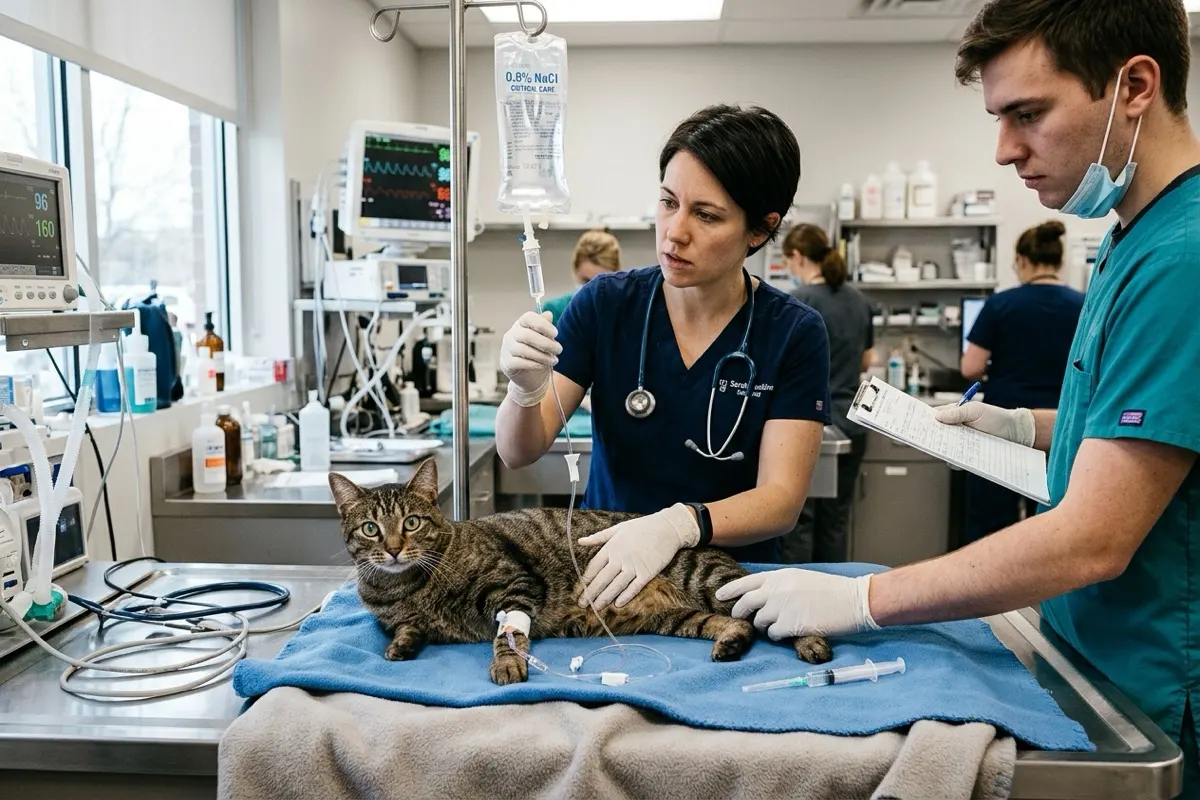
- Aggressive IV fluid diuresis for 48 to 72 hours: This is the cornerstone of therapy—maintaining high renal blood flow, flushing out cellular debris, and preventing fatal tubular necrosis.
- Serial blood chemistry monitoring: Daily tracking of serum creatinine, BUN, phosphorus, and potassium levels.
---
4. When to Seek Emergency Veterinary Care
Any known or suspected exposure to lilies must be treated as a code-red life-threatening emergency. Do not wait for clinical signs to appear:
- Brushing against lily flowers, licking pollen, or ingesting vase water.
- Sudden acute vomiting with visible plant material, dilated pupils, or sudden collapse.
- Difficulty breathing, facial swelling, or full-body tremors.
Locate immediate critical care in our directory of emergency veterinary clinics.
---
Scientific References and Sources
- ASPCA Animal Poison Control Center (APCC): Lily Toxicity in Felines: Clinical Signs, Pathology, and Treatment Protocols.
- Journal of Feline Medicine and Surgery: Acute Kidney Injury secondary to lily intoxication in domestic cats: retrospective study.
- Veterinary Emergency and Critical Care Society (VECCS): Toxicological Emergencies: Plant Ingestions in Small Animals.
Nekolife Community
Caring for a cat? Keep their health in your pocket
Register your cat on Nekolife to track vaccination history, weight, and get advice from loving cat parents.
- Vaccine & weight records
- Supportive cat community
- Earn Meow Points & badges
Create free cat passport →100% free forever
Related pages



Know someone who needs this?