Cat Hairballs: How to Treat Them, Malt Paste Prevention, and Signs of Intestinal Blockage
Domestic cats spend between 30% and 50% of their waking hours grooming. Their tongues are equipped with hundreds of backward-facing, tiny keratinized spines called filiform papillae, which function as an exquisite built-in detangling comb to clean the fur and remove loose dander. Because these microscopic barbs face toward the throat, cats cannot easily spit loose hairs out of their mouths, forcing them to swallow what they lick away. While the majority of ingested hair travels uneventfully through the gastrointestinal tract and exits in the stool, large accumulations that fail to pass the stomach form dense, compacted cylinders known as trichobezoars (hairballs).
In this guide
1. How and Why Do Trichobezoars Form?
Feline fur is made of keratin, an insoluble fibrous protein that stomach acids and digestive enzymes cannot break down.
- Healthy gut transit: Under normal physiological conditions, ingested hairs blend into the food chyme. Strong peristaltic waves (the migrating motor complex) steadily push the fibers through the pylorus and into the small intestine, expelling them invisibly in the litter box.
- Trichobezoar formation: When a cat ingests an overwhelming volume of fur during a moult, or when gastrointestinal transit slows down due to dehydration, low dietary moisture, or lack of insoluble fiber, the individual strands mesh together. Over time, stomach tumbling rolls the hair into a tightly packed mat that cannot pass through the narrow pyloric valve, prompting reflex gastric contractions to expel it upward.
---
2. Red Flags: When Hairballs Become a Medical Emergency
A trichobezoar that fails to be vomited and becomes wedged in the stomach or small intestine can cause a life-threatening mechanical blockage:
- Unproductive dry heaving: The cat makes repeated, violent retching sounds with abdominal spasms, yet produces only small puddles of clear foam or frothy saliva.
- Persistent constipation: Straining inside the litter box without producing stool for more than 48 hours, or passing hard, pellet-like feces visibly bound together by tight ropes of hair.
- Anorexia and food aversion: The trapped mass occupies physical stomach volume, causing early satiety, nausea, and immediate refusal to touch food.
- Abdominal guarding and pain: The cat arches its back, resists having its belly touched, and exhibits subtle signs of discomfort (see how to tell if your cat is in pain).
- Depression and lethargy: Hiding in dark corners, refusing social interaction, and showing dull, glassy eyes.
---
3. Active Prevention: The Anti-Hairball Protocol
Preventing hairball accumulation is far easier and safer than dealing with surgical obstructions:
1. Consistent Grooming and Combing
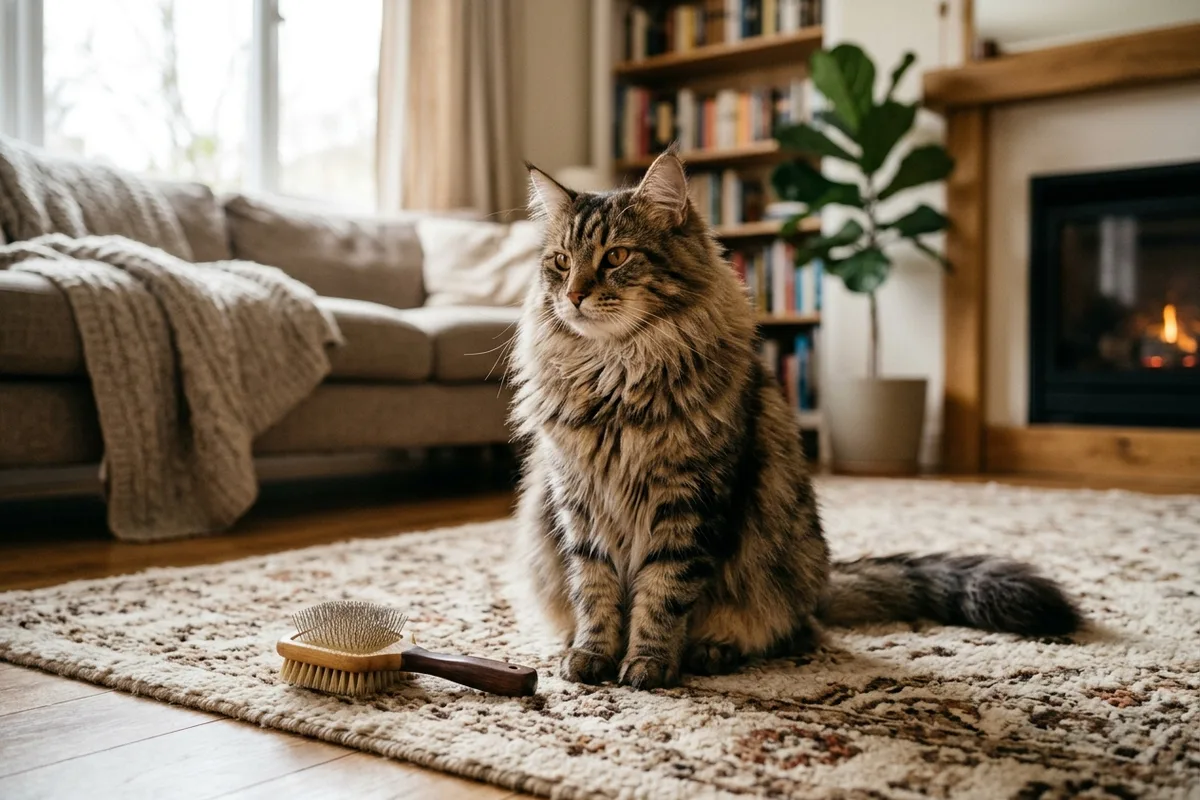
The single most effective preventative tool. Short-haired cats benefit from two to three weekly sessions with a fine-toothed steel comb or rubber grooming mitt. For long-haired breeds like Persians, Siberians, or Maine Coons, daily brushing is essential, especially when undercoat shedding peaks.
2. Veterinary Malt Paste and Intestinal Lubricants
Feline malt paste is a palatable, viscous vegetable-based paste enriched with oils that lubricates the gastrointestinal lining. This allows loose hairs to glide smoothly along the digestive tract and pass out with feces rather than balling up. Administer a hazelnut-sized ribbon two to three times weekly.
3. Hydration and Dietary Fiber
Cats on strictly dry kibble diets suffer from lower systemic hydration and slower gastric emptying. Incorporating moisture-rich wet food (as explored in wet food vs. dry kibble for cats) combined with fresh living cat grass provides moisture and soluble dietary fiber (such as psyllium husk) that stimulates healthy gastrointestinal motility.
---
4. Differential Diagnosis: Hairball, Vomiting, or Asthma?
It is extraordinarily common for pet parents to confuse asthma attacks with hairball attempts:
- Feline Asthma Attack: The cat crouches low to the ground with its neck extended forward, panting or coughing with a dry, wheezing, horn-like sound, producing zero gastric contents at the end.
- Hairball Regurgitation: Demonstrates powerful, rhythmic abdominal contractions, audible retching, and ends with the ejection of a slippery, tubular mucus-coated hair cylinder.
- Pathological Vomiting: If vomiting is frequent, consists of yellow bile, blood, or undigested food without visible fur, consult our guide on why cats vomit to rule out systemic gastritis, kidney disease, or toxicity.
---
Frequently Asked Questions (FAQ)
Can I give my cat olive oil, mineral oil, or butter to pass hair?
While old home remedies recommend a teaspoon of olive oil or butter, culinary vegetable oils and animal fats are rapidly absorbed in the upper small intestine and never reach the colon where lubrication is actually needed. Furthermore, excessive dietary fat can trigger acute feline pancreatitis. Always use veterinary-formulated malt paste designed specifically for cats.
At what age do kittens begin developing hairballs?
Young kittens rarely produce hairballs because their infant kitten coat is very fine and they have not yet developed adult self-grooming frequency. Hairballs typically begin appearing as cats reach physical maturity between 6 and 12 months of age.
---
Veterinary Clinical References
- Barrs, V. R., et al. "Feline panleukopenia and other causes of vomiting and diarrhea in cats." Journal of Feline Medicine and Surgery, 2018.
- Cannon, M. "Hair balls in cats: a normal nuisance or a sign that something is wrong?" Journal of Feline Medicine and Surgery, 2013.
- International Cat Care (iCatCare). "Hairballs in cats: causes, management and veterinary care." Clinical Guidelines, 2022.
Caring for a cat? Keep their health in your pocket
Register your cat on Nekolife to track vaccination history, weight, and get advice from loving cat parents.
- Vaccine & weight records
- Supportive cat community
- Earn Meow Points & badges
Related pages
Know someone who needs this?