Feline Corneal Sequestrum: Stromal Necrosis, Predisposed Breeds, and Keratectomy
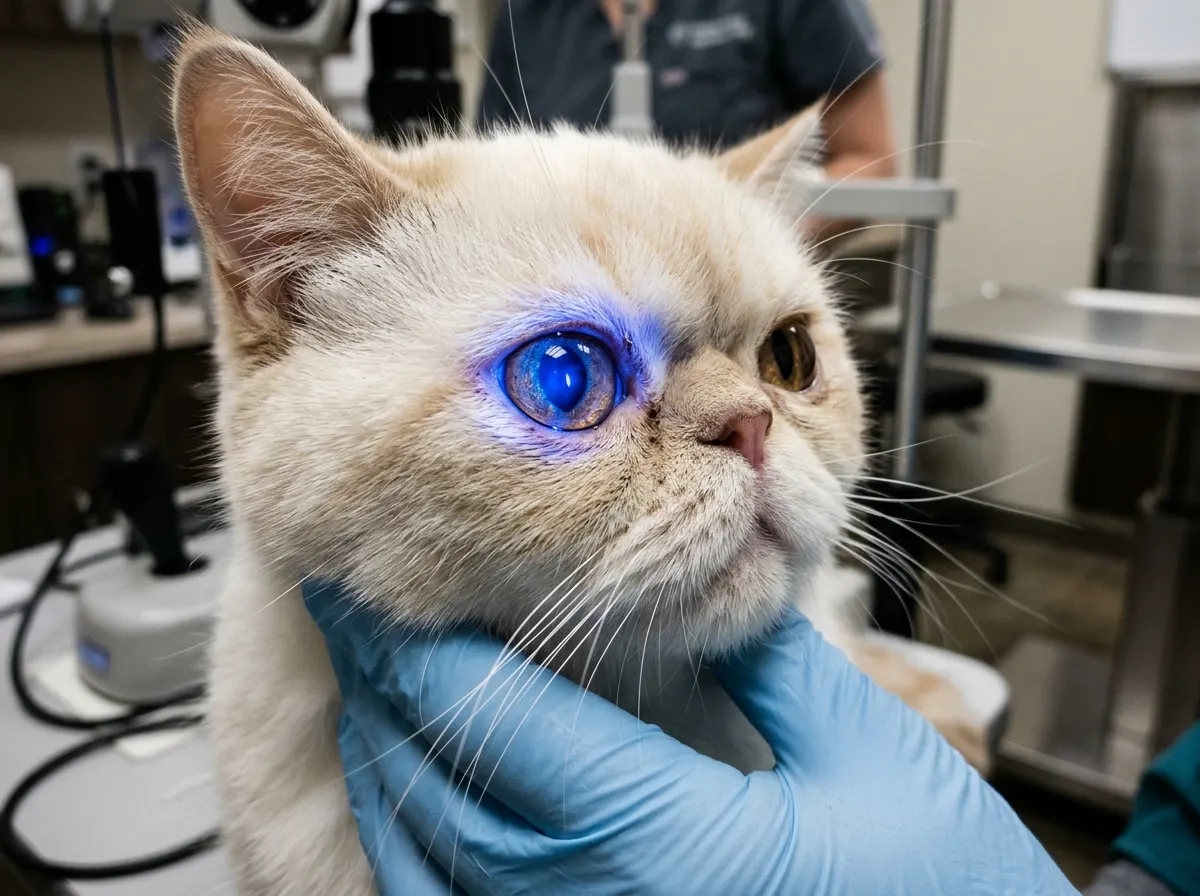
Feline corneal sequestrum (also referred to as corneal mummification or keratitis nigrum) is an idiosyncratic degenerative disorder unique to cats, defined by focal necrosis of corneal stromal collagen fibrils that undergo amber to deep jet-black melanin-like pigmentation. Acting as a persistent intrastromal foreign body, this rigid dead tissue incites chronic ocular discomfort, prominent perilimbal neovascularization, and carries a significant danger of ocular perforation if sloughed prematurely without tectonic support.
In this guide
Etiopathogenesis and Breed Predispositions
- Brachycephalic Ocular Syndrome: Persian, Exotic Shorthair, Himalayan, and British Shorthair breeds possess shallow orbits, prominent globes, and incomplete blinking (lagophthalmos), predisposing the central cornea to tear film instability and tear desiccation.
- Feline Herpesvirus-1 (FHV-1): Active viral cytolysis damages keratocytes and sustains non-healing epithelial ulcers that evolve into stromal necrosis.
- Mechanical Irritation: Chronic abrasion from nasal fold trichiasis, entropion, or ectopic cilia.
Surgical Treatment and Corneal Reconstruction
While superficial cases may be managed with topical lubricants and antiviral drops, definitive resolution requires microsurgical excision:
- Lamellar Keratectomy: Precise excision of the pigmented collagen plaque down to healthy, viable stromal beds under an operating microscope.
- Tectonic Grafts: In deep stromal defects exceeding 50% thickness, an autologous conjunctival pedicle graft, porcine small intestinal submucosa (SIS), or corneal-conjunctival transposition is anchored with 9-0 or 10-0 absorbable sutures to reinforce tectonic strength and prevent corneal perforation.
Scientific Sources and References
- Featherstone, H. J., & Sansom, J. (2004). Feline corneal sequestrum: a review of 64 cases (80 eyes) from 1993 to 2000. Veterinary Ophthalmology, 7(4), 213-227.
- Stiles, J. (2014). Feline ophthalmology. In Gelatt, K. N. (Ed.), Essentials of Veterinary Ophthalmology (3rd ed., pp. 411-450). Wiley-Blackwell.
Caring for a cat? Keep their health in your pocket
Register your cat on Nekolife to track vaccination history, weight, and get advice from loving cat parents.
- Vaccine & weight records
- Supportive cat community
- Earn Meow Points & badges
Related pages
Know someone who needs this?