Feline Arthritis and Osteoarthritis: Silent Pain Detection and Senior Cat Care
Unlike dogs, which frequently limp or whimper when their joints ache, cats are evolutionary masters at masking chronic musculoskeletal pain. In the wild, a solitary predator exhibiting physical weakness quickly becomes vulnerable to rivals and risks losing essential hunting territory. As a result of this deep-seated survival instinct, over 90% of cats older than 10 to 12 years suffer from degenerative joint disease (osteoarthritis), yet the vast majority of guardians fail to notice until mobility is severely compromised, mistakenly dismissing gradual lethargy as "just old age."
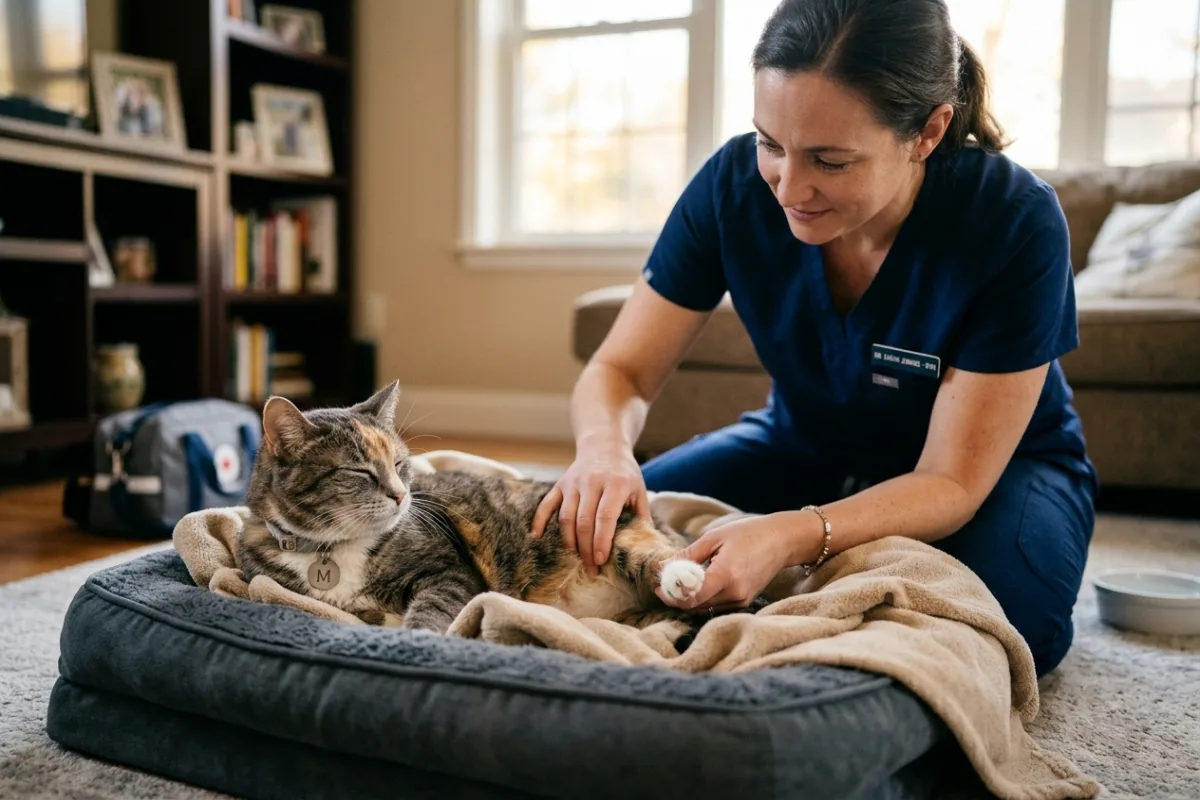
In this guide
1. Arthritis vs. Osteoarthritis in Cats
Although frequently used interchangeably in everyday conversation, these terms denote distinct pathological realities:
- Arthritis: Active acute or subacute inflammation of the synovial membrane, often triggered by physical trauma, bacterial infections, or immune-mediated disorders.
- Osteoarthritis (Degenerative Joint Disease - DJD): A chronic, irreversible condition characterized by progressive loss of hyaline articular cartilage, periarticular bone spur (osteophyte) formation, and joint capsule fibrosis. This represents the overwhelming majority of geriatric feline joint disease.
---
2. Subtle Signs of Joint Pain in Senior Cats
Because cats rarely cry out in pain, observant guardians must watch for altered movement patterns and daily habits:
- Reluctance to jump: The cat stops leaping smoothly from the floor to counters, instead searching for intermediary stepping stones (chairs, footstools) or hesitating while bobbing their head before attempting a leap.
- Stiff landings: When descending from beds or couches, the cat no longer lands with elastic grace, but instead slides down cautiously, landing with a noticeable, rigid thud on the front paws.
- Matted fur and grooming decline: Due to spinal stiffness and hip pain, curling around to groom the lumbar spine, tail base, and rear legs becomes agonizing, resulting in dandruff and fur mats.
- Litter box avoidance: High-walled litter pans or boxes located up steep staircases become daunting hurdles. A cat experiencing joint pain may eliminate right beside the box rather than endure the painful step-in.
- Temperament shifts: Previously friendly, cuddly cats may grow reclusive, hide in low enclosed cubbies, or hiss when picked up around the ribcage and hips.
---
3. Modern Veterinary Treatments and Pain Management
A multimodal pain management plan should always be customized by a licensed veterinarian following an orthopedic and radiographic assessment.
Monoclonal Antibodies (Frunevetmab / Solensia)
One of the most transformative advances in feline medicine in recent decades. Administered as a once-monthly subcutaneous injection, this therapy specifically binds and neutralizes Nerve Growth Factor (NGF), a primary driver of osteoarthritic chronic pain signaling. Because it is eliminated through natural protein catabolism pathways rather than renal or hepatic excretion, it is remarkably safe for senior cats with concurrent chronic kidney disease.
Non-Steroidal Anti-Inflammatory Drugs (NSAIDs)
Feline-approved NSAIDs (such as meloxicam or robenacoxib) can be prescribed at low maintenance doses to quell acute inflammatory flares, provided renal parameters and hydration are regularly monitored.
Chondroprotectants and Joint Supplements
High-grade marine omega-3 oils, glucosamine sulfate, chondroitin, and green-lipped mussel (Perna canaliculus) provide structural precursors that support residual cartilage integrity and dampen intra-articular inflammation.
---
4. Adapting Your Home for an Arthritic Cat
Thoughtful home adjustments restore independence and emotional dignity to aging cats:
- Ultra-low entry litter trays: Provide boxes with an entry rim lower than 2 inches (5 cm), ensuring senior cats can walk in without raising painful limbs.
- Ramps and padded pet steps: Place gradual ramps up to couches, beds, and window sills to eliminate vertical jumping impact.
- Non-slip pathways: Hardwood, laminate, and tile flooring are treacherous for arthritic paws. Place non-skid runners and yoga mats along key indoor pathways.
- Elevated food and water dishes: Raising bowls 4 to 6 inches (10-15 cm) relieves painful cervical spine and elbow bending during mealtime.
- Therapeutic orthopedic beds: Memory foam mattresses distribute body weight evenly and keep sore joints off cold, unyielding floors.
---
Frequently Asked Questions (FAQ)
Can I give my cat human pain relievers like acetaminophen or ibuprofen?
NEVER. Acetaminophen (Tylenol/Paracetamol) and human NSAIDs are lethal poisons to cats. Even a fraction of a human pill causes fatal methemoglobinemia, severe asphyxiation, and acute liver failure. Only administer medications explicitly prescribed by your veterinarian.
When is a cat considered "senior"?
Cats are considered mature adults between 7 and 10 years of age, and officially enter the senior/geriatric life stage at 11 to 14+ years, at which point bi-annual veterinary wellness exams are strongly advised.
---
Scientific Sources and Clinical References
- Lascelles, B. D. X., et al. "Cross-sectional study of the prevalence of radiographic degenerative joint disease in domesticated cats." Veterinary Surgery, 2010.
- Bennett, D., et al. "Osteoarthritis in the cat: 1. How common is it and how does it present?" Journal of Feline Medicine and Surgery, 2012.
- Gruen, M. E., et al. "2022 ISFM Consensus Guidelines on the Management of Acute and Chronic Pain in Cats." Journal of Feline Medicine and Surgery, 2022.
Caring for a cat? Keep their health in your pocket
Register your cat on Nekolife to track vaccination history, weight, and get advice from loving cat parents.
- Vaccine & weight records
- Supportive cat community
- Earn Meow Points & badges
Related pages
Know someone who needs this?