The Feline Grimace Scale (FGS): Assessing Cat Pain Through Ears, Eyes, and Whiskers
Cats are evolutionary masters at concealing pain: in the wild, displaying vulnerability invites predation. Consequently, vocalizations are unreliable pain indicators, and most cats suffer in total silence.
This guide is not a substitute for a vet.
In this guide
1. The 5 Facial Action Units of the FGS
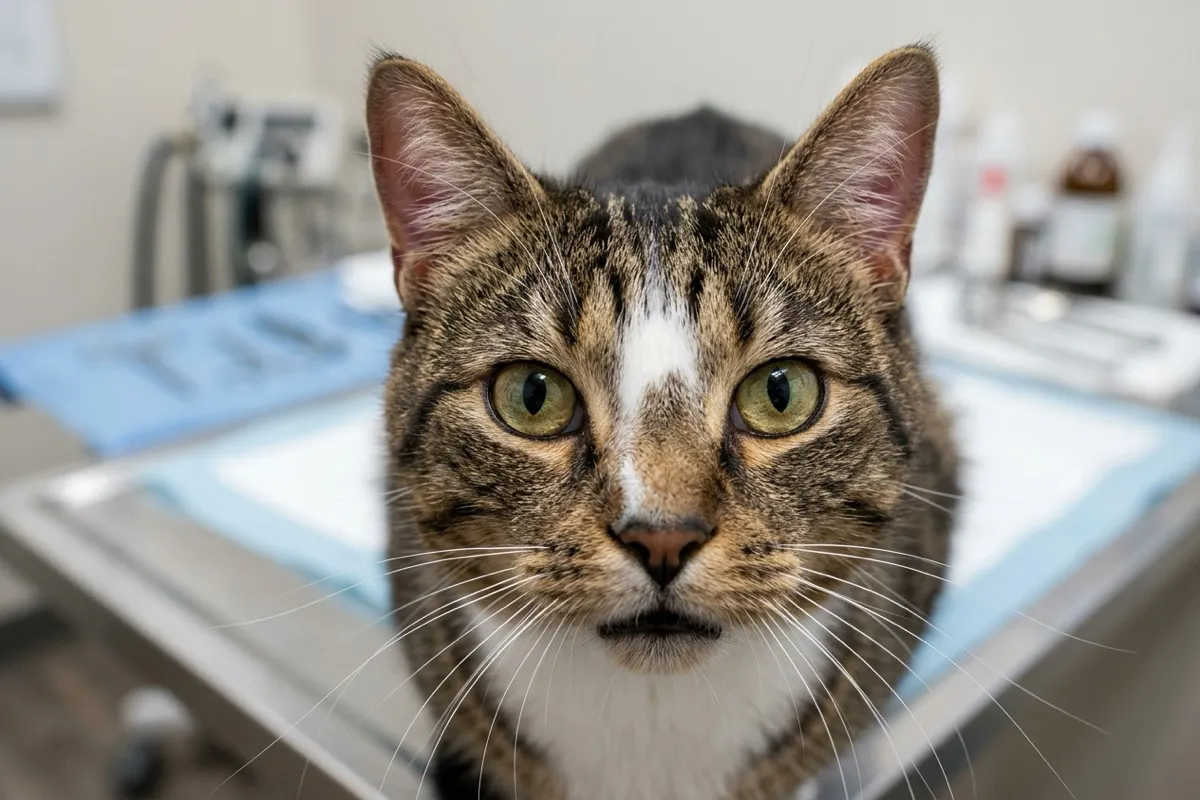
- Ear Position: Ears facing forward (0), slightly rotated or flattened outward (1), fully flattened and rotated back/out (2).
- Orbital Tightening: Eyes round and open (0), partially squinted/almond-shaped (1), tightly closed (2).
- Muzzle Tension: Relaxed and round (0), moderately tense (1), flattened into an oval pressed against the face (2).
- Whisker Position: Loose and naturally curved (0), slightly curved forward or straight (1), pushed forward away from the face and bunched (2).
- Head Position: Head held high above the shoulder line (0), head level with the spine (1), head held low or tucked to the chest (2).
---
2. Clinical Scoring Interpretation
- 0 to 3 points: Minimal or absent pain.
- 4 to 10 points: Significant clinical pain. Veterinary intervention and prescription analgesia are urgently warranted.
---
3. When to Seek Emergency Veterinary Care
If high pain scores are accompanied by rapid shallow breathing, abdominal guarding, or acute distress, find 24/7 care through our directory of emergency veterinary clinics.
---
Scientific Sources and References
- University of Montreal: Feline Grimace Scale: Development and Validation (Evangelista et al., Nature Scientific Reports).
- WSAVA: Global Pain Guidelines.
Nekolife Community
Caring for a cat? Keep their health in your pocket
Register your cat on Nekolife to track vaccination history, weight, and get advice from loving cat parents.
- Vaccine & weight records
- Supportive cat community
- Earn Meow Points & badges
Create free cat passport →100% free forever
Related pages



Know someone who needs this?