Feline Seizures: First Aid During an Attack, Common Causes, and Emergency Protocols
Watching your cat experience a seizure is one of the most frightening events a pet parent can witness. During a generalized tonic-clonic seizure (grand mal fit), a cat typically collapses onto its side, loses consciousness, displays rigid limb extension or violent paddling motions, accompanied by foaming at the mouth, dilated pupils, and involuntary urination.
In this guide
1. Step-by-Step First Aid Protocol During a Seizure
Follow these 4 safety directives while the episode unfolds:
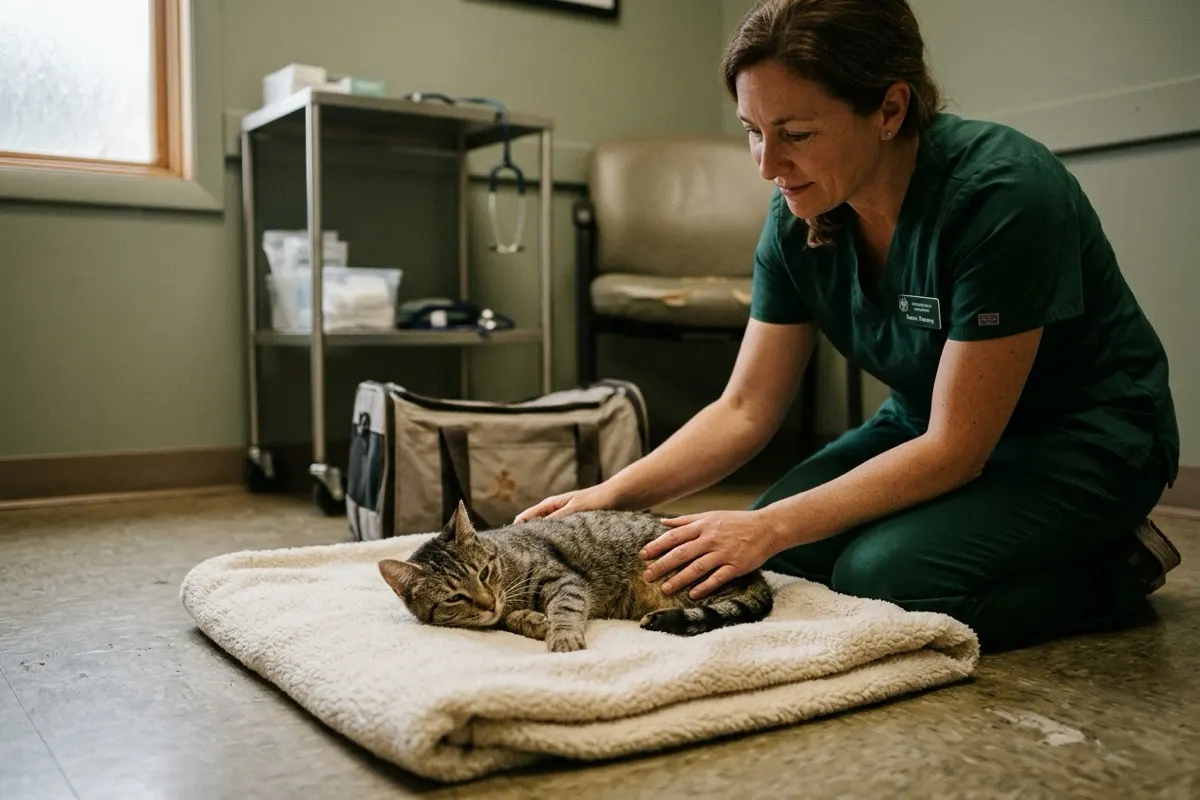
- Secure the perimeter: If the cat is seizing on a bed or couch, gently nudge or guide them down to a carpeted floor onto a soft blanket to eliminate fall injuries.
- Eliminate sensory stimuli: An actively seizing feline brain is hyper-reactive. Dim bright room lights, draw blinds, and speak only in quiet whispers.
- Do not restrain movements: Do not attempt to pin the cat down or slap/shake them awake. Never splash cold water onto their face.
- Log the exact duration: Check your watch. In panic, 30 seconds feels like 10 minutes. Exact timing determines whether emergency anticonvulsant medication is needed.
---
2. Common Underlying Causes of Seizures in Cats
Unlike dogs, true idiopathic epilepsy (genetic epilepsy without an identifiable structural lesion) is relatively uncommon in cats. Feline seizures are predominantly secondary to:
- Acute toxicosis: Accidental exposure to canine spot-on flea treatments containing permethrins/pyrethroids (extremely neurotoxic to cats), organophosphates, snail bait (metaldehyde), or toxic lilies.
- Metabolic disturbances: Severe hypoglycemia (in diabetic cats on insulin therapy), hepatic encephalopathy (portosystemic shunts), or end-stage chronic kidney disease (uremic encephalopathy).
- Infectious and inflammatory disease: Neurological Feline Infectious Peritonitis (FIP), toxoplasmosis, or fungal cryptococcosis.
- Intracranial structural disease (older cats): Brain neoplasms (particularly feline meningiomas), strokes, or severe systemic arterial hypertension.
---
3. The Post-Ictal Phase: Supporting Recovery
Once the violent muscle contractions cease, the brain requires time to rebalance its neurochemical equilibrium. Normal post-ictal symptoms include:
- Ataxia and stumbling: Pacing aimlessly, bumping into door frames like an intoxicated individual.
- Transient cortical blindness: Staring blankly and failing to respond to visual cues; vision resolves naturally within several hours.
- Intense hunger or thirst: The metabolic energy expended by full-body muscle contractions is massive. Offer small sips of water only once they are fully alert to prevent choking.
---
4. When to Seek Emergency Veterinary Care
Transport your cat immediately to a 24-hour veterinary emergency center if:
- The seizure lasts longer than 3 continuous minutes.
- Your cat experiences two or more separate seizures within a 24-hour period (cluster seizures).
- You suspect toxic exposure (flea medications, plants, or household chemicals).
- Your cat fails to regain consciousness or suffers severe respiratory distress after spasms subside.
Locate specialized neurological care in our directory of emergency veterinary clinics.
---
Scientific References and Sources
- Journal of Feline Medicine and Surgery: Feline epilepsy: diagnostic approach and therapeutic management of recurrent seizures.
- Veterinary Clinics of North America: Small Animal Practice: Feline Seizure Disorders: Etiologies, Status Epilepticus, and Long-Term Anticonvulsant Therapy.
- ACVIM (American College of Veterinary Internal Medicine): Consensus Statement on Seizure Management in Feline Patients.
Caring for a cat? Keep their health in your pocket
Register your cat on Nekolife to track vaccination history, weight, and get advice from loving cat parents.
- Vaccine & weight records
- Supportive cat community
- Earn Meow Points & badges
Related pages

Know someone who needs this?