Moving with Cats: The Safe Room Protocol, Pheromones, and Fear-Free Adjustment
Cats are fiercely territorial creatures. To a feline, home is not merely a shelter—it is an intricate sensory territory marked with familiar facial pheromones, established escape routes, and predictable scents.
This guide is not a substitute for a vet.
In this guide
1. Pre-Move Preparation in the Old Home
- Carrier Positive Conditioning: Keep the travel carrier open in your living area weeks beforehand with blankets and treats, transforming it into a cozy sanctuary rather than a scary crate.
- Do NOT Wash Their Bedding: It is human instinct to clean everything before moving; for a cat, washing away their scent wipes out their primary sense of safety.
- Pre-Travel Fasting: Avoid heavy meals 3 to 4 hours before the drive to prevent motion sickness and stress-induced vomiting.
---
2. Setting Up the Base Camp Safe Room
Pick a quiet room (such as your bedroom) and make it an impenetrable haven:
- Resource Placement: Keep the litter box in one corner and food/water far apart on the opposite side.
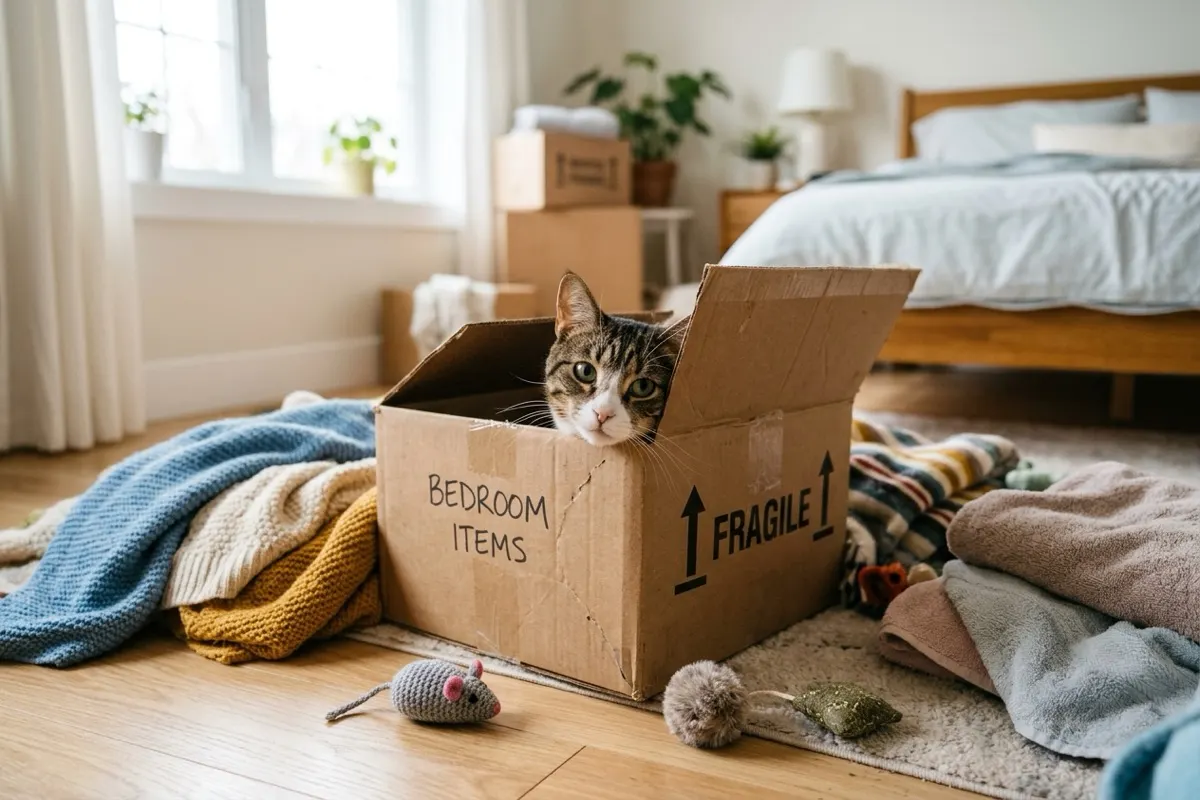
- Hiding Spots and Height: Provide an open cardboard box or a sturdy scratching tree. It is completely normal for a cat to hide under the bed for the first 24 to 48 hours.
- Never Force Interaction: Do not drag a hiding cat out. Sit quietly on the floor, speak softly, read a book, or browse your phone to offer a reassuring, calm presence.
---
3. Critical Safety and Escape Prevention
- Moving Day Hazard: Doors frequently remain propped open while carrying furniture. Place a bold sign on the safe room door: "DO NOT OPEN: CAT INSIDE".
- Screen and Window Check: Ensure all windows and balcony doors have secure safety screens before granting free house access.
- Microchip Registry Update: Update your new phone number and address in the national veterinary microchip database immediately upon moving.
---
4. Gradual Territory Expansion
Once your cat is eating normally, grooming, using the litter box, and purring or head-bunting in the safe room:
- Open the safe room door and let them explore at their own pace.
- If startled by unfamiliar sounds, they will instinctively dash back to their safe room.
- Place a second litter box in its permanent household location before removing the base camp box.
---
Scientific References and Sources
- ISFM (International Society of Feline Medicine): Environmental Enrichment and Stress Reduction Guidelines for Moving Cats.
- Journal of Feline Medicine and Surgery: Feline territoriality, relocation stress and idiopathic cystitis prevention.
- American Association of Feline Practitioners (AAFP): Feline Environmental Needs Guidelines.
Nekolife Community
Caring for a cat? Keep their health in your pocket
Register your cat on Nekolife to track vaccination history, weight, and get advice from loving cat parents.
- Vaccine & weight records
- Supportive cat community
- Earn Meow Points & badges
Create free cat passport →100% free forever
Related pages


Know someone who needs this?