Homemade Feline Diets: Deadly Nutritional Traps, Calcium-to-Phosphorus Ratios, and Taurine
Cooking fresh human-grade meals for a cat seems like the ultimate act of devotion. Yet in veterinary clinics, amateur homemade feline diets represent a primary cause of acute malnutrition, nutritional secondary hyperparathyroidism, and permanent blindness. Cats are not small dogs or human omnivores: their specialized metabolic pathways do not tolerate guesswork. If deciding between wet food and dry kibble or preparing home-cooked meals, owners must recognize how home-cooking differs from a raw BARF diet for cats.
In this guide
1. Why Cats Cannot Tolerate Improvised Cooking
Cats lack the metabolic plasticity of dogs and humans. Their hepatic enzymes continuously break down amino acids for energy even when protein intake is deficient.
Major amateur pitfalls:
- Excess carbohydrates: Cats have minimal salivary and pancreatic amylase. Diluting feline food with grains alkalizes urine pH and triggers struvite urolithiasis.
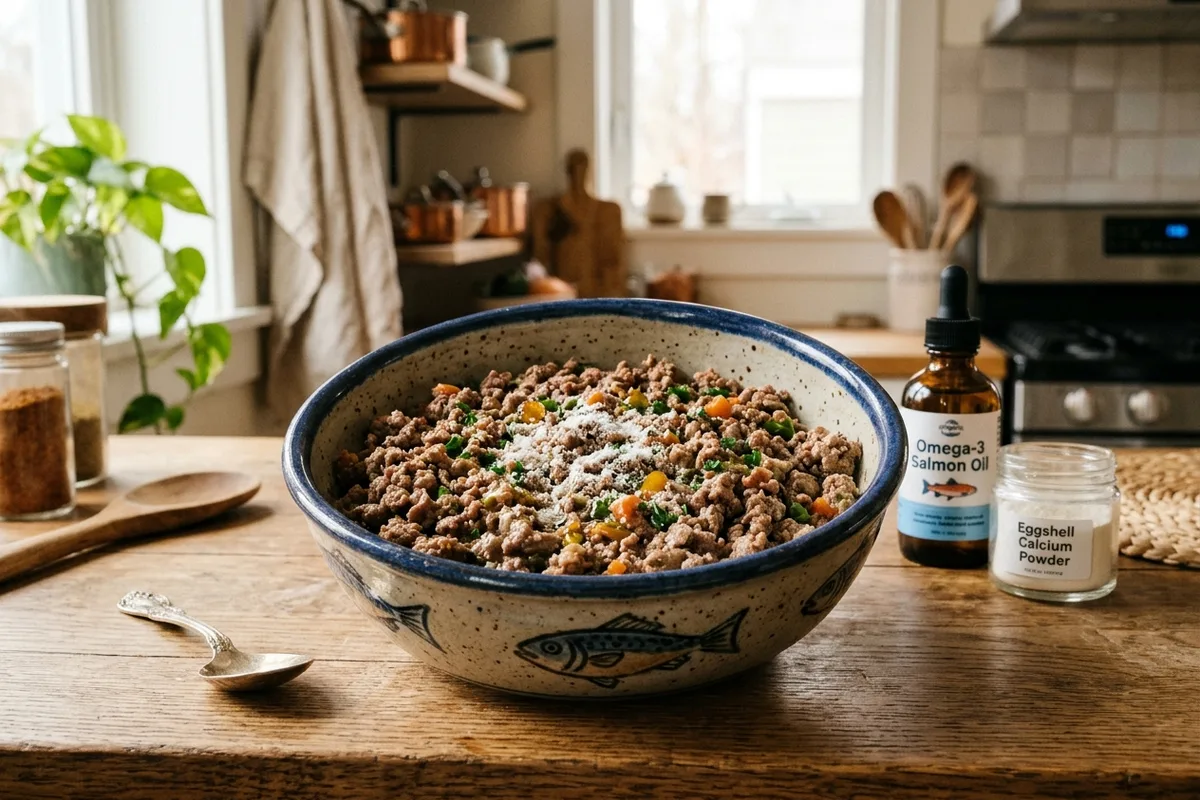
- Missing organs and bones: Wild prey delivers calcium from bones and trace minerals from glands. Grocery store muscle meat lacks calcium, iodine, zinc, and manganese.
- Heat degradation of taurine: Taurine is water-soluble. Boiling meat leaches taurine into the discarded broth, starving cardiac myocytes.
---
2. Correcting the Calcium-to-Phosphorus (Ca:P) Ratio
- Target ratio: 1.1:1 to 1.3:1 Calcium to Phosphorus.
- Eggshell powder: Washed, boiled, dried, and micro-ground eggshells yield approximately 1,000 mg of bioavailable elemental calcium per half-teaspoon.
---
3. Taurine and Essential Fatty Acids
Always mix powdered taurine (250–500 mg) into food after it has cooled below 40°C. Complement with liver (strictly 5–7% of total diet) for retinol and wild salmon oil for arachidonic acid and EPA/DHA.
---
Sources and Scientific Citations
- Pion, P. D., et al. (1987). Myocardial failure in cats associated with low plasma taurine: a reversible cardiomyopathy. Science, 237(4816), 764-768.
- National Research Council (NRC). (2006). Nutrient Requirements of Dogs and Cats. National Academies Press.
- Stockman, J., et al. (2013). Evaluation of recipes of home-prepared maintenance diets for dogs and cats. JAVMA, 242(11), 1500-1505.
- FEDIAF (2024). Nutritional Guidelines for Complete and Complementary Pet Food for Cats and Dogs.
Caring for a cat? Keep their health in your pocket
Register your cat on Nekolife to track vaccination history, weight, and get advice from loving cat parents.
- Vaccine & weight records
- Supportive cat community
- Earn Meow Points & badges
Related pages
Know someone who needs this?