Bengal Cat: Complete Guide to Characteristics, Health and Care
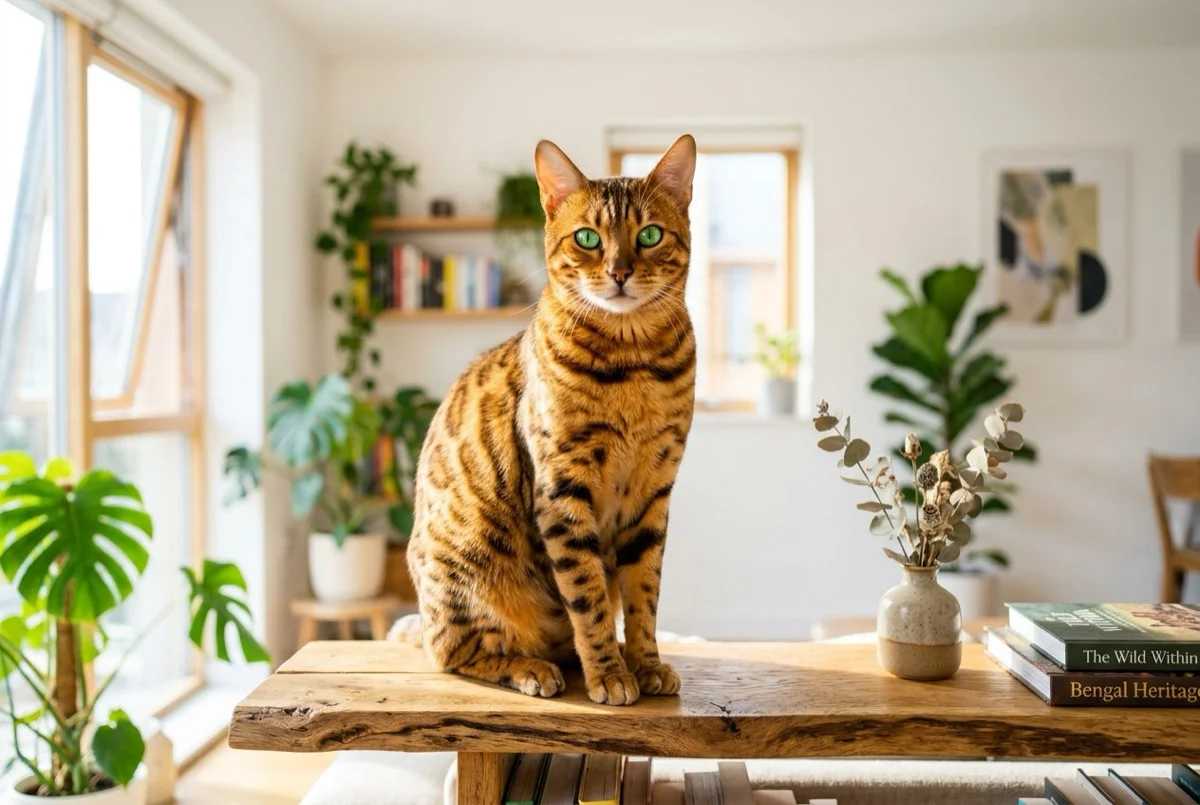
The Bengal cat is one of the most mesmerizing and visually striking breeds in the domestic feline world. Developed through the deliberate crossing of the wild Asian leopard cat (Prionailurus bengalensis) with domestic shorthair breeds, this exotic feline merges the breathtaking appearance of a wild jungle cat with the affectionate, playful, and loyal temperament of a devoted home companion.
In this guide
Official Breed Factsheet
| Biological Parameter | Official Bengal Standard | Veterinary & Breed Observations |
|---|---|---|
| Life Expectancy | 12 to 16 years | High vitality when supported by early cardiac screening and high-protein nutrition. |
| Adult Male Weight | 11 – 18 lbs (5.0 – 8.0 kg) | Heavy, dense muscular structure with long athletic limbs. |
| Adult Female Weight | 8 – 12 lbs (3.5 – 5.5 kg) | Agile, graceful, and remarkably muscular. |
| Coat Architecture | Spotted (Rosetted) or Marbled | High-contrast rosettes or horizontal liquid marbling. |
| Optical Effect | Golden «glitter» sheen | Light-refracting translucent hair tips unique to the breed. |
| Activity Level | Very High (Athletic Explorer) | Requires vertical wall climbing paths, cat wheels, and daily mental stimulation. |
| Water Affinity | Exceptionally High | Instinctive splashing, tap drinking, and bath exploration. |
| Classification | Hybrid-origin domestic feline | Fully recognized by TICA, FIFe, and the GCCF. |
---
Origin and History of the Bengal Cat
The foundation of the Bengal breed began in the 1960s in the United States when geneticist Jean Mill bred a female Asian leopard cat (Prionailurus bengalensis) with a domestic tomcat. The objective was both to study natural feline leukemia virus resistance and to create a domestic cat bearing the magnificent coat of a forest ocelot. By the 1980s, the breed was systematically established, and TICA granted official championship recognition in 1983, stipulating that only cats four or more generations removed from wild ancestors (F4+) qualify as domestic companions.
---
Temperament and Ethology: Living with an Athlete
Living with a Bengal is an exhilarating experience. They are intensely curious problem solvers capable of opening door knobs, cabinets, and turning on water faucets. Unlike quiet lap cats, they want to be part of every household activity, communicate with exotic chirps and trills, and eagerly learn to walk on harnesses for outdoor adventures.
---
Genetic Health and Veterinary Protocols
While robust and naturally athletic, Bengal cats are predisposed to three hereditary conditions: Hypertrophic Cardiomyopathy (HCM), Pyruvate Kinase Deficiency (PK-Def causing chronic hemolytic anemia), and Progressive Retinal Atrophy (PRA-b leading to blindness). Ethical breeders perform annual cardiac ultrasounds and DNA swabs on all breeding kings and queens.
---
The Official Nekolife Feline Passport for your Bengal
Because Bengal cats are highly prized and intensely adventurous, securing them with immediate identification is paramount. Through Nekolife, you can generate your Bengal's official ID-1 digital credential, record their 15-digit microchip, register emergency contacts, and download high-contrast QR rescue cards for immediate recovery.
---
Frequently Asked Questions about Bengal Cats
Can a Bengal cat live happily in an apartment?
Yes, provided the living space is vertically enriched with tall cat trees, wall walkways, puzzle feeders, and 30-45 minutes of daily interactive play.
Do Bengal cats get along with dogs and children?
Exceptionally well. Their energetic, fearless disposition makes them enthusiastic playmates for respectful children and energetic family dogs.
---
Caring for a cat? Keep their health in your pocket
Register your cat on Nekolife to track vaccination history, weight, and get advice from loving cat parents.
- Vaccine & weight records
- Supportive cat community
- Earn Meow Points & badges
Related pages
Sources
- The International Cat Association (TICA): Bengal Breed Standard & Show Guidelines.
- Veterinary Genetics Laboratory (UC Davis): Bengal PRA and PK-Def DNA Screening Panels.
- Journal of Feline Medicine and Surgery: Feline Cardiomyopathy Diagnostic Guidelines.
Know someone who needs this?