Ragdoll Cat: Complete Guide to Characteristics, Health, and Care
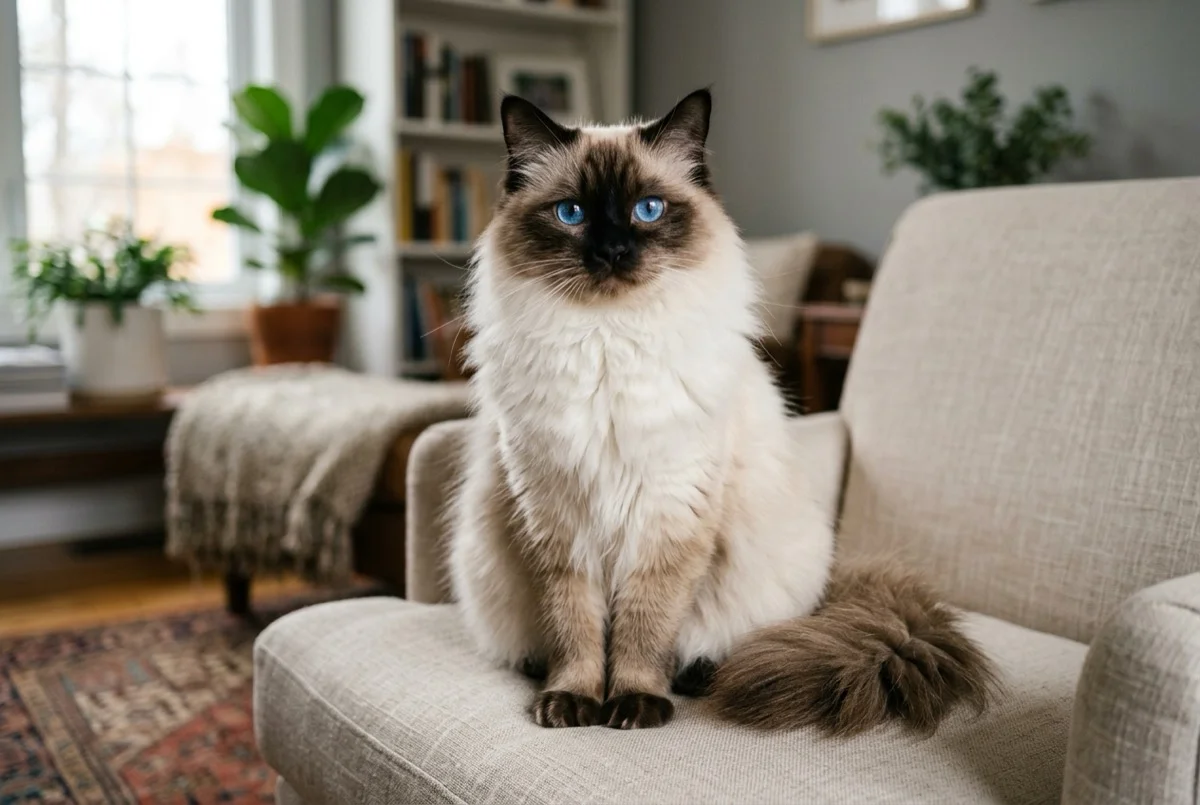
The Ragdoll cat (whose name literally describes its tendency to go limp like a cloth doll when held) is one of the world's most cherished and adored feline breeds. Renowned for its angelic disposition, silky semi-long rabbit-soft coat, and hypnotic sapphire blue eyes, this gentle giant embodies the pinnacle of domestic feline serenity, trust, and loving companionship.
In this guide
Official Breed Factsheet
| Biological Parameter | Official Ragdoll Standard | Veterinary & Zootechnical Notes |
|---|---|---|
| Life Expectancy | 12 to 16 years | Strong longevity supported by regular echocardiograms and weight management. |
| Adult Male Weight | 13 – 21 lbs (6.0 – 9.5 kg) | Heavy bone structure and slow musculoskeletal development. |
| Adult Female Weight | 9 – 14 lbs (4.0 – 6.5 kg) | Distinct sexual dimorphism; noticeably more compact yet solid. |
| Eye Color | Vivid sapphire blue | Mandatory across all coat colorations and patterns. |
| Coat Texture | Semi-long, plush rabbit-fur feel | Silky coat with minimal woolly undercoat, dramatically reducing matting. |
| Maturity Timeline | 36 to 48 months (3 to 4 years) | Skeleton, muscle mass, and point color saturation take years to peak. |
| Temperament | Docile, placid, puppy-like | Follows owners room to room and seeks continuous human presence. |
| Activity Level | Moderate to low | Prefers floor-level interactive play and relaxed cuddling sessions. |
---
Origin and History of the Ragdoll Breed
The Ragdoll was created in Riverside, California, during the early 1960s by breeder Ann Baker. The foundational queen was Josephine, a white semi-feral longhaired cat whose litters displayed extraordinary docility and complete muscular relaxation when cradled. Baker bred Josephine's offspring with seal point and mitted cats, trademarking the name. By 1979, the Ragdoll Fanciers' Club International (RFCI) standardized the breed under scientific criteria, leading to formal championship status in TICA (1979) and the CFA (1993).
---
Temperament and Ethology: The Ultimate Companion
Ragdolls defy the stereotype of the aloof, independent cat. Often nicknamed «puppy cats», they greet family members at the door, follow owners like shadows, and collapse into boneless relaxation («flopping») when scooped into arms. Their gentle tolerance makes them wonderful companions for children, friendly dogs, and multi-cat households. Because they lack defensive territorial aggression, they must live strictly indoors.
---
Genetic Health and Essential Veterinary Screenings
The primary hereditary concern in the breed is Hypertrophic Cardiomyopathy (HCM) caused by the specific autosomal dominant R820W mutation in the MYBPC3 gene. Responsible breeders test all breeding queens and studs to ensure they are DNA-negative. Additional preventative priorities include genetic screening for Polycystic Kidney Disease (PKD) and monitoring body condition to prevent post-neutering obesity, which strains their heavy joints.
---
The Official Nekolife Feline Passport for your Ragdoll
Because of their extreme docility and trusting nature, lost Ragdolls are especially vulnerable outside. Register your cat on Nekolife to log their 15-digit microchip, store negative HCM/PKD test certificates, monitor their 4-year growth curve, and download an official high-resolution ID-1 digital credential with rescue QR code.
---
Frequently Asked Questions about Ragdoll Cats
Do Ragdoll cats shed heavily?
They shed significantly less than Persians because they lack a dense undercoat. Light brushing twice weekly with a steel comb keeps their rabbit-soft coat glossy and tangle-free.
Can a Ragdoll be left alone all day?
Ragdolls are deeply social and prone to separation anxiety if isolated for extended periods. If you work long hours away from home, adopting a pair or providing another feline companion is strongly advised.
---
Caring for a cat? Keep their health in your pocket
Register your cat on Nekolife to track vaccination history, weight, and get advice from loving cat parents.
- Vaccine & weight records
- Supportive cat community
- Earn Meow Points & badges
Related pages
Sources
- The International Cat Association (TICA): Ragdoll Breed Standard & Seminar Guide.
- Cat Fanciers' Association (CFA): Ragdoll Breed Profile & Color Standards.
- Meurs, K. M., et al. (2007): A cardiac myosin binding protein C mutation in the Ragdoll cat is associated with hypertrophic cardiomyopathy. Genomics, 90(2), 261-264.
- Royal Canin Feline Health Nutrition: Breed Nutritional Requirements for Large Slow-Growing Cats.
Know someone who needs this?