Munchkin Cat Breed: Genetics, Health, Short Legs and Care Guide
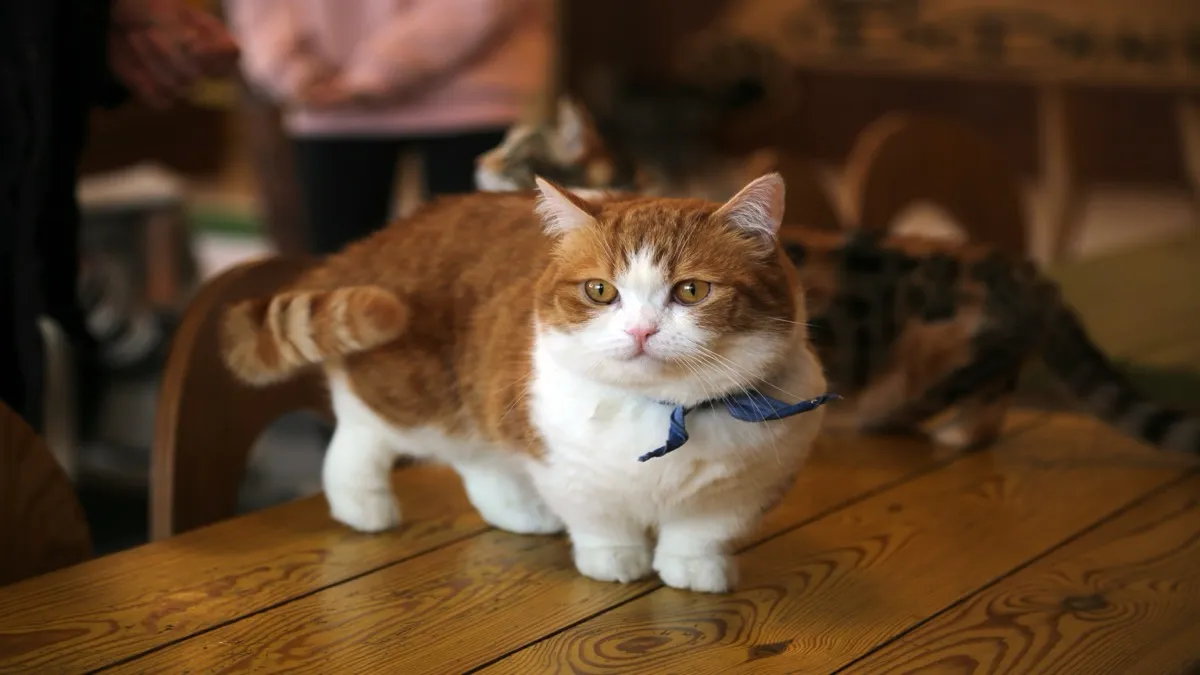
The Munchkin cat is arguably one of the most distinctive and widely discussed breeds in modern felinology, instantly recognizable by its defining trait: compact, short limbs supporting a standard-length feline body. Far from being hampered by its low stature, the Munchkin is a delightfully agile sprinter that navigates living rooms like a miniature sports car, captivating families with its signature meerkat stance where it perches upright on its haunches to inspect its kingdom.
In this guide
1. History and Discovery: The Legacy of Blackberry
Unlike designer breeds engineered through intricate cross-species matings, the Munchkin emerged from a spontaneous natural mutation. In 1983, music teacher Sandra Hochenedel rescued an abandoned, pregnant female with strikingly short legs in Rayville, Louisiana, naming her Blackberry.
When Blackberry delivered her litter, approximately half the kittens exhibited her charming short stature. Hochenedel gifted a male kitten named Toulouse to a friend, laying the foundation for systematic development. The International Cat Association (TICA) accepted the Munchkin into its New Breed program in 1994, achieving full Championship status in 2003. The breed was affectionately named after the tiny Munchkin inhabitants of L. Frank Baum's The Wonderful Wizard of Oz.
---
2. Genetics and Morphology: Feline Hypochondroplasia
The short-legged trait is governed by an autosomal dominant gene with complete penetrance:
- Homozygous Lethality (MM): Kittens inheriting two copies of the Munchkin gene fail to develop in utero. Responsible breeding programs therefore cross Munchkins (Mm) with non-short-legged domestic cats (mm), yielding 50% short-legged and 50% long-legged offspring.
- Skeletal Structure: The mutation targets long bones (humerus, radius, femur, and tibia), leaving the spine's length and flexibility unaltered. Unlike Dachshund dogs, the feline spine possesses remarkable flexibility, making feline disc herniation far less prevalent.
- Coat Varieties: Available in two coat lengths: Shorthair (all-weather plush coat) and Longhair (semi-long silky coat with a delicate plume tail). All coat colors, shades, and tabby patterns are accepted.
---
3. Temperament: The Inquisitive Prairie Dog
The Munchkin's temperament is thoroughly outgoing, affectionate, and playful:
- The Meerkat Stance: They frequently sit erect on their rear legs, balancing on their tail like a meerkat to peek over furniture edges or watch passing birds.
- Speed Demon at Floor Level: What they lack in high-altitude vertical leaps, they make up for with breathtaking acceleration across hardwood floors and tight cornering.
- Affectionate Companion: Deeply bonded to human families, they get along wonderfully with polite dogs, other cats, and children, loving lap cuddles.
---
4. Home Accommodations and Everyday Care
Integrating a Munchkin into a home is smooth with a few thoughtful modifications:
- Pet Steps and Ramps: Placing cushioned ramps beside sofas or beds prevents jarring, high-impact landings that strain short limb joints.
- Low-Entry Litter Trays: Select litter boxes with lowered entry thresholds so short legs can step in easily without stumbling.
- Grooming Routine: Weekly brushing for shorthair varieties; two to three weekly combings for longhair Munchkins to prevent tangles and underbelly mats.
---
5. Joint Health, Spinal Screening, and Longevity
Munchkins boast an average lifespan of 12 to 15 years, provided key health checkpoints are maintained:
- Weight Control: Obesity is devastating to short limb geometry, exponentially increasing the burden on elbows and hips. Strict portion control is mandatory.
- Joint Supplements: Daily omega-3 fatty acids and joint protectants (glucosamine/chondroitin) promote cartilage resilience as cats age.
- Lordosis and Pectus Excavatum: Developmental spinal curvatures (excessive inward spinal dipping) or indented chests can occasionally occur in growing kittens, requiring early clinical evaluation.
- Routine Vet Visits: Bi-annual orthopedic assessments ensure early detection of degenerative joint wear.
---
Scientific Sources and References
- The International Cat Association (TICA) - Munchkin Breed Standard. https://tica.org/breeds/browse-all-breeds?view=article&id=861:munchkin-breed&catid=79
- Anderson, L. V. et al. (2020). Achondroplasia and hypochondroplasia mutations in domestic cats. Canine Medicine and Genetics.
- Cat Fanciers' Association (CFA). Position and statements on feline dwarfism mutations.
- International Cat Care - Dwarfism and Munchkin Cats Health Statement. https://icatcare.org/advice/munchkin/
Caring for a cat? Keep their health in your pocket
Register your cat on Nekolife to track vaccination history, weight, and get advice from loving cat parents.
- Vaccine & weight records
- Supportive cat community
- Earn Meow Points & badges
Related pages
Know someone who needs this?