Siberian Cat: Comprehensive Guide to Characteristics, Personality, and Allergy Facts
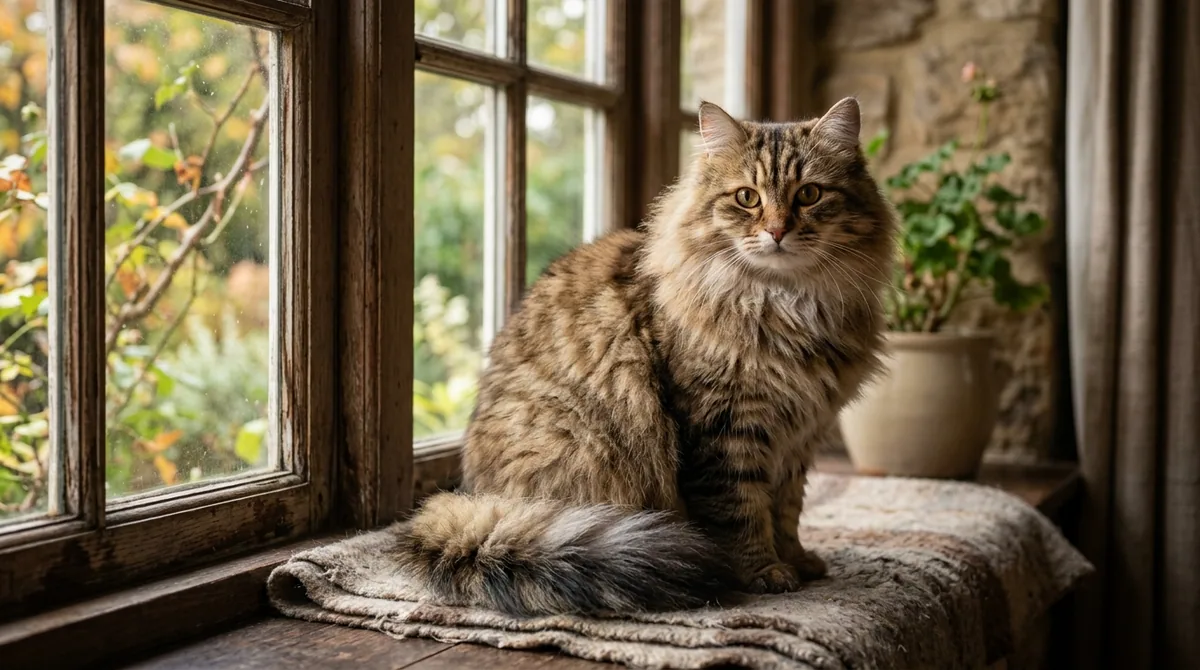
Hailing from the vast, frozen landscapes of Siberia and the ancient Russian taiga forests, the Siberian Cat (Sibirskaya koshka) is one of the most majestic, hardy, and captivating natural breeds in the feline world. With its muscular, barrel-shaped torso, sweet expressive gaze, and dense, water-repellent triple coat crafted to withstand sub-zero winters, this cat merges the formidable presence of a wild woodland hunter with an affectionate, dog-like devotion to its human family. Moreover, it is celebrated worldwide within medical and allergy communities for producing notably lower concentrations of the primary feline allergen protein, Fel d 1.
In this guide
Ancient Origins in the Russian Taiga
The Siberian cat is a natural landrace that flourished for centuries across Russia and Ukraine without selective human intervention. The earliest written records referencing these dense-coated forest cats in Russian settlements date back to approximately 1000 AD, where they were treasured by peasants, shopkeepers, and monasteries for their unmatched prowess in keeping grain warehouses safe from vermin in freezing conditions.
In Russian folklore and fairy tales, the Siberian cat is frequently depicted as a loyal guardian of the hearth, a mystical spirit (Kot Bayun) that brought blessings and tranquility to the household.
Despite its centuries-old ancestry, international recognition emerged recently:
- Late 19th Century: Siberians were documented in Harrison Weir’s early cat show records in London (1871).
- Post-Cold War Emergence (1990): Following the fall of the Iron Curtain, the first documented breeding pairs arrived in the United States when breeder Elizabeth Terrell arranged an exchange with Soviet cat enthusiasts in 1990.
- Official Recognition: Recognized by the World Cat Federation (WCF) in 1992, TICA in 1996, and CFA championship status in 2006.
---
Physical Traits and the Unique "Triple Coat"
Every facet of the Siberian’s anatomy reflects centuries of evolutionary adaptation to sub-arctic conditions:
1. Body Structure and Proportion
- Torso: Substantial, muscular, and barrel-shaped, with a broad chest and heavy bone density.
- Legs & Paws: Medium length with thick bones and heavy musculature. Hind legs are slightly longer than front legs, generating spring-loaded jumping power. Paws are large and round with thick tufts of hair between toes to prevent slipping on snow.
- Tail: Wide at the base, blunt-tipped, well-plumed, and long enough to reach along the flank to keep warm while curled up sleeping.
2. Head and Facial Contours
- Shape: A modified wedge with smooth, rounded contours, broader at the top of the cheekbones and tapering softly to a rounded muzzle.
- Profile: Gentle concave slope at the bridge of the nose, avoiding the severe stop of the Persian and the absolute straightness of the Norwegian Forest Cat.
- Eyes: Large, slightly oval, and nearly round, expressive and set wide apart with a slight tilt toward the outer ear base.
- Ears: Medium-sized with rounded tips, furnished with generous interior hair and lynx tipping at the apex.
3. The Triple Waterproof Coat
Unlike breeds with single or double coats, the Siberian boasts three distinct layers:
- Dense Woolly Undercoat: Retains body heat directly against the skin.
- Insulating Middle Layer: Moderates temperature shifts in fluctuating weather.
- Waterproof Guard Hairs: Smooth, slightly oily, resilient outer hairs that shed rain, snow, and slush effortlessly.
They feature a full, plush ruff around the neck that thickens noticeably during winter months.
Breed Comparison: Siberian vs. Maine Coon vs. Norwegian Forest Cat
| Feature | Siberian Cat | Maine Coon | Norwegian Forest Cat |
|---|---|---|---|
| Head Shape | Rounded wedge, soft curves | Rectangular, square muzzle | Equilateral triangle |
| Nasal Profile | Gentle concave curve | Pronounced concave slope | Straight line, no stop |
| Eye Shape | Large, nearly round | Large, expressive oval | Almond-shaped, oblique |
| Torso Shape | Compact barrel, rounded | Long, rectangular, stretched | Muscular, high rear stance |
| Coat Texture | Dense, coarse triple coat | Uneven shaggy double coat | Smooth double coat, woolly under |
| Fel d 1 Allergen | Significantly low levels | Normal feline baseline | Normal feline baseline |
---
The Hypoallergenic Science: Understanding Fel d 1
The term "hypoallergenic" literally means "less allergenic," not allergen-free.
The True Cause of Cat Allergies
Over 90% of individuals allergic to cats react to the Fel d 1 glycoprotein, produced primarily in:
- Salivary and sublingual glands.
- Sebaceous glands of the skin.
- Perianal glands and urine.
When cats groom, saliva coats their hair. As it dries, microscopic particles of dried protein become airborne dander, remaining suspended in indoor environments for long periods.
What Makes Siberians Unique?
Independent laboratory testing and peer-reviewed molecular genetics studies have demonstrated that many Siberian cats exhibit naturally occurring mutations in the genes encoding Fel d 1, resulting in dramatically reduced allergen production:
- Normal domestic cats produce between 4 and 63 µg of Fel d 1 per gram of saliva.
- Verified low-allergen Siberians frequently measure under 0.2 to 1.5 µg of Fel d 1.
- Because Fel d 1 is polygenic, levels vary between individuals. Intact males produce the highest allergen concentrations due to hormonal influence, while spayed females and neutered males consistently test lowest.
> [!TIP]
> Practical Advice for Allergy Sufferers: Before adopting a Siberian, schedule an in-person visit with an ethical breeder whose cats are tested for Fel d 1 levels, or request a fur sample test to evaluate your personal tolerance safely.
---
Temperament, Behavior, and Daily Life
Siberians are celebrated for their outgoing, playful, and affectionate demeanor:
1. Dog-Like Loyalty and Social Warmth
- People-Focused: Siberians want to be in the same room as their human companions. They greet owners at the front door, follow from room to room, and communicate through charming chirps and soft trills rather than loud meows.
- Great with Children and Dogs: Their fearless, grounded disposition makes them exceptionally patient with gentle children and curious household dogs.
- Love of Water: Many Siberians are fascinated by running taps, will bat at water bowls, and may even attempt to join owners in the bath or shower.
2. Physical and Mental Enrichment
- Acrobatic Jumpers: Their powerful hind legs allow them to clear high furniture easily.
- Vertical Territory: Invest in heavy-duty scratching posts with thick sisal pillars (at least 5–6 inches / 12–15 cm in diameter) and securely mounted wall shelves that can safely bear a 20-lb cat.
---
Health, Lifespan, and Veterinary Care
Blessed with a wide genetic background, Siberians have a robust average lifespan of 12 to 16 years, with many reaching 18 years or more in loving homes. Responsible breeders focus on two primary inherited concerns:
1. Hypertrophic Cardiomyopathy (HCM)
HCM causes progressive thickening of the left ventricular heart muscle.
- Protocol: Breeding cats must undergo regular Doppler echocardiograms performed by a board-certified veterinary cardiologist every 1–2 years.
2. Polycystic Kidney Disease (PKD)
Genetic cyst formation in the renal parenchyma.
- Protocol: Screened easily via single-swab DNA testing for the PKD1 gene before breeding.
3. Grooming Routine
- Weekly Brushing: Outside shedding season, comb through the triple coat twice weekly with a stainless-steel wide-toothed comb to prevent mats in the armpits and britches.
- Spring Shedding: Siberians blow their winter undercoat each spring. Daily combing during this 2–3 week period is essential to prevent hairball ingestion.
---
Frequently Asked Questions (FAQ)
Can Siberian cats live happily in an apartment?
Yes. They adapt smoothly to apartment life as long as their physical and mental needs are met with tall cat trees, puzzle feeders, window perches, and interactive playtime each day.
What should I feed my Siberian cat?
Feed a high-protein, meat-first diet (>40–45% dry matter protein) with adequate moisture. Combining premium dry food with daily complete wet food supports optimal kidney health and coat hydration. Omega-3 fatty acids (EPA and DHA) from salmon or krill oil support joint and coat health.
Is the Neva Masquerade a Siberian cat?
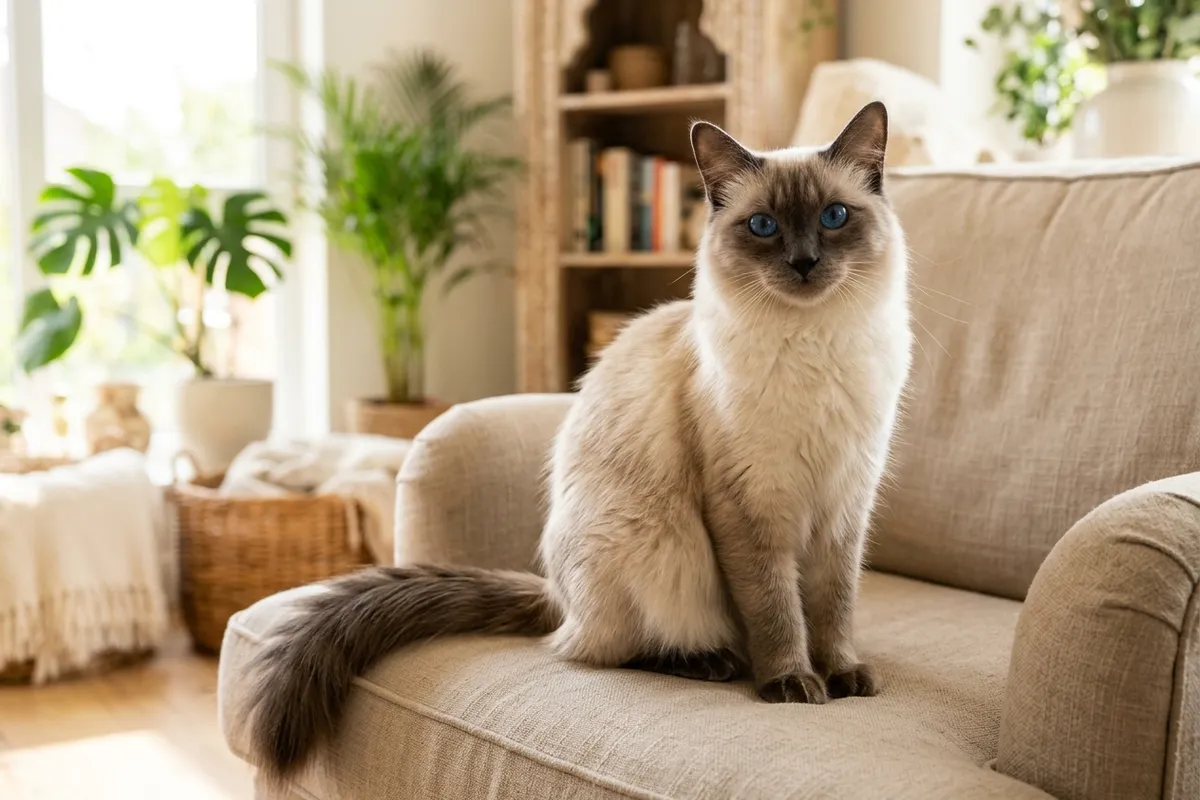
Yes. The Neva Masquerade is simply the colorpoint variety of the Siberian Cat (displaying seal, blue, red, or lynx points and blue eyes). Genetically, structurally, and temperamentally, it is an identical Siberian carrying the Himalayan colorpoint gene.
---
Veterinary Sources and References
- Fédération Internationale Féline (FIFe): Siberian Breed Standard (SIB / NEM), 2024.
- The International Cat Association (TICA): Siberian Breed Seminar & Standard Documentation.
- Satyaraj, E. et al. (2019): Reduction of active Fel d 1 in saliva of cats fed an anti-Fel d 1 egg product, Journal of Feline Medicine and Surgery.
- Gromboni, C. et al. (2018): Evaluation of Fel d 1 allergen levels across diverse feline breeds, Int Arch Allergy Immunol.
- Cat Fanciers' Association (CFA): Siberian Breed Profile and Medical History.
Caring for a cat? Keep their health in your pocket
Register your cat on Nekolife to track vaccination history, weight, and get advice from loving cat parents.
- Vaccine & weight records
- Supportive cat community
- Earn Meow Points & badges
Related pages
Know someone who needs this?