Canned Tuna for Humans: Why It Is Dangerous for Cats
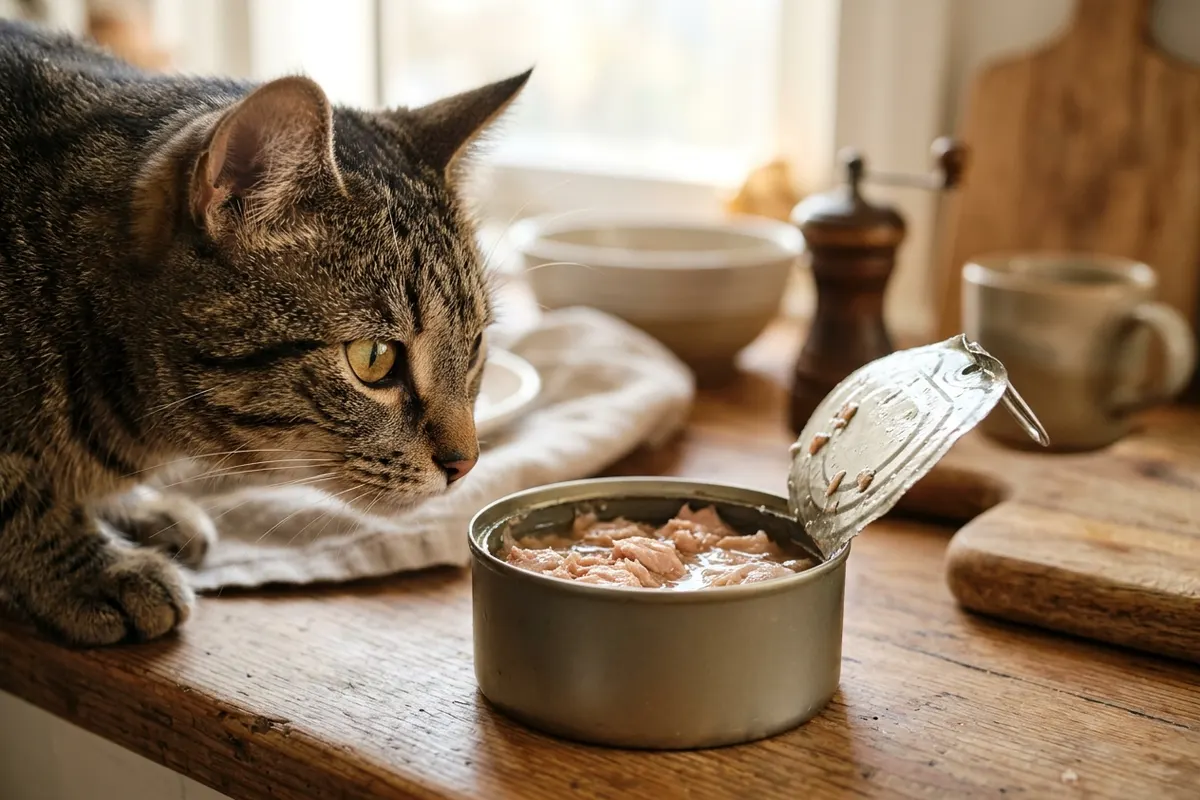
Almost every cat rushes to the kitchen when hearing a can opening. The intense aroma of tuna is irresistible to their sharp sense of smell, but feeding human canned tuna to cats can quickly lead to severe malnutrition, sodium toxicity, and painful inflammatory conditions.
In this guide
1. The Seafood Myth in Feline Nutrition
While popular cartoons depict cats devouring fish, domestic cats (Felis catus) descend from African wildcats (Felis lybica) that evolved in arid desert climates hunting rodents, birds, and insects. Fish was never a natural part of their evolutionary diet.
Feeding human canned tuna poses four major physiological threats to obligate carnivores:
| Risk Factor | Human Canned Tuna | Feline Biological Requirement | Clinical Consequence |
|---|---|---|---|
| Vitamin E (Alpha-tocopherol) | Virtually nonexistent | High (protects cellular lipids) | Pansteatitis (Yellow Fat Disease) |
| Sodium (Added Salt) | 300 - 450 mg / 100g | 20 - 40 mg | Renal stress & hypertension |
| Taurina | Thermally degraded | 1000 - 2500 mg/kg DM | Dilated cardiomyopathy & retinal degeneration |
| Mercury | High bioaccumulation | Near zero tolerance | Cumulative neurotoxicity |
---
2. Pansteatitis: The Agony of Yellow Fat Disease
Pansteatitis (steatitis) is an agonizing metabolic condition caused by high intake of unsaturated fatty acids paired with a deficiency of vitamin E. Without antioxidant defense, body fat undergoes widespread oxidative degradation, turning body fat into painful, inflamed, firm yellow-brown nodules.
Common Clinical Symptoms:
- Severe sensitivity to touch: The cat flinches, growls, or bites when gently touched along the back or belly.
- Reluctance to move: Walking with a stiff, hunched gait; avoiding jumps or climbing.
- Persistent fever: High body temperature unresponsive to typical antibiotics.
- Palpable subcutaneous lumps: Hardened fat pockets under the skin.
---
3. Sodium Strain, Mercury, and "Tuna Addiction"
Cats have concentrated urine and delicate kidneys. The brine and salted water in human canned tuna create an immediate osmotic shock, increasing blood pressure and accelerating kidney decline.
Furthermore, tuna contains intense natural umami compounds (nucleotides) that can trigger behavioral fixations: cats become "tuna junkies," outright refusing balanced commercial cat food.
If your cat exhibits intense pain, lethargy, or signs of sodium overload, find immediate clinical help via Emergency veterinarians near you.
---
4. Safe Treats: How to Offer Tuna Responsibly
If your cat craves tuna, keep these veterinary boundaries in mind:
- Never tuna canned in vegetable or olive oil: Excess oil triggers acute diarrhea and life-threatening pancreatitis.
- Water-packed, no salt added only: Limit portions to a single teaspoon (10 grams) once every two weeks as a rare reward.
- Choose complete cat-formulated cans: Feline canned tuna products are specifically fortified with vitamin E, taurine, and balanced minerals.
---
Veterinary Sources and Clinical References
- National Research Council (NRC): Nutrient Requirements of Dogs and Cats: Vitamin E and Polyunsaturated Fatty Acids Interactions in Felines.
- Niza, M. M., Vilela, C. L., & Ferreira, L. M. (2003): Feline pansteatitis revisited: A study of clinical cases and dietary implications, Journal of Feline Medicine and Surgery.
- Dzanis, D. A. (2018): Mercury and heavy metal concentrations in commercial marine-based pet foods, Veterinary Clinics of North America: Small Animal Practice.
- American Association of Feline Practitioners (AAFP): Feline Feeding and Nutrition Guidelines.
Caring for a cat? Keep their health in your pocket
Register your cat on Nekolife to track vaccination history, weight, and get advice from loving cat parents.
- Vaccine & weight records
- Supportive cat community
- Earn Meow Points & badges
Related pages
Know someone who needs this?