Grain-Free Cat Food: Myths, Realities and Feline Cardiac Health
In recent years, the "grain-free" label has become one of the most prominent marketing claims in pet food aisles, marketed as the natural, ancestral diet for domestic felines. However, beneath advertising promises of wild feline wellness lie complex formulation tradeoffs, including high legume substitution and serious veterinary concerns regarding taurine bioavailability and heart function.
In this guide
1. Obligate Carnivores and Carbohydrate Digestion
The domestic cat (Felis catus) is a strict obligate carnivore. Unlike omnivores, feline metabolic pathways are optimized exclusively for animal proteins and fats:
- Absence of salivary amylase: Cats lack ptyalin in their saliva, meaning starch digestion does not initiate in the mouth.
- Minimal hepatic glucokinase: Cats rely on low-affinity hexokinase to process glucose, preventing insulin surges but limiting rapid sugar clearance.
- Unregulated gluconeogenesis: Feline hepatic enzymes constantly convert amino acids (such as alanine, arginine, and glutamate) into blood glucose, regardless of dietary carbohydrate intake.
Despite these evolutionary specializations, peer-reviewed clinical research (Verbrugghe & Hesta) demonstrates that domestic cats can digest properly cooked, extruded starch with greater than 90% efficiency, via pancreatic amylase and mucosal brush-border enzymes. Cooked grains are neither inherently toxic nor indigestible, but chronically high carbohydrate intake promotes obesity and insulin resistance.
---
2. The Commercial Grain-Free Mirage: What Replaces Grains?
The grain-free movement arose primarily as a human marketing trend transferred to companion animals. Grains were branded as cheap fillers responsible for allergies and weight gain.
However, dry kibble manufacturing requires starch gelatinization under high heat and pressure to bind ingredients into crunchy pellets. When wheat, corn, or rice are eliminated, manufacturers substitute them with:
- Yellow and green peas (whole peas, pea flour, pea protein, and pea fiber).
- Lentils and chickpeas.
- Potatoes, sweet potatoes, and tapioca starch.
Consequently, many formulas boasting "GRAIN-FREE" banners contain 30% to 45% soluble carbohydrates (Nitrogen-Free Extract), matching or exceeding traditional grain-inclusive recipes.
---
3. Taurine Bioavailability and Dilated Cardiomyopathy (DCM)
Starting in 2018, the US Food and Drug Administration (FDA) launched an epidemiological inquiry into atypical dilated cardiomyopathy (DCM) cases in pets fed diets rich in peas, lentils, and potatoes.
In felines, taurine is an irreplaceable essential amino acid. Cats cannot synthesize sufficient taurine from cysteine because the enzyme cysteine sulfinic acid decarboxylase has minimal activity. Crucially, cats conjugate bile acids exclusively with taurine rather than glycine.
How Legumes Interfere with Feline Biology:
- Ingredient splitting: Brands divide legumes into multiple sub-ingredients (e.g., peas, pea protein, pea fiber) so that fresh meat appears as the first listed ingredient.
- Bile acid binding: Legume fibers and phytates bind tauroconjugated bile acids in the intestinal lumen, inhibiting ileal reabsorption and increasing fecal loss.
- Functional taurine deficiency: Even when total dietary taurine meets minimum laboratory standards, reduced bioavailability can gradually compromise myocardial contractility over years.
---
4. How to Read and Evaluate Cat Food Labels
To select optimal feline dry food based on scientific nutrition rather than marketing claims, apply these guidelines:
- Calculate the carbohydrate content (NFE):
```
% Carbs (NFE) = 100 - % Crude Protein - % Crude Fat - % Crude Fiber - % Crude Ash - % Moisture
```
For healthy cats, aim for dry matter carbohydrates below 15-20%.
- Check the first three ingredients: These should consist of clearly identified meat or fish sources (e.g., "deboned chicken," "salmon meal"), avoiding ambiguous animal by-product meals.
- Monitor crude ash: Ash levels above 7.5-8% indicate high bone content rich in phosphorus and magnesium, which strains feline kidney function over time.
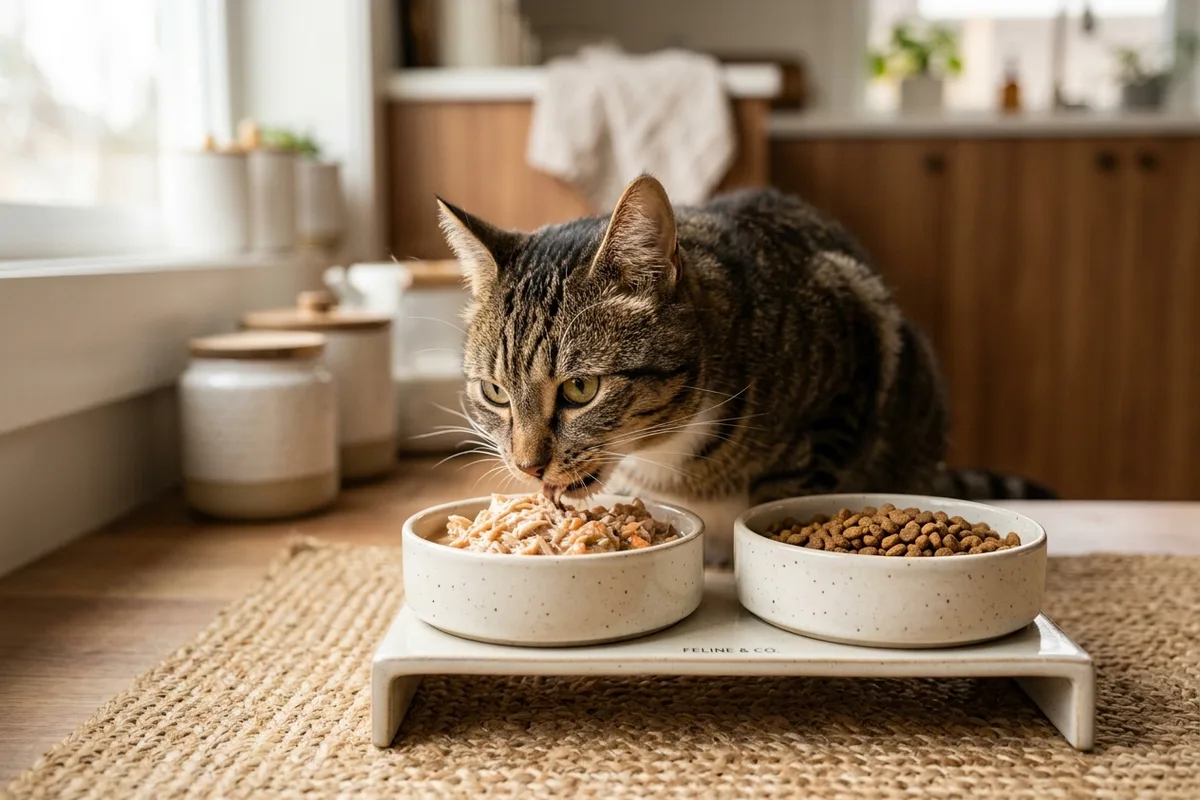
- Prioritize dietary moisture: No dry kibble, regardless of its ingredient quality, can compensate for low feline thirst drive. Always feed at least 50% high-moisture complete wet food daily.
---
Sources & Scientific References
- U.S. Food and Drug Administration (FDA) (2021): FDA Investigation into Potential Link between Certain Diets and Canine/Feline Dilated Cardiomyopathy, Center for Veterinary Medicine (CVM).
- Verbrugghe, A., & Hesta, M. (2017): Cats and Carbohydrates: The Carnivore Fantasy?, Veterinary Sciences, 4(4), 55.
- Mansilla, W. D., Marinangeli, C. P., Ekenstedt, K. J., et al. (2019): The effect of pulse ingredients on nutrient digestibility and taurine status in cats, Journal of Animal Science, 97(11), 4523-4534.
- European Pet Food Industry Federation (FEDIAF) (2023): Nutritional Guidelines for Complete and Complementary Pet Food for Cats and Dogs.
Caring for a cat? Keep their health in your pocket
Register your cat on Nekolife to track vaccination history, weight, and get advice from loving cat parents.
- Vaccine & weight records
- Supportive cat community
- Earn Meow Points & badges
Related pages
Know someone who needs this?