Feline Anorexia and Hepatic Lipidosis: Why 48 Hours Without Food Is a Fatal Medical Emergency
Unlike humans or dogs who can tolerate fasting by safely metabolizing peripheral fat stores, the obligate carnivore metabolism of the feline responds catastrophically to caloric deprivation. When a cat stops eating for more than 24 to 48 hours, its body initiates a devastating cascade known as feline hepatic lipidosis (fatty liver disease). Without immediate veterinary medical intervention, this acute hepatic failure carries a mortality rate exceeding 90% in untreated patients.
In this guide
1. Pathophysiology of Feline Hepatic Lipidosis
The feline liver requires constant supplies of specific dietary amino acids (such as methionine, carnitine, and choline) to assemble very low-density lipoproteins (VLDL) that export triglycerides out of liver tissue.
During anorexia triggered by underlying illness, dental pain, or severe stress and anxiety in cats:
- Peripheral adipose tissue undergoes uncontrolled lipolysis.
- Immense quantities of free fatty acids flood the liver.
- Lacking essential amino acids to process them into exportable VLDL, triglycerides accumulate inside hepatocytes.
- Swollen liver cells compress intrahepatic bile canaliculi, triggering cholestasis, liver failure, and toxic encephalopathy.
---
2. Common Causes of Refusal to Eat
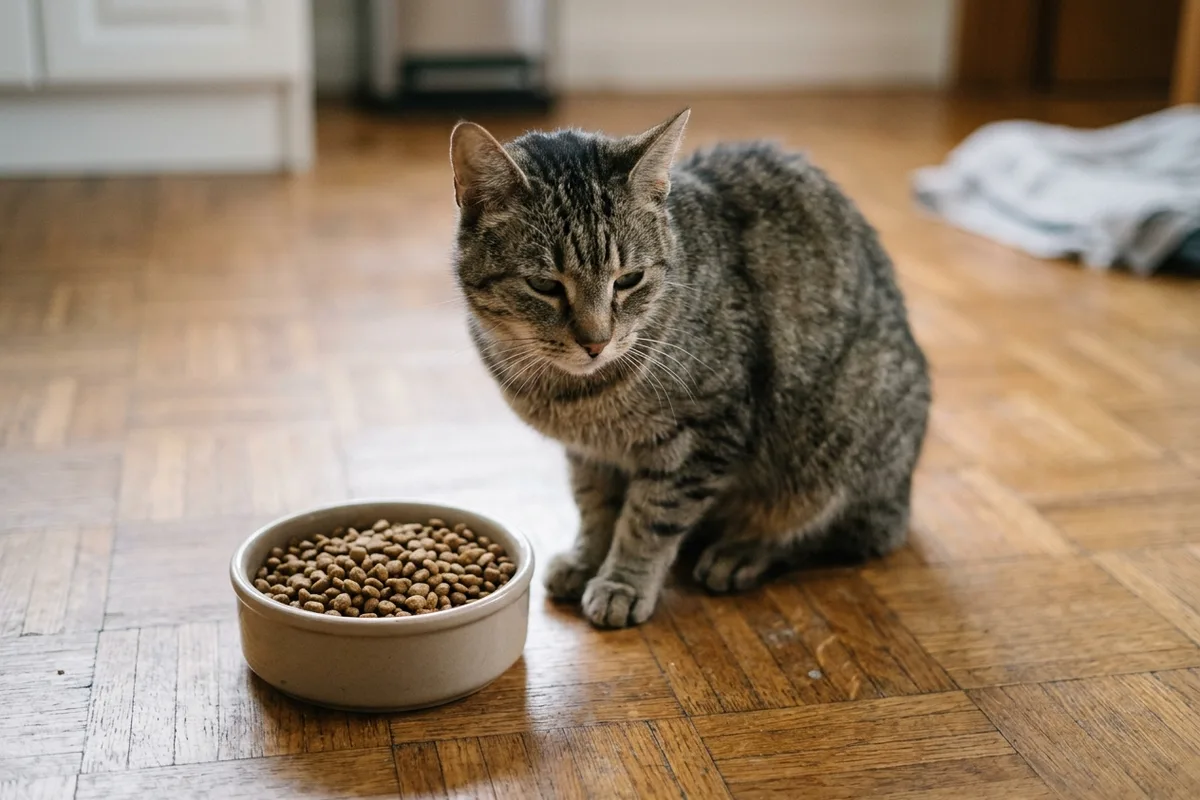
Anorexia is almost never stubbornness:
- Pain: Dental resorptive lesions (FORL) or pancreatitis, as outlined in our guide on how to tell if a cat is in pain.
- Uremic Nausea: Seen in cats with chronic kidney disease in cats.
- Upper Respiratory Infections: Loss of smell leads to total refusal to eat.
---
When to Seek Emergency Veterinary Care
Transport your cat to an emergency veterinary hospital immediately if:
- Your cat has not eaten solid food for 36 to 48 hours.
- Noticeable yellow tint (jaundice/icterus) appears in the sclera, gums, or inner ear flaps.
- Excessive drooling (ptyalism), extreme weakness, or ventroflexion (inability to lift the head due to severe hypokalemia).
- Persistent vomiting and profound lethargy.
Locate an emergency veterinary hospital equipped for intensive care and enteral tube placement:
---
Sources and Scientific Citations
- Center, S. A. (2005). Feline hepatic lipidosis. Veterinary Clinics of North America: Small Animal Practice, 35(1), 225-269.
- Armstrong, P. J., & Blanchard, G. (2009). Hepatic lipidosis in cats. JFMS, 11(3), 203-216.
- Valtolina, S., & Favier, R. P. (2017). Feline hepatic lipidosis: pathophysiology, diagnostic approach, and nutritional management. JFMS, 19(5), 457-466.
- FEDIAF (2024). Nutritional Guidelines for Complete and Complementary Pet Food for Cats and Dogs.
Caring for a cat? Keep their health in your pocket
Register your cat on Nekolife to track vaccination history, weight, and get advice from loving cat parents.
- Vaccine & weight records
- Supportive cat community
- Earn Meow Points & badges
Related pages

Know someone who needs this?