Veterinary Guide to Feline Supplements: When to Use, Dosages, and Toxicity Risks
In modern feline care, there is a common misconception that adding supplements to every meal automatically boosts feline vitality. However, the feline metabolism is uniquely specialized, and any excess or nutritional imbalance can trigger acute hepatopathy, hypervitaminosis, or pancreatitis. When administered under strict veterinary indications, marine omega-3s, species-specific probiotics, and digestive malt pastes provide invaluable clinical support.
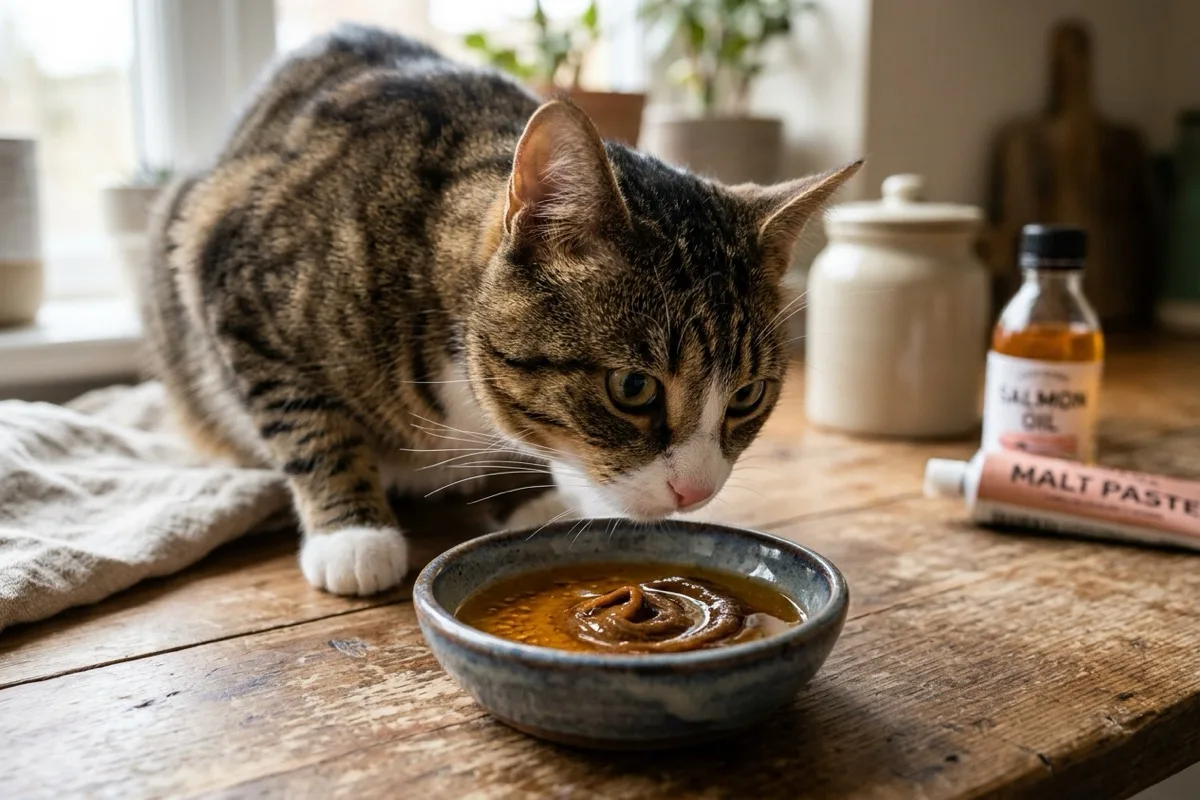
In this guide
1. Salmon Oil and Marine Omega-3s: EPA, DHA, and Safe Dosing
Long-chain polyunsaturated omega-3 fatty acids—specifically eicosapentaenoic acid (EPA) and docosahexaenoic acid (DHA)—are potent cellular modulators that outcompete the pro-inflammatory arachidonic acid cascade.
Why plant-based Omega-3 fails in cats
As obligate carnivores, cats evolved consuming whole prey rich in finished animal lipids. Their livers display negligible delta-6-desaturase and delta-5-desaturase enzyme activity, rendering them biologically unable to synthesize sufficient EPA and DHA from plant alpha-linolenic acid (ALA). Feeding flaxseed, chia, or hemp oil adds empty dietary calories and increases the burden of hepatic lipid storage without exerting clinical anti-inflammatory action.
Validated clinical applications
- Chronic Kidney Disease (CKD): EPA mitigates glomerulosclerosis and attenuates intraglomerular capillary hypertension, curbing proteinuria and slowing functional nephron decline.
- Osteoarthritis and Mobility: Inhibits chondrocyte inflammatory enzymes (matrix metalloproteinases), allowing senior cats to climb and access litter boxes comfortably.
- Dermatological Barrier: Elevates epidermal ceramide production, diminishing pruritus in allergic dermatitides and banishing persistent dry dander.
Dosage, freshness, and anti-oxidation rules
- Therapeutic dosage: 30 to 40 mg combined EPA + DHA per kg of body weight daily. For an average 4 kg adult cat, this translates to 120–160 mg of active EPA/DHA.
- Rancidity hazards: Polyunsaturated fats degrade swiftly when exposed to air and ultraviolet rays. Oxidized fish oil produces toxic lipid peroxides that irritate gastric mucosa. Always choose opaque bottles equipped with vacuum airless pump dispensers and store refrigerated upon opening.
- Vitamin E balance: Long-term high-dose omega-3 intake consumes systemic alpha-tocopherol. Verify that your supplement contains mixed natural tocopherols to guard against feline steatitis (yellow fat disease).
---
2. Digestive Malt Paste: Mechanics Against Trichobezoars
Grooming is an instinctive behavior wherein rigid, backward-facing filiform papillae collect shed hair. Normally, gastric peristalsis passes hairs into the duodenum, but during shedding cycles or in long-haired breeds, hairs tangle into dense trichobezoars.
Mode of action
High-grade malt extract forms a gentle mucilaginous barrier around ingested hair clumps, softening the mass and assisting smooth peristaltic transit through the pylorus and ileocecal junction into the feces without inducing vomiting.
Choosing safe malt pastes
- No added sugars: Avoid formulations loaded with sucrose or glucose syrup, which drive feline obesity, diabetes, and dental plaque.
- Eliminate liquid paraffin / white petrolatum dependence: Petroleum derivatives create an impermeable film over intestinal villi, impairing the natural absorption of fat-soluble vitamins (A, D, E, K).
- Administration guidelines: 1 to 2 cm of paste squeezed onto your finger, their front paw, or mixed into wet food:
- Short-haired cats: 1–2 times weekly.
- Medium/long-haired cats (or during peak molting): 3–4 times weekly.
---
3. Feline Probiotics: Restoring the Gut-Immune Axis
Over 70% of a cat’s immune system resides in the gut-associated lymphoid tissue (GALT). When gastrointestinal dysbiosis occurs, commensal flora collapses, allowing pathogens such as Clostridium perfringens and Salmonella to flourish.
Clinically proven feline probiotic strains
- **Enterococcus faecium (strain SF68):** The most extensively researched probiotic in feline medicine. Withstands gastric hydrochloric acid and bile salts, adhering securely to feline enterocytes, reducing stress-related diarrhea in shelters, and elevating mucosal secretory IgA.
- **Bifidobacterium animalis (strain AHC7):** Excellent for managing acute large-bowel colitis and inflammatory flare-ups.
- **Lactobacillus acidophilus:** Lowers luminal intestinal pH by generating lactic acid, deterring pathogen colonization.
When to administer probiotics
- During and after antibiotic regimens: Start concurrently on day one (staggered at least 3 to 4 hours away from antibiotic dosing) and continue for 10–14 days post-medication.
- Dietary transitions and environmental stress: Offer preemptively 3 days before dietary switches, travel, or veterinary visits to buffer stress-induced hyperpermeability.
---
4. Chondroprotectants for Feline Joint Health
Cats rarely limp visibly when suffering from joint degeneration; instead, they exhibit subtle behavioral shifts—sleeping more, refusing high jumps, or defecating outside their litter tray due to painful rim stepping.
Essential joint ingredients
- Glucosamine HCl & Low Molecular Weight Chondroitin Sulfate: Structural substrates for glycosaminoglycans within articular cartilage and synovial fluid.
- *Green-Lipped Mussel (Perna canaliculus):* Provides unique eicosatetraenoic acid (ETA) isomers that block both COX and LOX inflammatory cascades.
- Undenatured Type II Collagen (UC-II): Modulates joint autoimmunity via oral tolerance mechanisms.
---
5. Comparison Guide for Common Cat Supplements
| Supplement | Key Active Compound | Primary Indication | Dosage Schedule | Critical Caution |
|---|---|---|---|---|
| Wild Salmon Oil | Preformed EPA + DHA | Kidney health, joint inflammation, coat | Daily (30-40 mg/kg) | Keep refrigerated; avoid oxidized oil |
| Malt Paste | Mucilaginous malt fiber | Hairballs and bowel regularity | 2-4 times weekly | Reject added sugars and heavy mineral oils |
| Probiotics | Enterococcus faecium SF68 | Dysbiosis, acute diarrhea, antibiotics | 10-30 day cycles | Space 3-4 hours apart from antibiotics |
| Chondroprotectants | Glucosamine + Chondroitin + UC-II | Osteoarthritis, spinal stiffness | Daily ongoing | Requires veterinary mobility assessment |
---
6. Toxicity Risks: Why Human Supplements Are Lethal to Cats
The greatest hazard in feline supplementation is applying human products to a cat's ultra-sensitive physiology:
- Hypervitaminosis A: Overdosing human cod liver oil or retinol supplements causes dramatic cervical spinal exostosis and fusion (deforming spondylosis), freezing the neck and causing excruciating pain.
- Hypervitaminosis D and Tissue Calcification: Cats have minimal tolerance for excess cholecalciferol (Vitamin D3). Toxicity causes hypercalcemia and metastatic calcification of the kidneys, myocardium, and lungs, culminating in irreversible acute kidney failure in under 48 hours.
- Dangerous Excipients: Xylitol (lethal sweetener), garlic powder, and onion extracts present in "natural" human herbal pills induce oxidative Heinz body hemolytic anemia, destroying feline red blood cells.
---
When to Seek Emergency Veterinary Care
If your cat has accidentally consumed human vitamins, oil capsules, or exhibits acute signs of poisoning, immediate medical intervention is critical:
- Unstoppable vomiting, hypersalivation, or bloody diarrhea.
- Extreme lethargy, collapse, or uncoordinated drunken gait (ataxia).
- Polyuria (excessive urination) rapidly turning into anuria (inability to produce urine).
- Muscle tremors, seizures, or unreactive dilated pupils.
Locate an emergency veterinary hospital equipped for rapid decontamination, diuresis, and blood biochemistry:
---
Sources and Scientific Citations
- Bauer, J. E. (2011). Nutritional review: Metabolic basis for the essential nature of fatty acids in cats and dogs. Journal of the American Veterinary Medical Association (JAVMA), 239(5), 596-601.
- Bybee, S. N., Scorza, A. V., & Lappin, M. R. (2011). Effect of the probiotic Enterococcus faecium SF68 on presence of diarrhea in cats and dogs housed in an animal shelter. Journal of Veterinary Internal Medicine (JVIM), 25(4), 856-860.
- Lascelles, B. D. X., et al. (2010). Evaluation of a therapeutic diet for feline degenerative joint disease. Journal of Veterinary Internal Medicine, 24(3), 487-495.
- National Research Council (NRC). (2006). Nutrient Requirements of Dogs and Cats. National Academies Press, Washington, D.C.
- FEDIAF (2024). Nutritional Guidelines for Complete and Complementary Pet Food for Cats and Dogs. European Pet Food Industry Federation.
- Mellanby, R. J., et al. (2005). Hypervitaminosis D in cats: Clinical and pathological findings. Journal of Feline Medicine and Surgery (JFMS), 7(4), 235-241.
Caring for a cat? Keep their health in your pocket
Register your cat on Nekolife to track vaccination history, weight, and get advice from loving cat parents.
- Vaccine & weight records
- Supportive cat community
- Earn Meow Points & badges
Related pages
Know someone who needs this?