Feline Ear Mites (Otodectes cynotis): Symptoms, Black Discharge, and Treatment
Ear mites, caused by the microscopic surface parasite Otodectes cynotis, are the single most prevalent cause of feline external otitis, accounting for up to 50-80% of ear complaints in kittens and shelter cats. These non-burrowing mites live on the surface of the external ear canal, feeding on epidermal debris and tissue fluids, producing unbearable pruritus that leads to relentless scratching and a hallmark dark brown to black crumbly exudate resembling coffee grounds.
In this guide
1. Life Cycle and Biology of Otodectes cynotis
The entire life cycle of Otodectes cynotis spans approximately 18 to 21 days from egg to reproductive adult. As thousands of mites crawl across the sensitive canal lining, their feeding mechanics and antigens trigger an intense hypersensitivity reaction.
Mites occasionally venture outside the ear canal, roaming around the neck, rump, and tail tip, producing mild crusting miliary dermatitis.
---
2. Classical Clinical Symptoms
- Frantic Ear Scratching: Frequent digging at the base of the ears, causing self-inflicted excoriations and hair loss behind the pinnae.
- Vigorous Head Shaking: Repetitive head flicking in an attempt to dislodge the irritating debris.
- Coffee-Ground Exudate: Heavy buildup of dry, blackish-brown wax coating the vertical and horizontal ear canals.
- Secondary Infections: Compromised ear canal barriers invite secondary yeast (Malassezia) or bacterial overgrowths, adding a rancid, sour odor.
---
3. In-Clinic Veterinary Diagnostics
Identification is simple and definitive:
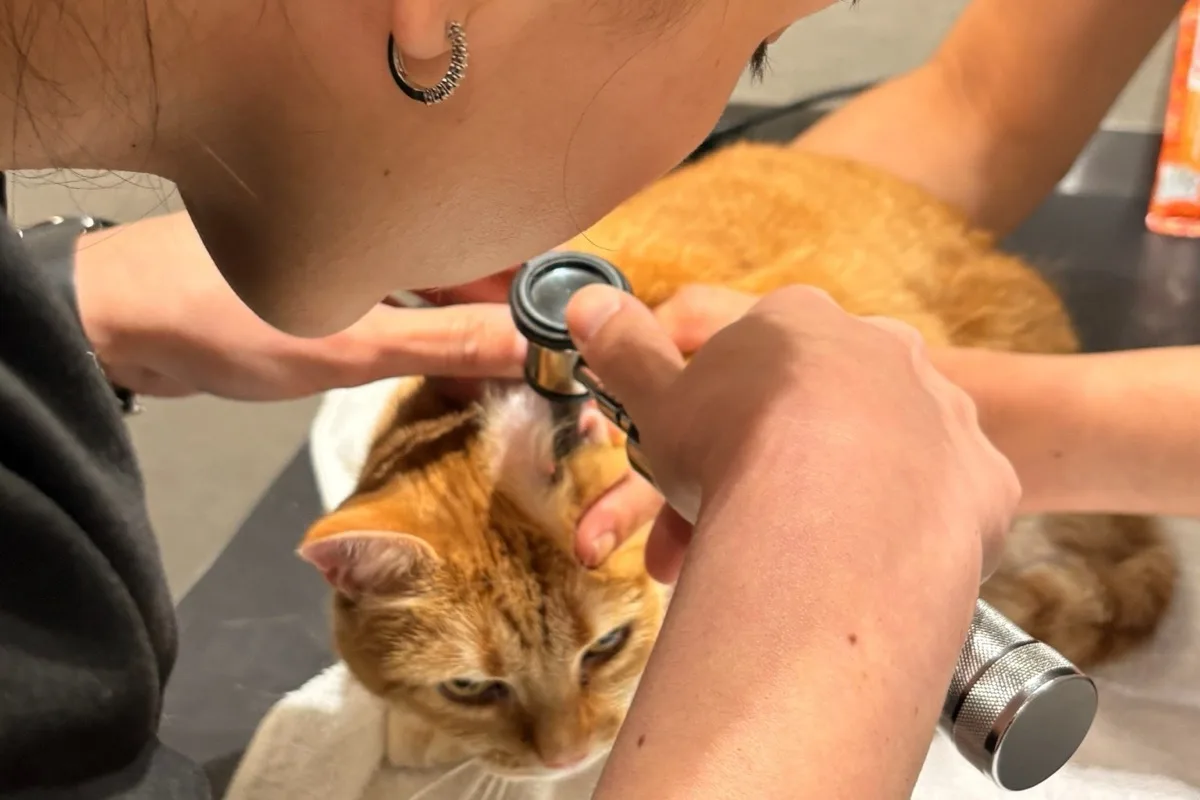
- Direct Otoscopy: Magnification reveals tiny white, eight-legged specks scurrying away from the examination light.
- Microscopic Mineral Oil Prep: Ear discharge smeared on a slide with a drop of mineral oil demonstrates adult mites, larval nymphs, and oval eggs under low-power magnification.
---
4. Definitive Treatment and Gentle Ear Hygiene
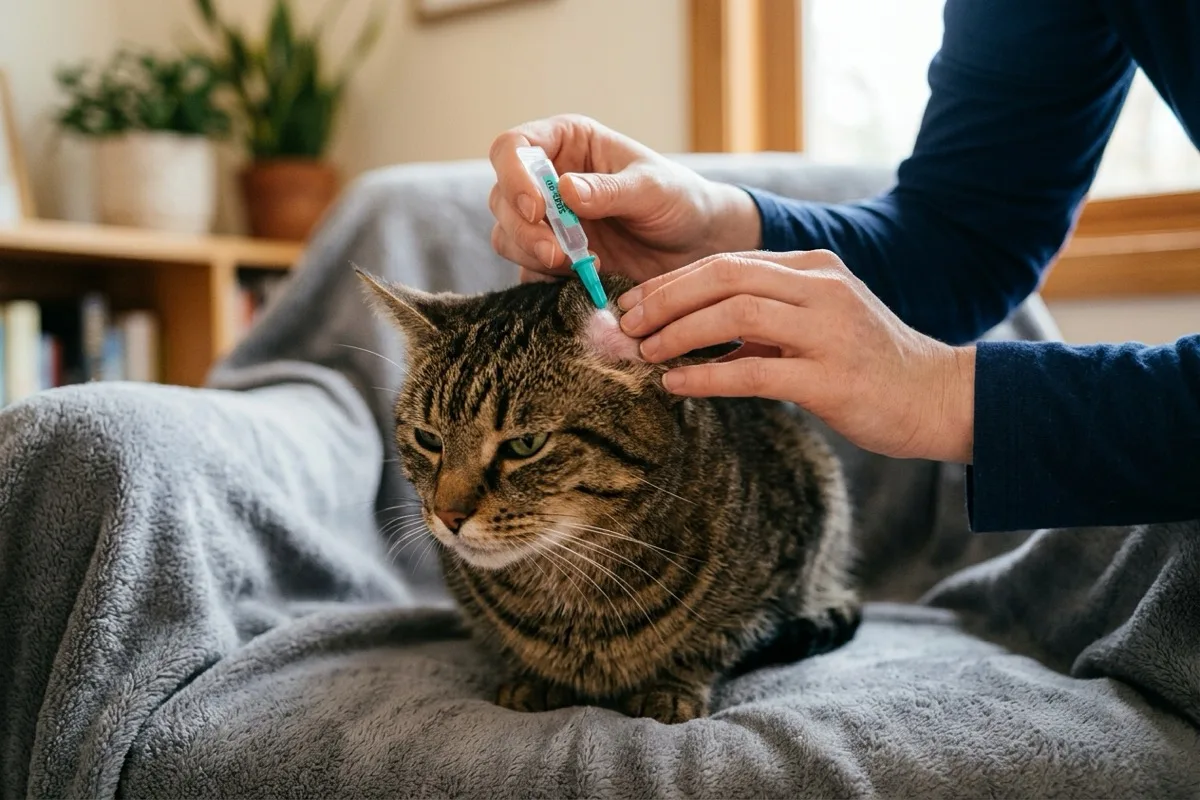
- Prescription Spot-On Medications: Single-dose spot-on parasiticides containing isoxazolines (fluralaner) or macrocyclic lactones (selamectin) offer 100% mite clearance through sebum distribution.
- Ear Flush and Wax Debridement: Flushing with a veterinary ceruminolytic cleanser dissolves heavy wax plugs, providing instant relief.
- Household Co-Treatment: Because asymptomatic carrier pets re-infest their housemates, all cohabitating animals must receive spot-on treatment on the same day.
---
Scientific Sources and References
- Six, R., et al. (2000). Efficacy of selamectin against Otodectes cynotis on dogs and cats. Vet Parasitol, 91(3-4), 291-309.
- Taenzler, J., et al. (2017). Efficacy of fluralaner spot-on against Otodectes cynotis in cats. Parasit Vectors, 10, 483.
- Curtis, C. F. (2004). Treatment of mite infestations in dogs and cats. Vet Dermatol, 15(2), 108-114.
Caring for a cat? Keep their health in your pocket
Register your cat on Nekolife to track vaccination history, weight, and get advice from loving cat parents.
- Vaccine & weight records
- Supportive cat community
- Earn Meow Points & badges
Related pages
Know someone who needs this?