Feline Chin Acne: Blackheads, Plastic Bowl Hazards, and Effective Antiseptic Care
Have you noticed tiny black specks resembling coffee grounds or pepper flakes clustered on your cat's chin and lower lip? This is not ordinary dirt or dried food debris: it is feline chin acne, a widespread dermatological disorder driven by follicular keratinization defects and sebaceous hyperplasia.
This guide is not a substitute for a vet.
In this guide
1. Primary Triggers of Feline Chin Acne
- Plastic food and water bowls: A cat's chin rubs directly against contaminated plastic rims, introducing bacteria into open sebum-rich follicles.
- Anatomical grooming limitations: The underside of the chin is one of the few zones a cat cannot reach directly with its grooming tongue.
- Chronic stress and immune shifts: Stress elevates cortisol levels, directly augmenting cutaneous sebum production and follicular plugging.
- Underlying allergic disease: Food sensitivities or feline atopic skin syndrome impairing epidermal barrier integrity.
---
2. Three-Step Safe Home Cleansing Protocol
For mild, uninfected chin acne (blackheads without swelling or bleeding):
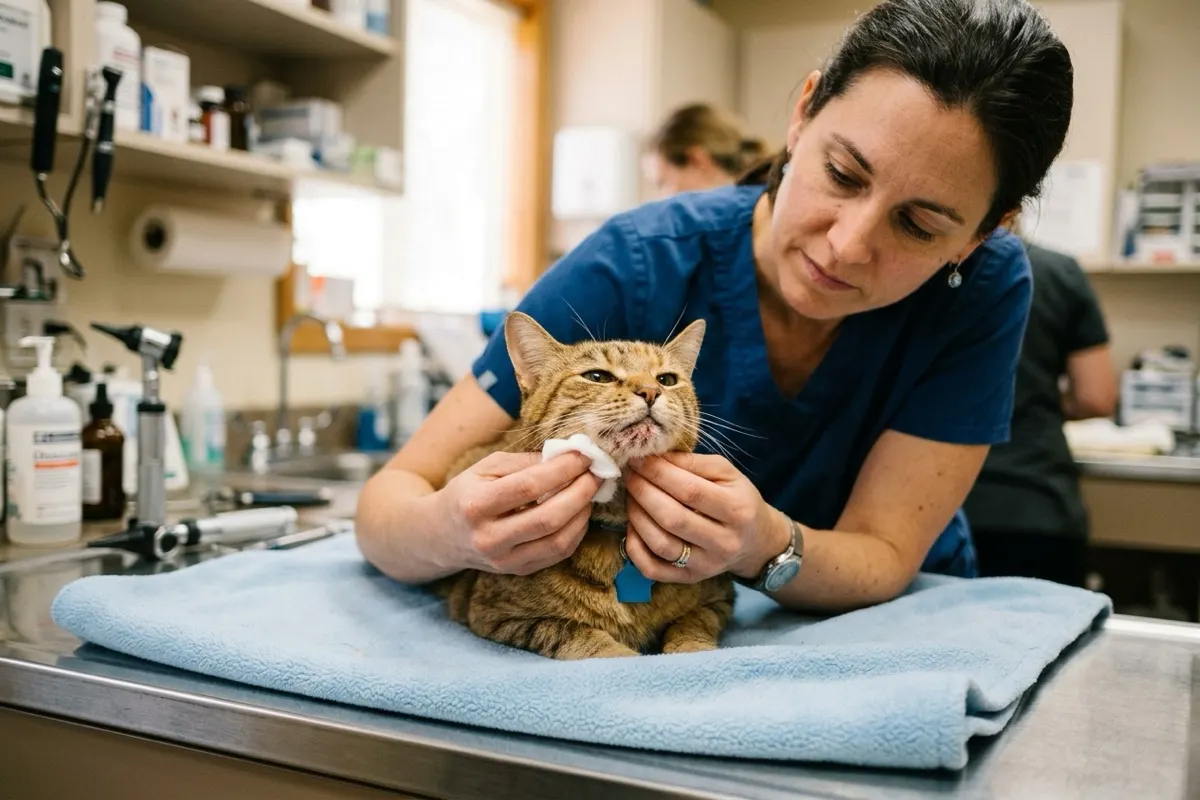
- Step 1: Warm Compresses: Soak a clean gauze pad in warm water (or strained chamomile tea) and hold it gently against the chin for 3 to 5 minutes to soften keratin plugs.
- Step 2: Antiseptic Wipe: Gently dab the area with a gauze pad moistened with 2% chlorhexidine gluconate solution (never use rubbing alcohol or hydrogen peroxide, which chemically burn cat skin).
- Step 3: Pat Dry: Blot gently with a dry paper towel without vigorous friction. Repeat once or twice daily for 14 consecutive days.
---
3. Warning Signs of Severe Bacterial Infection
Feline acne requires immediate veterinary intervention if it transitions from comedones to active infection:
- The chin becomes noticeably swollen, firm, and hot to the touch.
- Red inflammatory papules, whitehead pustules oozing bloody discharge, or thick crusts develop.
- Focal hair loss (alopecia) on the chin and surrounding lip margins.
- Compulsive chin rubbing against hard furniture or frantic scratching with hind claws due to intense pain and pruritus.
---
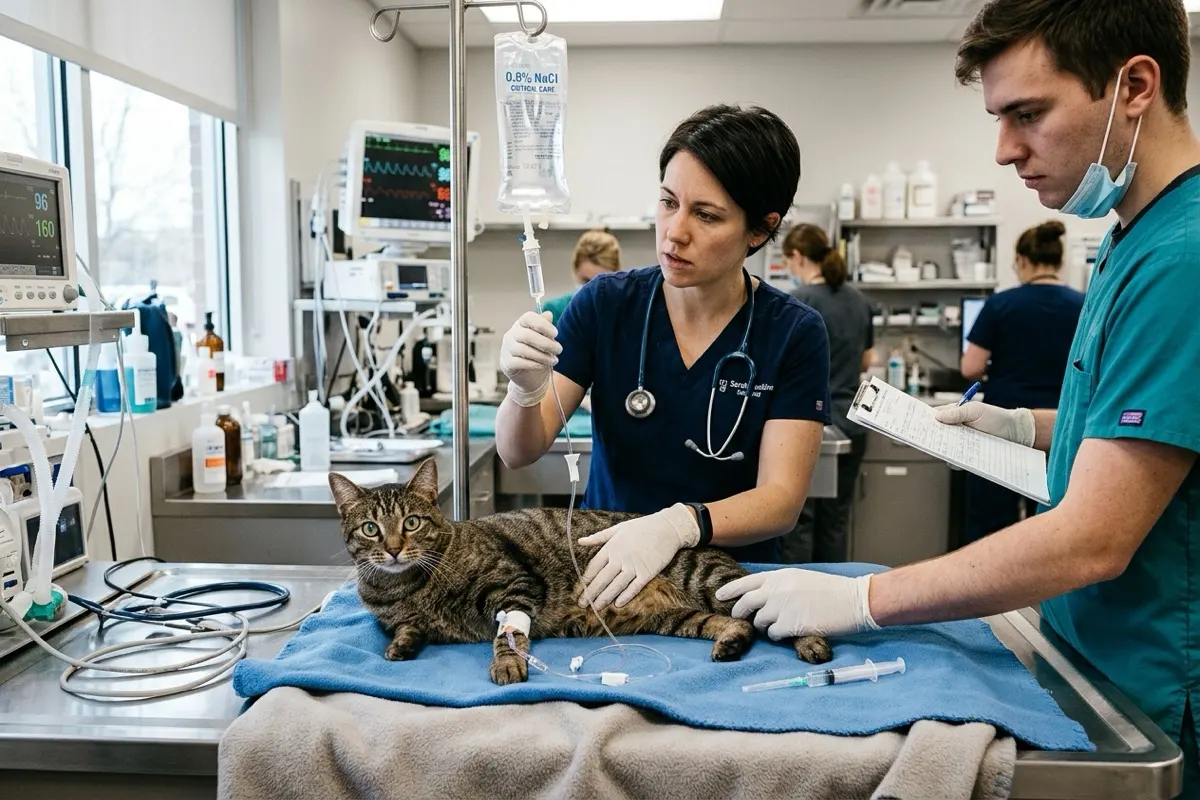
4. When to Seek Emergency Veterinary Care
Schedule an urgent veterinary visit if:
- Open bleeding sores, ulcerations, or draining tracts appear on the chin.
- Your cat refuses to eat due to oral pain upon opening the mouth or brushing the bowl.
- Facial swelling is rapidly spreading toward the cheeks or throat.
Locate expert clinical care in our directory of emergency veterinary clinics.
---
Scientific References and Sources
- Veterinary Dermatology: Feline acne: Clinical features, histopathological findings, and therapeutic evaluation of topical treatments.
- Journal of Feline Medicine and Surgery: Dermatological disorders of the feline chin: A retrospective review of feline acne and differential diagnoses.
- ESVD (European Society of Veterinary Dermatology): Guidelines for the Management of Keratinization Disorders in Cats.
Nekolife Community
Caring for a cat? Keep their health in your pocket
Register your cat on Nekolife to track vaccination history, weight, and get advice from loving cat parents.
- Vaccine & weight records
- Supportive cat community
- Earn Meow Points & badges
Create free cat passport →100% free forever
Related pages

Know someone who needs this?