My cat is vomiting: what it means and when to worry
Many cats vomit now and then, but if yours vomits more than once a week or does so with blood, lethargy, or loss of appetite, take them to the vet soon. If they vomit more than once or twice a day, they also need a check-up.
When is it urgent? Signs to see the vet today
Take them to the vet today if they vomit and also:
- Vomits several times on the same day (more than once or twice) or has been vomiting for several days.
- There is blood in the vomit.
- They are lethargic, weak, or won’t eat.
- They have belly pain, fever, or seem dehydrated, or have diarrhea at the same time.
- They retch again and again without bringing anything up: it could be an obstruction or another problem, even a respiratory one such as asthma.
- You suspect they ate something dangerous: lilies, paracetamol or another human medicine, string, yarn, or a small object.
Some causes of severe or long-lasting vomiting can put their life at risk. If you don’t have a trusted vet, find one in Vets near you.
In this guide
Vomiting or regurgitation: how to tell them apart
They are not the same, and it helps the vet to know which one you saw.
Vomiting:
- Beforehand, the cat drools, swallows saliva several times, and retches.
- The belly contracts forcefully.
- They bring up food or fluid from the stomach and the first part of the intestine.
Regurgitation:
- It is passive: it comes up without effort or retching.
- It is usually undigested food.
- Sometimes it has a tube shape, like the esophagus.
Hairballs that cats bring up are also often elongated, like a cigar, because of the tube they pass through.
What it means depending on how the vomit looks
Color or appearance can give clues, but the veterinary sources we consulted do not link each color to a specific cause. What marks urgency is how often they vomit and what other symptoms they have.
Yellow vomit
Vomit can contain secretions from the stomach and intestine, such as bile.
Watch them and check if it repeats. If they vomit more than once a week, take them to the vet soon.
White foam
Appearance alone does not reveal the cause. Note how many times it happens and tell the vet.
Watch them and check if it repeats. Go today if they have repeated retching without bringing anything up.
Clear vomit
As with foam, appearance alone does not reveal the cause. Note how many times it happens and whether they drink more water than usual.
Watch them and check if it repeats or if they drink more water than normal.
Whole or undigested food
If it comes up without effort and in a tube shape, it may be regurgitation rather than vomiting.
Watch them and check if it repeats. Tell the vet whether there was retching or not.
Hair (hairball)
Hair swallowed while grooming that built up in the stomach. A hairball every one or two weeks is not unusual.
Watch them and check if it happens more often. Go today if they are lethargic or retch without bringing anything up.
Vomits every day
That is not normal. It can have many causes, from parasites to kidney, thyroid, or intestinal disease.
See the vet. More than one vomit a week is already a reason to book a visit.
Vomits and won’t eat
Vomiting with loss of appetite appears in many illnesses and in poisonings, such as lily or paracetamol toxicity.
See the vet today.

My cat vomits hair: is that normal?
Bringing up a hairball now and then is normal: when grooming, the rough tongue makes them swallow loose hair, which is not digested. Almost all of it passes in the feces, but some can stay in the stomach and form a ball.
- Every one or two weeks: no cause for concern.
- Long-haired cats: breeds such as the Persian or Maine Coon are at higher risk.
- During shedding season they appear more often. Kittens and young cats have them less than older cats.
- If they groom too much, they may have a skin problem related to a food allergy.
Rarely, a large hairball blocks the intestine, and without surgery it can be fatal. So take them to the vet without delay if they are lethargic, stop eating for more than a day or two, or have repeated retching or vomiting.
Do not give laxatives or “anti-hairball” diets unless your vet advises it.
My cat vomits and won’t eat
A cat that vomits and also eats less needs to see the vet soon. If they have gone more than a day or two without eating, don’t wait any longer.
Also think about whether they could have eaten something toxic:
- Lilies: any part of the plant, the pollen, or the vase water. Early signs are drooling, vomiting, loss of appetite, and lethargy, between 1 and 6 hours later.
- Paracetamol: even a piece of a tablet can kill a cat. Signs include vomiting, loss of appetite, and brown gums.
In both cases it is an emergency: go to the vet immediately.
Later we will have a guide on My cat won’t eat.
Most common causes
Things they ate:
- Toxic plants or spoiled food.
- Human medicines.
- String, yarn, clips, rubber bands, or other objects.
- Toxic substances such as antifreeze, chocolate, or onion.
Health problems:
- Hairballs and constipation.
- Internal parasites.
- Inflammatory bowel disease, food allergy, or intestinal obstruction.
- Kidney or liver disease, pancreatitis, diabetes, or hyperthyroidism.
- Infections and tumors.
What to do at home (and what not to do)
Yes:
- Watch them: note how many times they vomit, what the vomit looks like, and whether they eat, drink, and stay active. Those details decide whether you need the vet.
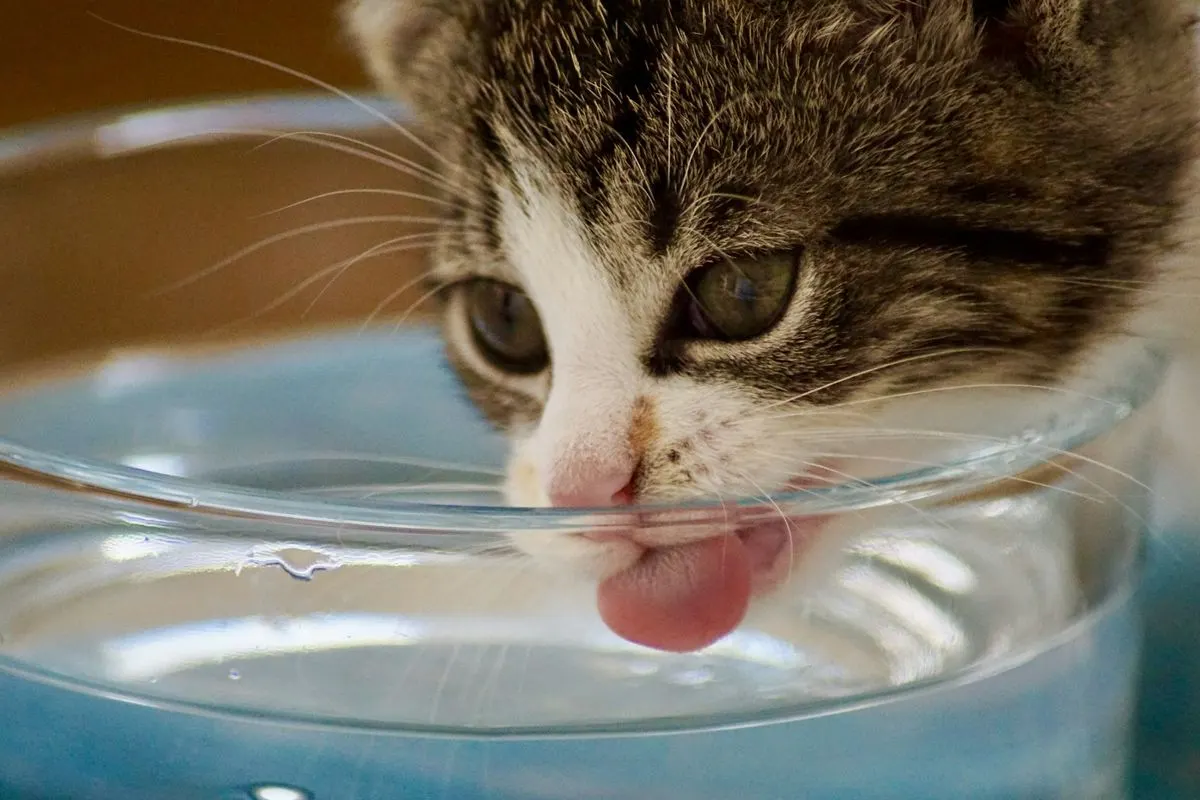
- Leave water available at all times. Don’t take it away unless the vet says so: that can worsen dehydration.
- Check whether they had access to plants, medicines, string, or small objects.
No:
- Don’t give human medicines, or any medicine the vet hasn’t prescribed. Paracetamol, for example, is highly toxic to cats.
- Don’t give laxatives or hairball remedies on your own.
- Don’t wait if any of the urgent signs appear.
How to prevent vomiting
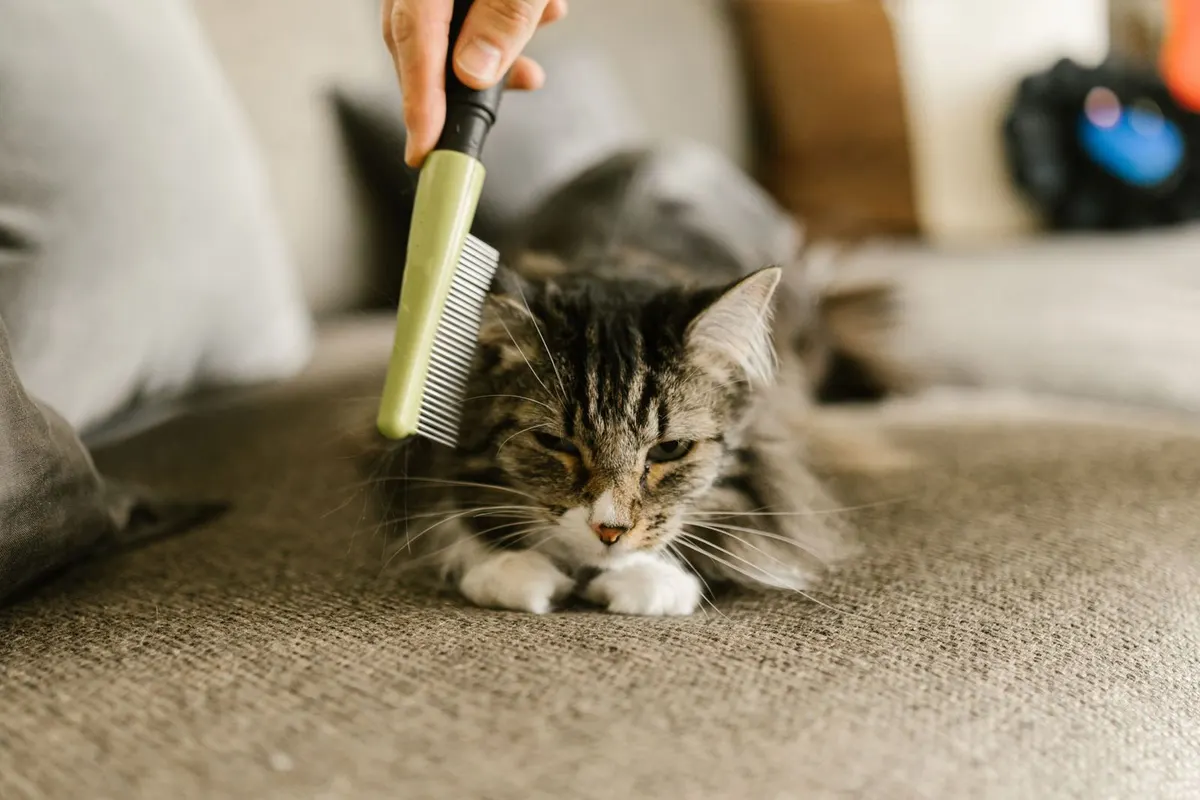
- Brush them every day, especially if they are long-haired or shedding.
- Don’t keep lilies in the house or garden.
- Store medicines out of reach, ideally in a cupboard.
- Put away string, yarn, clips, and rubber bands.
- Don’t give chocolate or onion.
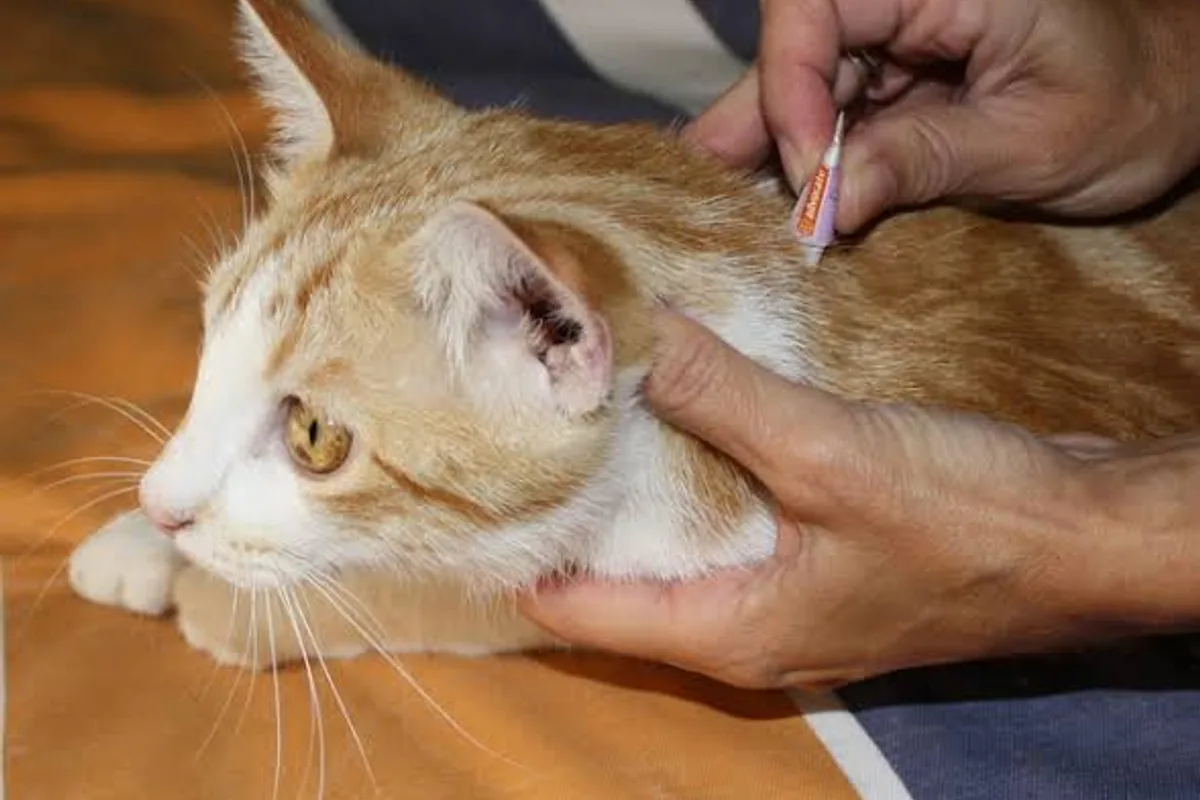
- Control parasites: internal parasites can cause vomiting. Ask your vet how to deworm them; we explain it in Deworming your cat.
- Control fleas: by swallowing an infected flea, the cat can get a tapeworm. See our guide on fleas in cats.

Frequently asked questions
Is it normal for my cat to vomit?
Many cats vomit now and then. But if they vomit more than once a week, or have other symptoms such as lethargy or loss of appetite, take them to the vet.
Why does my cat vomit yellow?
Vomit can contain secretions from the stomach and intestine, such as bile. If it happens once and the cat is fine, watch them; if it repeats, check with the vet.
Why does my cat vomit white foam?
It is usually stomach fluid without food. If they retch repeatedly without bringing anything up, take them to the vet without delay.
Why does my cat vomit whole food?
If it comes up without effort, it may be regurgitation: undigested food, sometimes tube-shaped. If it repeats, talk with your vet.
Is it normal for my cat to vomit hair?
Yes, a hairball every one or two weeks is not unusual. Daily brushing helps prevent them.
When should I take my cat to the vet for vomiting?
If they vomit more than once a week, more than once or twice in a day, or if there is blood, lethargy, loss of appetite, pain, fever, or diarrhea.
What should I give my cat if they vomit?
Nothing without talking to the vet first: human medicines can be highly toxic to cats. Leave water available.
My cat vomited a parasite — what do I do?
Take them to the vet: internal parasites can cause vomiting and need treatment. If you can, take a photo to show them.
Caring for a cat? Keep their health in your pocket
Register your cat on Nekolife to track vaccination history, weight, and get advice from loving cat parents.
- Vaccine & weight records
- Supportive cat community
- Earn Meow Points & badges
Related pages

Sources
- "Vomiting". Cornell Feline Health Center, Cornell University College of Veterinary Medicine. vet.cornell.edu
- "Vomiting in Cats" (owner section). Merck Veterinary Manual. Updated September 2024. merckvetmanual.com
- "The Danger of Hairballs". Cornell Feline Health Center, Cornell University College of Veterinary Medicine. vet.cornell.edu
- "Paracetamol poisoning in cats". International Cat Care (iCatCare). Updated September 26, 2025. icatcare.org
- "Lily poisoning in cats". International Cat Care (iCatCare). Updated September 26, 2025. icatcare.org
- "About Dog or Cat Tapeworm Infection". Centers for Disease Control and Prevention (CDC). cdc.gov
Know someone who needs this?