Feline Herpesvirus (FHV-1) Conjunctivitis: Eye Discharge, Blepharospasm, and Steroid Dangers
Ocular inflammation is among the most frequent clinical presentations in feline veterinary practice. Unlike dogs and humans, where conjunctivitis is commonly allergic or environmental, more than 80% of feline conjunctivitis cases are driven by Feline Herpesvirus-1 (FHV-1). Once contracted, FHV-1 establishes lifelong latency within the sensory neurons of the trigeminal ganglia, reactivating during periods of psychological stress, illness, or immunosuppression.
In this guide
1. How Herpesvirus Attacks the Feline Eye
FHV-1 exhibits an exclusive biological tropism for corneal and conjunctival epithelial cells:
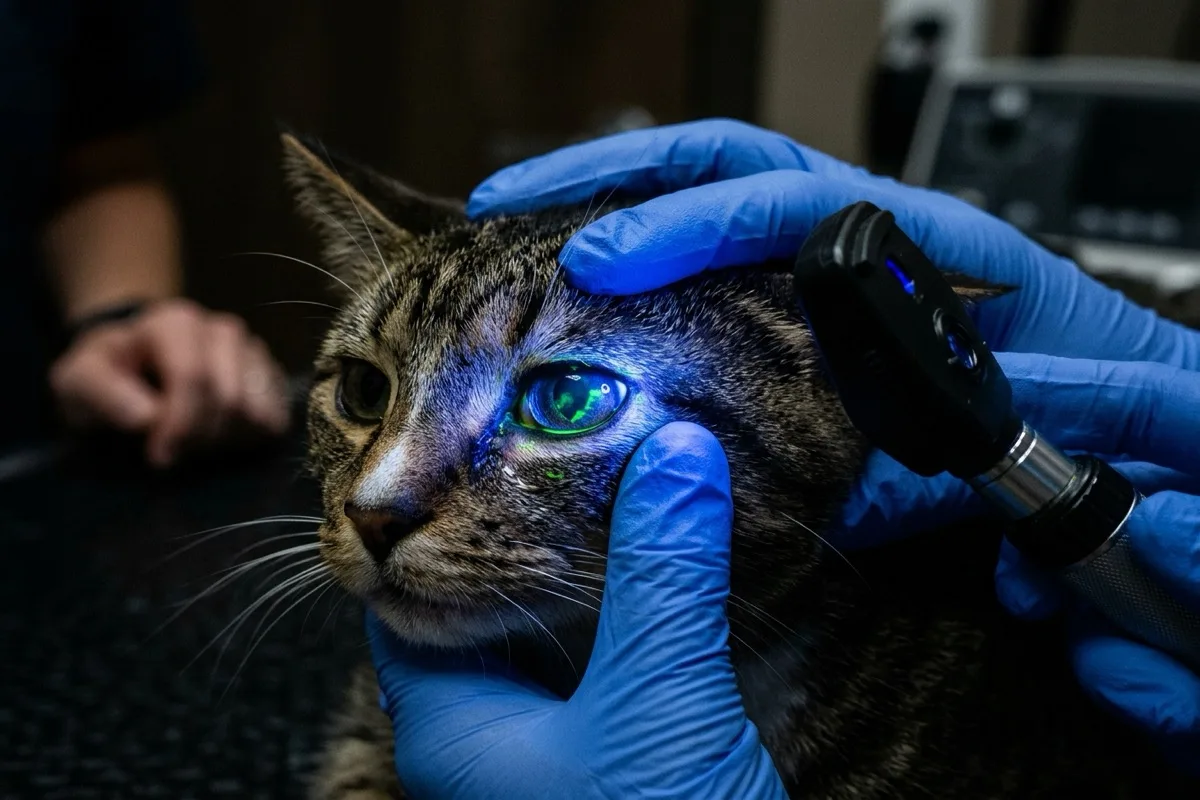
- Lytic cellular destruction: The replicating virus lyses host epithelial cells, creating branching, jagged microscopic fissures called dendritic corneal ulcers, pathognomonic of feline herpes.
- Secondary bacterial superinfection: Once the surface barrier is breached, opportunistic microbes (Chlamydia felis, Mycoplasma) invade, transforming clear discharge into thick, crusting pus.
- Corneal sequestrum: Chronic, unmanaged ulcerative inflammation can progress to a dark brown or jet-black plaque of necrotic corneal stroma requiring surgical keratectomy.
---
2. Dangerous Home Treatment Mistakes to Avoid
- Reusing leftover human eye drops: Administering leftover household bottles is the leading cause of preventable corneal perforations in cats.
- Chamomile and herbal infusions: Microscopic plant fragments and pollen particulates act as abrasive sandpaper on damaged corneal tissue.
- Dry crust picking: Picking hardened crusts off eyelashes with bare fingers tears delicate eyelid margins; crusts must always be soaked soft with warm sterile saline.
---
3. Veterinary Medical Protocol and Supportive Home Care
- Hygienic cleansing: Moisten individual sterile gauze pads with isotonic saline and wipe gently from the inner canthus outward, using a fresh pad for each eye.
- Antiviral intervention: During active bouts, veterinarians prescribe topical or oral antivirals to inhibit viral polymerase and halt tissue erosion.
- Stress-mitigation: Since cortisol surges reawaken latent viral loads, synthetic pheromone diffusers and stable daily routines significantly decrease recurrence rates.
---
4. When to Seek Emergency Veterinary Care
Corneal emergencies require immediate medical attention. Rush to an emergency facility if you notice:
- The cornea turns milky, cloudy blue, or displays an opaque white spot.
- The cat frantically paws at its eye (immediate risk of self-inflicted claw perforation).
- Frank blood in ocular discharge or visible bulging of the eyeball.
- Severe photophobia (the cat hides in dark closets, squinting against ambient room light).
Locate trauma-equipped centers with ophthalmic diagnostic equipment in our directory of emergency veterinary clinics.
---
Scientific References and Sources
- Veterinary Ophthalmology: Feline herpesvirus type 1 ocular disease: Diagnostic algorithms, antiviral therapies, and clinical outcomes.
- Journal of Feline Medicine and Surgery: ISFM Consensus Guidelines on the Diagnosis and Management of Feline Herpesvirus-1.
- GELAVET (Grupo de Especialistas Latinoamericanos en Veterinaria): Manejo de queratitis y úlceras corneales complejas en félidos.
Caring for a cat? Keep their health in your pocket
Register your cat on Nekolife to track vaccination history, weight, and get advice from loving cat parents.
- Vaccine & weight records
- Supportive cat community
- Earn Meow Points & badges
Related pages

Know someone who needs this?