Feline Hyperthyroidism: The 'Eating Constantly Yet Losing Weight' Trap, Hidden Kidneys, and Therapies
Hyperthyroidism is the most prevalent endocrine disorder in felines aged 8 to 10 years and older. In over 98% of clinical cases, it stems from a benign functional thyroid adenoma that autonomously hypersecretes thyroid hormones, accelerating the body's metabolic furnace into overdrive.
In this guide
1. Pathophysiology: What Happens Inside the Body?
The paired thyroid lobes located along the cervical trachea control baseline cellular energy expenditure. When autonomous hyperplastic nodules produce excessive total thyroxine (TT4) and triiodothyronine (T3):
- Cellular hypermetabolism: Body tissues burn calories at an unsustainable rate, breaking down skeletal muscle reserves (accelerated sarcopenia).
- Cardiovascular strain: Systemic vascular resistance drops, heart rate spikes, and secondary left ventricular concentric hypertrophy develops (thyrotoxic cardiomyopathy).
- Deceptive renal hyperfiltration: High renal blood flow temporarily pushes filtration rates above normal, artificially keeping serum creatinine falsely low.
---
2. Classic Symptoms and Behavioral Changes
| Clinical Sign | Typical Presentation | Common Caregiver Misconception |
|---|---|---|
| Voracious polyphagia | Begs constantly or steals food from other pets | "He has great energy and a fantastic appetite" |
| Progressive muscle wasting | Prominent spine and hollow flanks | Assumed to be simple old age |
| Restlessness & night crying | Pacing at 3 AM, howling, unable to settle | Confused with cognitive decline or dementia |
| Polydipsia & polyuria | Visiting water fountains repeatedly, heavy litter clumps | Shared hallmark of diabetes and renal insufficiency |
| GI disturbances | Rapid regurgitation after eating, patchy diarrhea | Blamed on hairballs or sensitive stomach |
| Coat deterioration | Matted, unkempt, greasy fur lacking self-grooming | Attributed to grooming laziness |
In approximately 10% of cases, cats present with "apathetic hyperthyroidism", exhibiting unexpected anorexia, depression, and marked muscular weakness. To evaluate subtle pain cues, read how to tell if your cat is in pain.
---
3. Diagnostic Confirmation
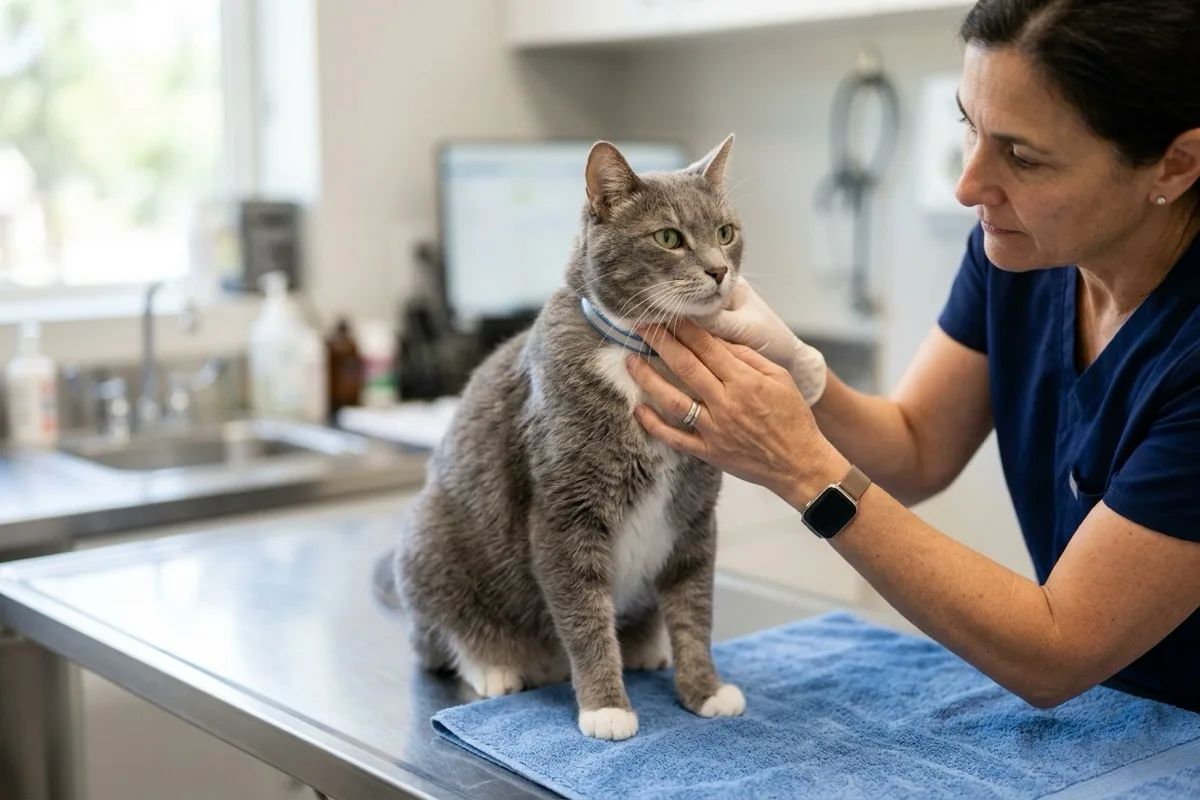
- Cervical thyroid slip palpation: Detecting an enlarged, mobile thyroid nodule during physical exam.
- Serum Total T4 (TT4): Confirms diagnosis in over 90% of affected cats. When TT4 is borderline-high but signs are compelling, Free T4 by equilibrium dialysis (fT4) helps rule out suppression from concurrent illness.
- Doppler blood pressure: Vital to rule out secondary hypertension (>160-180 mmHg) before retinal detachment occurs.
- Renal & Urinalysis baseline (SDMA, Creatinine, USG): Evaluates true underlying kidney reserve.
---
4. Treatment Modalities: Comparing Options
| Treatment Option | Therapeutic Mechanism | Clinical Role |
|---|---|---|
| 1. Methimazole / Thiamazole | Blocks T4 synthesis without destroying tissue | First-line medical therapy; unmasks underlying renal state |
| 2. Radioactive Iodine (I-131) | Destroys hyperactive follicles via targeted beta radiation | Curative gold standard (>95% cure rate with 1 injection) |
| 3. Iodine-Restricted Diet (y/d) | Deprives thyroid of elemental iodine for hormone building | Strict indoor-only felines intolerant of medications |
| 4. Surgical Thyroidectomy | Physical excision of affected thyroid lobe(s) | Rarely performed due to anesthetic and hypocalcemia risks |
1. Medical Antithyroid Therapy (Methimazole / Thiamazole)
- Action: Suppresses thyroid hormone synthesis without destroying tissue.
- Formulations: Tablets, flavored liquids, or transdermal ear gels.
- Advantage: Titratable and reversible; tests how kidneys respond to normal T4 levels.
- Side effects: Transient vomiting, facial itching/excoriation, or mild blood dyscrasias during initiation.
2. Radioactive Iodine (I-131) — The Curative Benchmark
- Action: Subcutaneous injection of radioactive iodine taken up exclusively by overactive thyroid follicles, destroying them through targeted beta radiation while preserving parathyroid tissue.
- Success rate: >95% permanent cure with no lifelong pills.
- Hospitalization: 3 to 7 days in a licensed nuclear veterinary facility.
3. Prescription Iodine-Restricted Nutrition (Hill's y/d)
- Starves the thyroid gland of iodine required to synthesize T4. Requires absolute 100% adherence (zero treats or outdoor hunting).
---
5. Nutritional Support and Home Care
Hyperthyroid cats require high caloric density and digestible high-protein nutrition to halt lean muscle catabolism. Combine premium complete wet cat foods with homemade nourishing broths to maintain vital hydration for vulnerable kidneys.
---
6. Critical Red Flags: When to Seek Emergency Care
Decompensated thyrotoxicosis can provoke acute cardiovascular collapse or vascular thrombosis. Seek immediate help at an emergency veterinary clinic or hospital if you notice:
- Open-mouth panting, respiratory distress, or rapid abdominal breathing.
- Sudden hindleg paralysis, vocalization of extreme agony, and cold paw pads (aortic saddle thrombus).
- Sudden blindness (widely dilated pupils that do not respond to light) resulting from acute hypertensive retinal detachment.
- Extreme collapse or uncontrolled cardiac racing.
---
Scientific Sources & References
- American Association of Feline Practitioners (AAFP, 2023): Feline Hyperthyroidism Guidelines: Diagnosis, Medical Management and Renal Monitoring.
- Journal of Feline Medicine and Surgery (JFMS, 2022): Radioactive iodine (I-131) therapy for feline hyperthyroidism: long-term outcomes and azotemia unmasking.
- European Society of Veterinary Endocrinology (ESVE, 2024): Endocrine consensus on methimazole dosing protocols and adverse effect mitigation.
Caring for a cat? Keep their health in your pocket
Register your cat on Nekolife to track vaccination history, weight, and get advice from loving cat parents.
- Vaccine & weight records
- Supportive cat community
- Earn Meow Points & badges
Related pages
Know someone who needs this?