Heatstroke in Cats: Recognizing Hyperthermia, First Aid, and Why Ice Is Dangerous
Unlike dogs or humans, cats tolerate warm ambient temperatures moderately well, but possess severely limited biological capacity to dissipate excess metabolic heat. Felines possess functional eccrine sweat glands exclusively in their paw pads and rely almost entirely on behavioral grooming (saliva evaporation) to cool down.
In this guide
1. Clinical Stages of Feline Heatstroke
Feline hyperthermia progresses with alarming speed. Recognize the warning signs:
- Initial Compensatory Stage:
- Rapid tachypnea with open-mouthed panting and protruding tongue.
- Thick, copious drooling (sialorrhea).
- Sweaty paw pads leaving wet tracks across floor tiles.
- Bright brick-red or congested oral mucous membranes.
- Decompensatory Critical Stage:
- Severe respiratory distress and tachycardia.
- Spontaneous vomiting (often containing blood) and bloody diarrhea.
- Pale, muddy, or cyanotic (bluish-grey) gums.
- Staggering ataxia, hind-limb weakness, and sudden collapse.
- Terminal Shock Stage:
- Generalized seizures, unresponsiveness, coma, and cardiopulmonary arrest.
---
2. Four-Step Safe Emergency Cooling Protocol
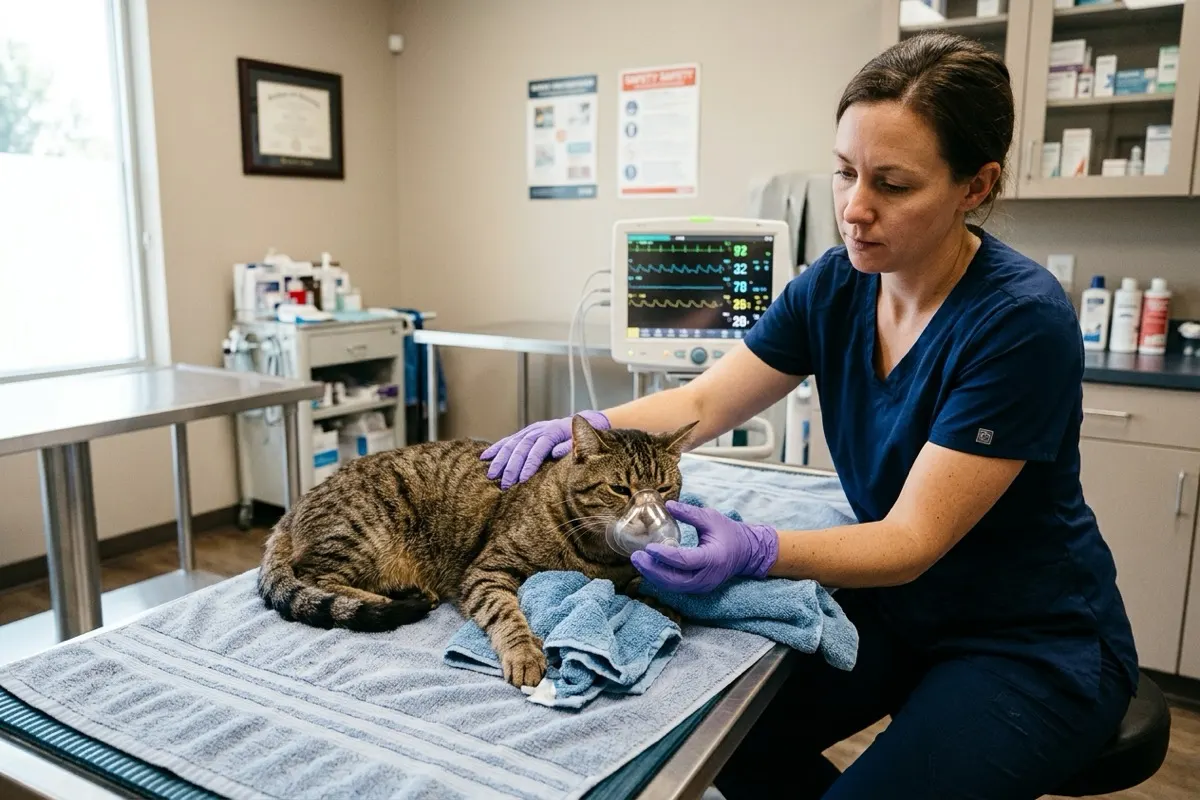
If you suspect heatstroke, initiate gentle cooling immediately while preparing for emergency transit:
- Step 1: Eliminate the heat source. Relocate the cat into an air-conditioned room or vehicle with maximum cooling airflow.
- Step 2: Moisten high-vascular zones. Douse washcloths in cool tap water (NEVER ice) and gently drape them across the paws, neck, groin, and axillary areas where major blood vessels run.
- Step 3: Convective air cooling. Direct a fan on medium speed across the damp coat to maximize evaporative cooling.
- Step 4: Offer tiny sips of water. Moisten the lips with cool water. Never force water into the mouth with a syringe if the cat is groggy or disoriented to avoid fatal pulmonary aspiration.
---
3. High-Risk Feline Populations
Certain cats possess inherently compromised thermoregulation:
- Brachycephalic breeds: Persian, Exotic Shorthair, and British Shorthair cats, whose compressed nasal architecture impedes air exchange.
- Overweight and obese cats: Excessive adipose tissue insulates the body, trapping core heat.
- Senior cats and those with heart disease: Felines suffering from hypertrophic cardiomyopathy (HCM) or asthma succumb to cardiovascular collapse rapidly under thermal strain.
---
4. When to Seek Emergency Veterinary Care
Heatstroke is a critical veterinary emergency with mortality exceeding 40%. Transport your cat immediately if:
- Your cat pants continuously and exhibits dark red or grayish-blue gums.
- Rectal temperature exceeds 40.0 °C (104.0 °F).
- The cat is disoriented, unable to stand, or loses consciousness.
- Vomiting or hemorrhagic diarrhea occurs following severe heat exposure.
Locate intensive emergency care in our directory of emergency veterinary clinics.
---
Scientific References and Sources
- Journal of Veterinary Emergency and Critical Care (JVECC): Heatstroke in small animals: Pathophysiology, clinical presentation, and therapeutic management.
- Veterinary Medicine International: Thermoregulation and heat-induced illness in domestic cats: Clinical risk factors.
- Journal of Feline Medicine and Surgery: Emergency management of acute hyperthermia and secondary coagulopathies in felines.
Caring for a cat? Keep their health in your pocket
Register your cat on Nekolife to track vaccination history, weight, and get advice from loving cat parents.
- Vaccine & weight records
- Supportive cat community
- Earn Meow Points & badges
Related pages
Know someone who needs this?