How to Tell If Your Cat Is in Pain: Veterinary Guide to Signs and the Feline Grimace Scale
Cats are renowned masters of disguise when it comes to pain and physical vulnerability. In the wild, as solitary predators that also serve as prey for larger carnivores, showing weakness or injury invites territorial aggression and predatory attack. Because of this deep-seated evolutionary biology, feline pain rarely sounds like crying, whining, or vocal lamenting. Instead, cats express discomfort through subtle facial expressions, rigid posture changes, and quiet withdrawals from daily family life.
In this guide
The evolutionary biology of feline pain
To recognize pain in our feline companions, we must understand their wild heritage. The domestic cat (Felis catus) directly descends from the African wildcat (Felis lybica), an obligate solitary hunter.
In nature, a limping, vocalizing, or sluggish cat signals vulnerability to larger predators and rival cats competing for hunting territory. To survive, cats evolved an extraordinary ability to mask overt signs of physical suffering.
Consequently, when an owner finally notices that their cat seems "a bit off," it is often because the pain has reached an unbearable intensity that overrides their masking instincts, or because the condition has been progressing silently for weeks or months.
The Feline Grimace Scale (FGS): evaluating facial expression
Developed and validated by the veterinary anesthesia and welfare team at the University of Montreal, the Feline Grimace Scale (FGS) is the worldwide veterinary gold standard for evaluating acute pain in cats through objective facial cues.
The scale evaluates 5 Action Units (AUs), assigning a score of 0 to 2 points to each feature after observing the undisturbed cat for 30 to 60 seconds:
| Facial Action Unit | 0: Pain Absent | 1: Moderate / Uncertain Pain | 2: Marked / Obvious Pain |
|---|---|---|---|
| 1. Ear Position | Ears upright and facing forward. | Ears slightly pulled apart or rotated sideways. | Ears flattened and rotated backward ("airplane ears"). |
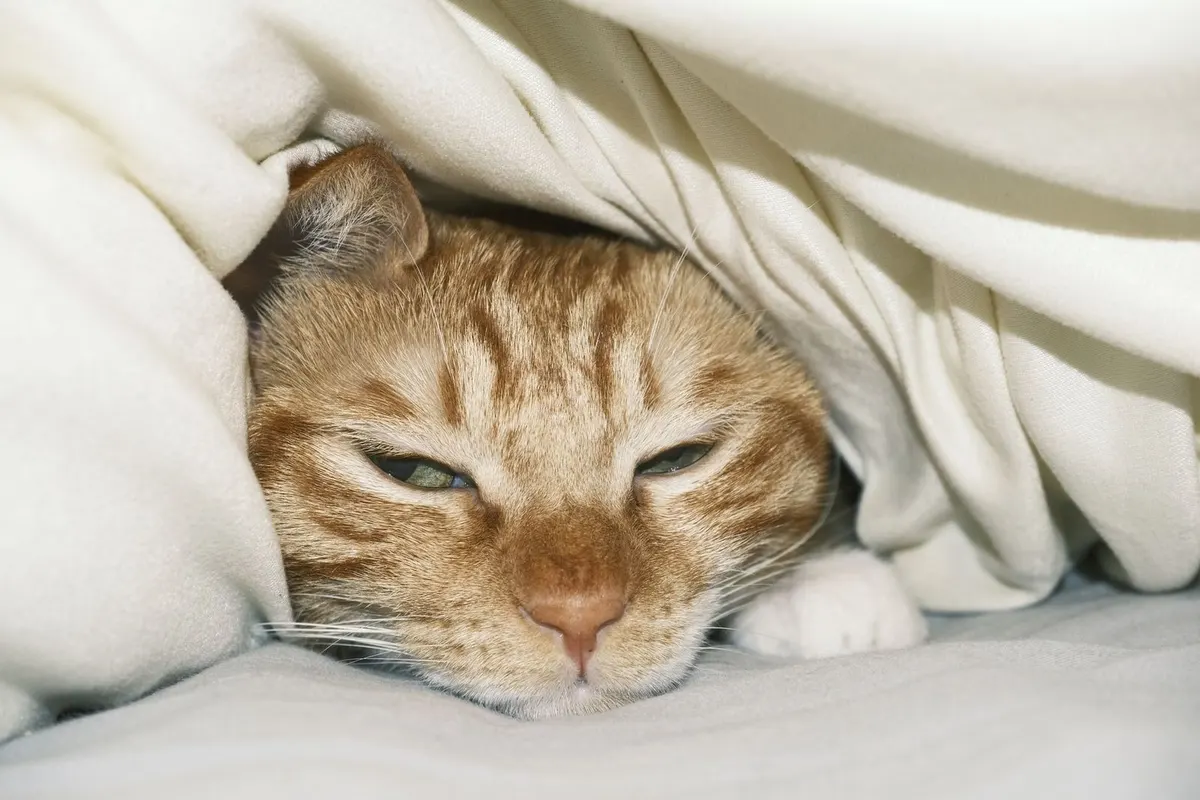
| 2. Orbital Tightening (Eyes) | Eyes completely open, round and alert. | Eyes partially closed or narrowed slits. | Eyes tightly shut or squinted shut. |
| 3. Muzzle Tension | Muzzle relaxed, round and softly curved. | Slight tension around the whisker pads. | Muzzle tense, flattened into an elliptical oval. |
| 4. Whisker Position | Whiskers loose, naturally curved downward. | Whiskers slightly straight or held outward. | Whiskers stiff, bunched straight forward or flat. |
| 5. Head Position | Head carried high above the shoulder line. | Head aligned level with the shoulders. | Head lowered below the shoulders or chin to chest. |
How to calculate and interpret the total score
- Add the scores across all 5 Action Units (maximum possible score: 10).
- Score 0 to 3: Baseline comfort or very mild discomfort.
- Score 4 or higher (≥ 4/10): Analgesic intervention threshold. Indicates that the cat is experiencing significant pain requiring medical examination and pain relief prescribed by a veterinarian.
Acute vs. chronic pain in cats
Pain manifests differently depending on its duration and underlying source:
1. Acute pain (sudden onset)
Arises from trauma, falls, post-surgical recovery, fight wounds, or sudden urinary blockage:
- Rapid, shallow, or abdominal-effort breathing.
- Wide, dilated pupils (mydriasis) even in bright light.
- Guarding of the affected body part and sharp defensive reaction if touched.
- Rigid, frozen posture—frequently crouched tightly in a corner.
2. Chronic pain (gradual and silent)
Frequently overlooked because owners mistake it for "just getting old." Chief culprits include feline osteoarthritis, feline tooth resorption (FORL), and chronic pancreatitis:
- Gradual withdrawal from interactive play and household activity.
- Hesitation or difficulty when jumping onto favorite furniture.
- Seeking secluded, dark, or ground-level hiding spots.
- Sudden grumpiness or swatting when petted over the lower back, hips, or joints.
Behavioral clues of feline pain in daily life
Beyond facial expression, changes in daily habits offer crucial diagnostic clues:
1. The hunched "meatloaf" posture
A comfortable, healthy cat sleeps stretched out luxuriously on their side or curls up loosely. A cat experiencing abdominal or visceral pain often assumes a hunched, guarded "meatloaf" pose: all four paws tucked tightly beneath the chest, back arched, head bowed low, and eyes half-shut for hours on end, unable to achieve restorative deep sleep.
2. Grooming changes: neglect vs. overgrooming
- Grooming neglect: Spinal, hip, or elbow arthritis makes contorting painful. The cat's coat becomes unkempt, dull, greasy, and matted over the lower back, tail base, and hindquarters.
- Compulsive overgrooming: When pain is localized (such as a burning bladder from cystitis or aching stifle joints), a cat may lick that specific area compulsively until the hair is stripped away, causing symmetrical alopecia or inflamed skin.
3. Litter box avoidance and accidents
When a previously tidy cat begins urinating or defecating just outside the litter box, the cause is often physical pain rather than a behavioral grudge:
- Stepping over high plastic litter box rims causes sharp hip or knee pain.
- Unstable, deep litter shifts painfully beneath arthritic toes.
- The cat associates the litter pan with the intense burning pain felt during a urinary tract inflammation episode.
4. Reluctance to jump and stiff gait
An arthritic cat rarely stops jumping overnight. Instead, they make subtle modifications: using an intermediate chair to reach the table, bobbing their head up and down while measuring the distance, or walking with stiff, unbending hind legs that lack shock absorption.
Why human painkillers are fatal to cats
Veterinarians consider this one of the most critical safety warnings in pet care: never give human medications to a cat.
1. The deadly danger of Acetaminophen (Tylenol/Paracetamol)
Cats have a genetic deficiency in the hepatic enzyme glucuronyl transferase, which is required to break down acetaminophen safely. In felines, the drug converts into a lethal toxin that damages red blood cells, converting hemoglobin into methemoglobin, which cannot transport oxygen. Within hours, the cat suffocates internally, their gums turn brown or blue, they suffer acute hepatic necrosis, and death occurs painfully. Even a crumb of a children's tablet can be fatal.
2. Ibuprofen, Aspirin, and human NSAIDs
Human nonsteroidal anti-inflammatory drugs have zero safety margin in cats. They cause rapid papillary renal necrosis, irreversible kidney failure, and perforating gastric ulcers with severe gastrointestinal hemorrhage.
Modern veterinary options for pain management
Feline medicine has advanced dramatically, offering safe, compassionate, and targeted pain relief:
1. Professional multimodal analgesia
- Feline-approved NSAIDs: Strictly formulated and weight-calibrated veterinary medications (such as meloxicam or robenacoxib), administered under monitoring of kidney and liver health.
- Gabapentin: An exceptionally safe medication widely used for neuropathic pain, osteoarthritis, and gentle pre-visit clinic sedation.
- Anti-NGF monoclonal antibodies (Frunevetmab / Solensia): A breakthrough biological treatment. A monthly subcutaneous injection that specifically neutralizes Nerve Growth Factor (NGF), relieving chronic arthritic pain without metabolizing through the liver or kidneys.
- Veterinary opioids: Used in clinical settings for severe acute trauma or post-operative surgical pain.
2. Home environmental accommodations
- Install ramps or carpeted steps next to beds and viewing perches.
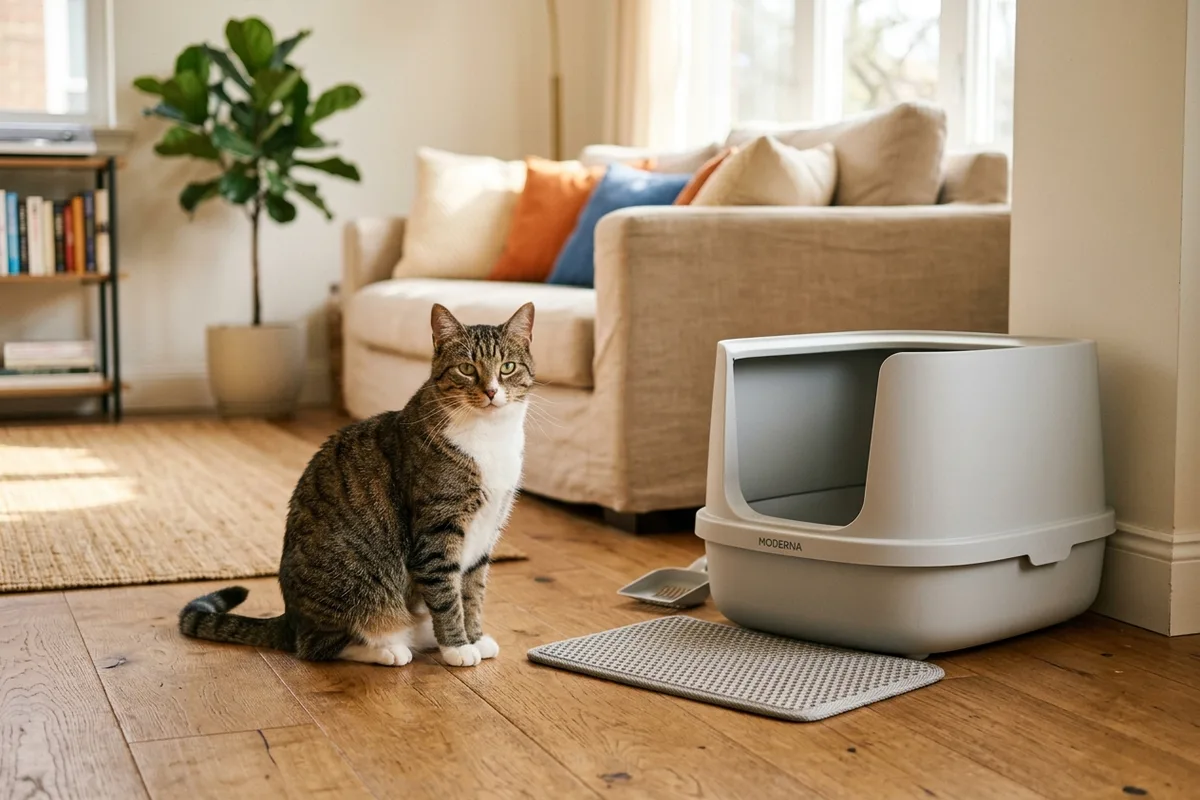
- Switch to wide, shallow litter boxes with ultra-low entry lips.
- Raise food and water bowls slightly so the neck does not have to bend uncomfortably.
- Place orthopedic memory foam beds and self-warming pads in warm, quiet zones.
When to seek emergency veterinary care
Transport your cat to an emergency clinic immediately if you observe:
- Straining in the litter box with little or no urine produced (medical emergency; life-threatening blockage in males).
- Open-mouth breathing, panting, or labored abdominal respiration.
- Dragging the hind legs or sudden inability to stand (suspected aortic thromboembolism or spinal injury).
- Rigid, hunched posture with dilated pupils unresponsive to surroundings.
- Hard, swollen abdomen that provokes distress upon light touch.
Frequently asked questions
Does purring always mean a cat is happy?
No. Cats purr for two distinct reasons: contentment and self-soothing. In moments of severe pain, trauma, or terminal illness, purring triggers the release of endorphins that help the cat cope with distress. Always check the cat's facial expression, eyes, and posture alongside the purr.
At what age do cats typically develop joint pain?
Radiographic studies show that over 60% of cats over 6 years old and more than 90% of cats over 10 years old have degenerative joint disease in at least one joint or spinal segment. If your cat is in their senior years, assume they may have joint discomfort and discuss it with your veterinarian.
How can I tell if my cat has dental pain?
Cats with tooth resorption (FORL) or gingivitis will chew on only one side of the mouth, drop food kibbles while eating, drool excessively (sometimes with blood-tinged saliva), shake their head during meals, or paw frantically at their face.
How often should I check the Feline Grimace Scale at home?
If you suspect discomfort or your cat is recovering from illness or surgery, evaluate their facial cues 2 to 3 times daily when they are awake and undisturbed. Record the scores and share them with your veterinary team.
Caring for a cat? Keep their health in your pocket
Register your cat on Nekolife to track vaccination history, weight, and get advice from loving cat parents.
- Vaccine & weight records
- Supportive cat community
- Earn Meow Points & badges
Related pages
Sources
- "Feline Grimace Scale (FGS)". Faculté de médecine vétérinaire, Université de Montréal. felinegrimacescale.com
- Evangelista, M. C., et al. "Facial expressions of pain in cats: the development and validation of a Feline Grimace Scale". Scientific Reports (Nature). nature.com
- "WSAVA Guidelines for the Recognition, Assessment and Treatment of Pain". World Small Animal Veterinary Association (WSAVA) Global Pain Council. wsava.org
- "AAFP and ISFM Feline Pain Management Guidelines". Journal of Feline Medicine and Surgery. catvets.com
- Robertson, S. A., et al. "Management of chronic pain in cats: a review of available options". Journal of Feline Medicine and Surgery.
Know someone who needs this?