Feline High-Rise Syndrome: Falls from Windows and Balconies, Invisible Trauma, and Emergency Care
"High-rise syndrome" describes the complex constellation of traumatic injuries sustained when a cat falls from an elevated opening such as an open window, fire escape, or balcony (typically from the second story or higher). Despite the pervasive cultural myth that "cats always land safely on their feet", vertical falls represent one of the leading causes of preventable blunt force poly-trauma and acute fatality in urban cats.
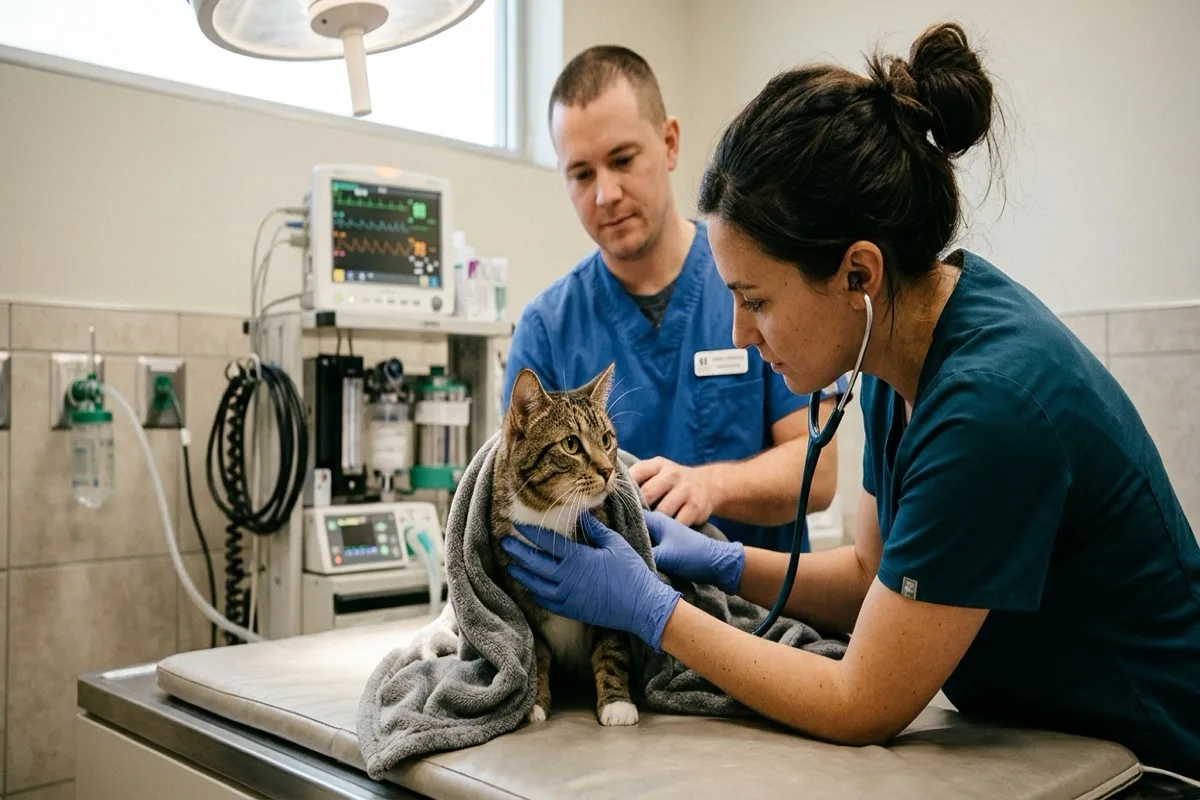
In this guide
1. Trauma Mechanics: The High-Rise Injury Triad
When landing on concrete or hard ground, deceleration forces produce hallmark anatomical damage:
- Facial and maxillofacial trauma: As the chin strikes the pavement, the feline hard palate splits down the midline suture (palatal fissure), accompanied by epistaxis (nosebleeds) and fractured incisors or canines.
- Thoracic trauma (primary cause of death): Lungs slam against the inner ribcage, rupturing alveoli. Escaping air (pneumothorax) and blood (hemothorax) compress the lung lobes, preventing oxygen uptake.
- Abdominal visceral rupture: A full urinary bladder easily ruptures under hydrostatic impact pressure (uroperitoneum), or the diaphragm tears, herniating abdominal organs into the pleural chest cavity.
---
2. Immediate First Aid Protocol at the Scene
If your cat has fallen from a window or balcony:
- Approach cautiously: A traumatized cat in agonizing pain or shock may reflexively bite or flee into a hidden crawlspace. Gently drape a thick towel over its body.
- Transport on a flat, rigid support: Slide the cat onto a sturdy piece of cardboard or into a rigid carrier. Maintain straight spinal alignment.
- Do not administer food, water, or medication: Never syringe water into the mouth (severe aspiration risk) and never give human pain relievers (paracetamol and ibuprofen are lethal toxins to cats).
- Visual assessment: Check for bleeding from the nose, mouth, or rectum, and observe respiratory rhythm.
---
4. When to Seek Emergency Hospitalization
Every feline fall exceeding 2 meters (6 feet) warrants immediate emergency examination within 60 minutes. Rush to the clinic if:
- The cat displays rapid, shallow panting or breathes with an open mouth.
- Frank blood drains from the nostrils, mouth, or perineum.
- The cat cannot stand, drags its hind legs, or cries in agony.
- Gums appear stark white, pale porcelain, or dusky gray (hypovolemic shock).
Find trauma centers with digital radiology, bedside ultrasound, and ICU oxygen cages in our directory of emergency veterinary clinics.
---
Scientific References and Sources
- Journal of Feline Medicine and Surgery: Feline high-rise syndrome: 119 cases (2010–2020) and analysis of injury patterns.
- Journal of Veterinary Emergency and Critical Care: Thoracic trauma and blunt abdominal injury in domestic cats: Clinical management of high-rise syndrome.
- ISFM (International Society of Feline Medicine): Environmental Safety and Cat-Proofing: Windows, Balconies, and Fall Prevention.
Caring for a cat? Keep their health in your pocket
Register your cat on Nekolife to track vaccination history, weight, and get advice from loving cat parents.
- Vaccine & weight records
- Supportive cat community
- Earn Meow Points & badges
Related pages

Know someone who needs this?