Permethrin Toxicity in Cats: Symptoms, Dermal Decontamination, and Critical Care
Permethrin toxicity in cats is one of the most perilous and frequent acute toxicological emergencies encountered in feline practice, almost invariably caused by the accidental application of a dog-specific flea spot-on treatment or intimate contact with a recently treated canine companion. Cats lack the crucial hepatic enzyme required to detoxify this synthetic pyrethroid, resulting in catastrophic neuro-excitation manifested by relentless muscle tremors, seizures, and lethal hyperthermia unless treated urgently.
In this guide
1. Mechanism of Feline Pyrethroid Vulnerability
Permethrin is a synthetic type I pyrethroid insecticide widely used in canine flea and tick topicals due to its wide safety margin in dogs. In felines, however, it is intensely neurotoxic:
- Voltage-Gated Sodium Channel Disruption: Permethrin binds to neuronal voltage-sensitive sodium channels, prolonging open-state channel inactivation. This causes persistent membrane depolarization and continuous repetitive electrical firing across motor neurons.
- Absence of Glucuronidation (UGT1A6 Mutation): Unlike dogs or humans, domestic cats exhibit a pseudogenized UGT1A6 gene. Lacking glucuronidation pathways, the lipophilic toxin accumulates rapidly within the central nervous system and peripheral adipose tissue.
---
2. Clinical Progression and Critical Signs
Signs typically emerge within 1 to 12 hours of dermal exposure or oral grooming:
- Early Presentation: Involuntary twitching of the pinnae (ear-twitching), blinking, facial tremors, paw flicking, and copious frothy hypersalivation.
- Severe Fasciculations: Whole-body tremors (the cat shakes uncontrollably as if experiencing hypothermic shivering), uncoordinated stumbling, dilated pupils (mydriasis), and severe acoustic/tactile hypersensitivity.
- Critical Seizures & Hyperthermia: Unabated tremors generate massive metabolic heat, driving rectal temperatures over 40.5–41.5 °C (105–107 °F). This triggers rhabdomyolysis, disseminated intravascular coagulation (DIC), lactic acidosis, and cardiovascular collapse.
---
3. Immediate At-Home First Aid Protocol
If a dog spot-on was applied minutes or hours ago and the cat is not actively convulsing:
- Emergency Dermal Wash: Immediately bathe the nape of the neck with lukewarm water (never hot or warm water, which dilates capillaries and accelerates transdermal absorption) using degreasing liquid dishwashing detergent.
- Rinse and Dry: Rinse thoroughly with room-temperature water and wrap the cat in dry towels. Avoid chilling the cat into severe hypothermia.
- Transport Immediately: Secure the cat in a padded crate and transport straight to an emergency veterinary hospital, alerting the medical staff en route.
---
4. Inpatient Veterinary Hospital Protocols
Hospital management targets neuro-excitation and toxin extraction:
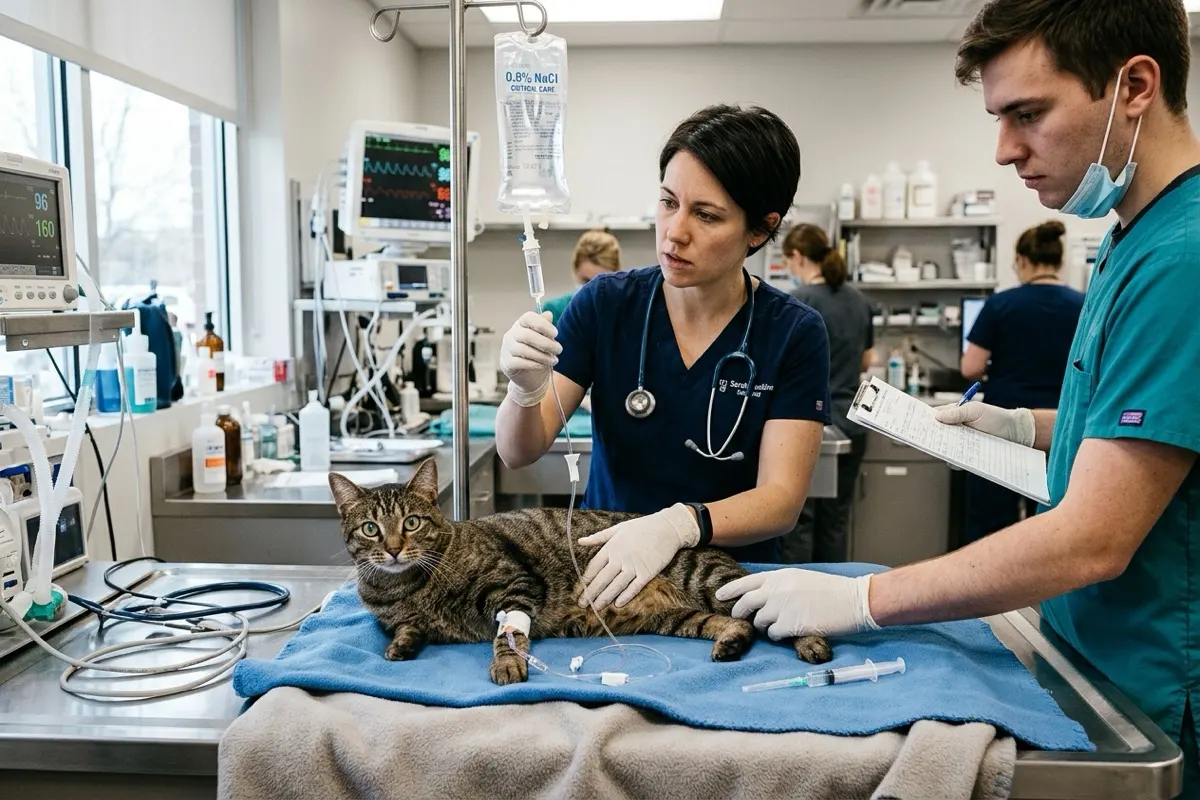
- Tremor Suppression: Methocarbamol (a centrally acting muscle relaxant) is administered slowly IV or rectally. Benzodiazepines (midazolam), propofol CRI, or inhalant gas anesthesia (isoflurane) are utilized for refractory seizure activity.
- Aggressive Intravenous Fluids: Balanced crystalloids cool hyperthermic patients and flush myoglobin to protect renal function from rhabdomyolysis.
- Intravenous Lipid Emulsion (ILE) Therapy: Infusion of 20% lipid emulsion creates a circulating vascular «lipid sink». Highly lipophilic permethrin molecules partition into the lipid droplets, pulling the toxin away from brain receptors and accelerating hepatic clearance.
---
5. Prognosis and Absolute Household Safety
- Prognosis: With prompt hospital intervention within the first 6–12 hours, survival rates exceed 90% without long-term neurological sequelae.
- Multi-Pet Household Protocol: If dogs receive permethrin-based flea products, isolate them from household cats for at least 24–48 hours until the topical application site is completely dry.
- Packaging Verification: Carefully inspect pet species icons and label warnings before opening any parasiticides; never split canine pipettes for feline use.
---
Scientific Sources and References
- Boland, L. A., & Angles, J. M. (2010). Feline permethrin toxicity: retrospective study of 42 cases. Journal of Feline Medicine and Surgery, 12(2), 61-71.
- Peacock, R. E., et al. (2015). Use of intravenous lipid emulsion in the management of feline permethrin toxicosis: a retrospective study of 52 cases. Journal of Veterinary Emergency and Critical Care, 25(6), 724-730.
- Linnett, P. J. (2008). Permethrin toxicosis in cats. Australian Veterinary Journal, 86(1-2), 32-35.
- Dymond, N. L., & Swift, I. M. (2008). Permethrin toxicity in cats: a retrospective study of 20 cases. Australian Veterinary Journal, 86(6), 219-223.
Caring for a cat? Keep their health in your pocket
Register your cat on Nekolife to track vaccination history, weight, and get advice from loving cat parents.
- Vaccine & weight records
- Supportive cat community
- Earn Meow Points & badges
Related pages

Know someone who needs this?