Culinary Herbs at Home: Which Are Cat-Safe and Which Are Toxic?
Growing a windowsill herb garden with fresh culinary greens is a wonderful domestic routine. However, for cat owners, every potted herb requires strict toxicological verification. Cats have a unique hepatic metabolism lacking the crucial liver enzyme glucuronyl transferase, preventing them from safely metabolizing concentrated essential oils and phenolic compounds found in common kitchen herbs.
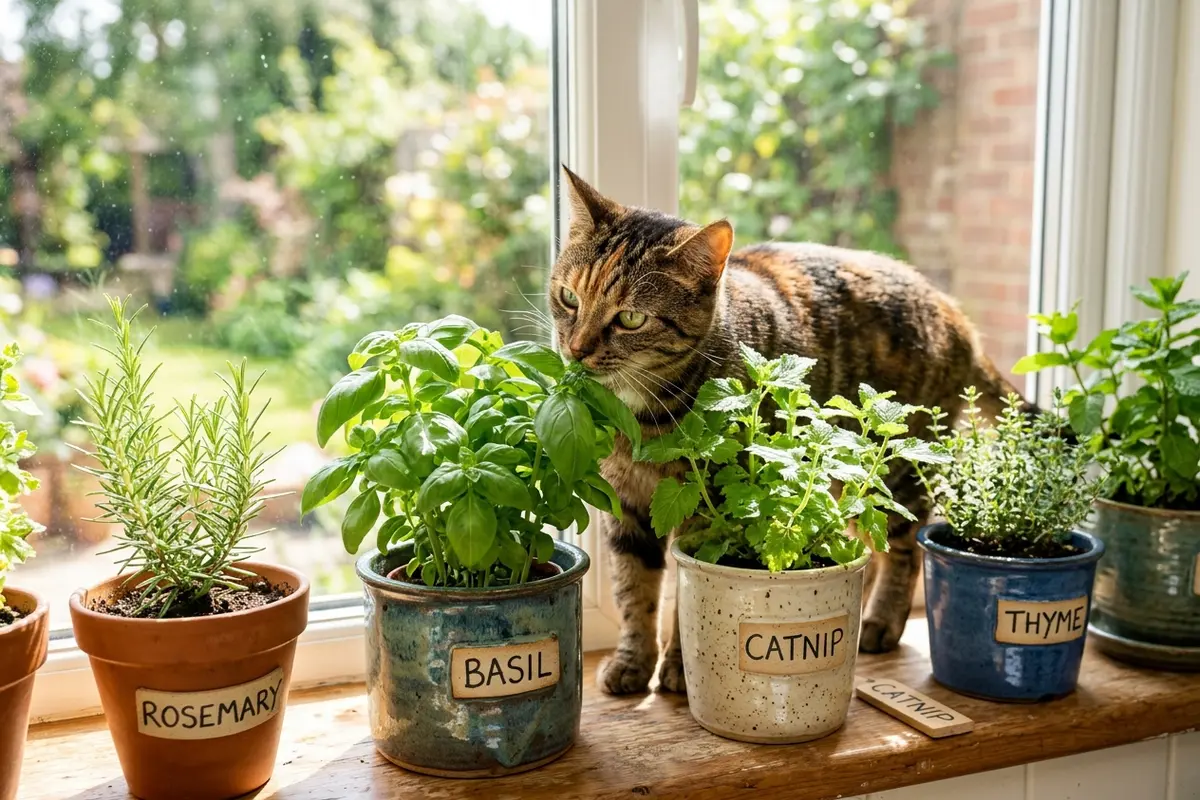
In this guide
1. Cat-Safe Culinary Herbs to Grow Indoors
| Herb Name | Scientific Name | ASPCA Status | Notes & Utility |
|---|---|---|---|
| Sweet Basil | Ocimum basilicum | Non-toxic | Perfectly safe if chewed; pleasing aroma that rarely causes obsession |
| Rosemary | Salvia rosmarinus | Non-toxic | Woody foliage is safe; tough needle texture naturally discourages heavy grazing |
| Common Thyme | Thymus vulgaris | Non-toxic | Safe in kitchen pots; offers gentle natural antiseptic properties |
| Catnip | Nepeta cataria | Safe & Euphoric | Rich in nepetalactone, triggering positive play and rolling behaviors |
| Wheatgrass / Cat Grass | Triticum aestivum | Nutritious | Classic digestive cat grass; rich in insoluble fiber supporting hairball transit |
---
2. Toxic Culinary Herbs to Keep Away from Cats
- *Chives and Wild Garlic (Allium schoenoprasum):*
- Toxic mechanism: Contains organic allyl sulfides that induce oxidative damage to feline red blood cells, causing Heinz-body hemolytic anemia.
- *True Mint (Mentha piperita / Mentha arvensis):*
- Toxic mechanism: Unlike catnip, true mint species contain high concentrations of volatile oils and pulegone, causing vomiting, diarrhea, and hepatic strain if ingested.
- *Lavender (Lavandula angustifolia):*
- Toxic mechanism: Active components linalool and linalyl acetate cannot be conjugated by feline hepatocytes, leading to ataxia and gastric inflammation.
- *Oregano (Origanum vulgare):*
- Toxic mechanism: Concentrated carvacrol and thymol irritate delicate gastric mucosa and overload feline hepatic metabolism.
---
3. Emergency Signs of Ingestion
If your cat ingests a toxic culinary herb and displays:
- Excessive drooling (ptyalism)
- Repeated vomiting or loose stool
- Lethargy, stumbling gait, or pale mucous membranes
Never induce vomiting at home with hydrogen peroxide (it causes severe hemorrhagic gastritis in cats). Rinse mouth debris and locate an urgent clinic immediately via our emergency veterinary clinic finder.
---
Scientific Sources & References
- ASPCA APCC: Toxic and Non-Toxic Plants Database – Herbs and Felines.
- Corticchiato, M. et al. (2018): Feline susceptibility to essential oils and botanical toxins, JVPT.
- Knight, M. W. (2015): Allium species toxicosis in companion animals, Vet Clin North Am Small Anim Pract.
Caring for a cat? Keep their health in your pocket
Register your cat on Nekolife to track vaccination history, weight, and get advice from loving cat parents.
- Vaccine & weight records
- Supportive cat community
- Earn Meow Points & badges
Related pages
Know someone who needs this?