Cat Urinary Problems: Cystitis, Symptoms, and When to See the Vet
Watching your cat enter and leave the litter box repeatedly, squat and strain without producing urine, or cry out in discomfort is one of the most distressing experiences for any cat parent. Feline lower urinary tract diseases (often grouped under the term FLUTD) are common, painful, and in certain situations, represent a genuine life-threatening emergency where every hour counts.
When is it urgent? Signs to see the vet today
Go immediately to an emergency veterinary hospital if you notice any of these alarming signs:
- Straining in the litter box without passing urine (anuria or stranguria): enters repeatedly, pushes hard, and the litter remains completely dry.
- Crying, howling, or groaning while squatting to urinate: clear evidence of acute, severe pain.
- Visible blood in the urine (hematuria): pinkish, reddish discolored urine or clots on the litter or floor.
- Obsessively licking the genital area: an inflamed urethra causes persistent burning and intense irritation.
- Lethargic, hiding, refusing food, or vomiting: retained metabolic toxins (elevated potassium and uremia) rapidly poison the body.
- Hard, swollen, painful abdomen when touched: the bladder may be tensed like a rock, on the verge of rupture or severe tissue injury.
> Veterinary rule of thumb: A cat that cannot pee can never wait until tomorrow. Every passing hour with a blocked bladder increases the risk of fatal cardiac arrest from hyperkalemia. If you do not have a regular vet, find one in Vets near you.
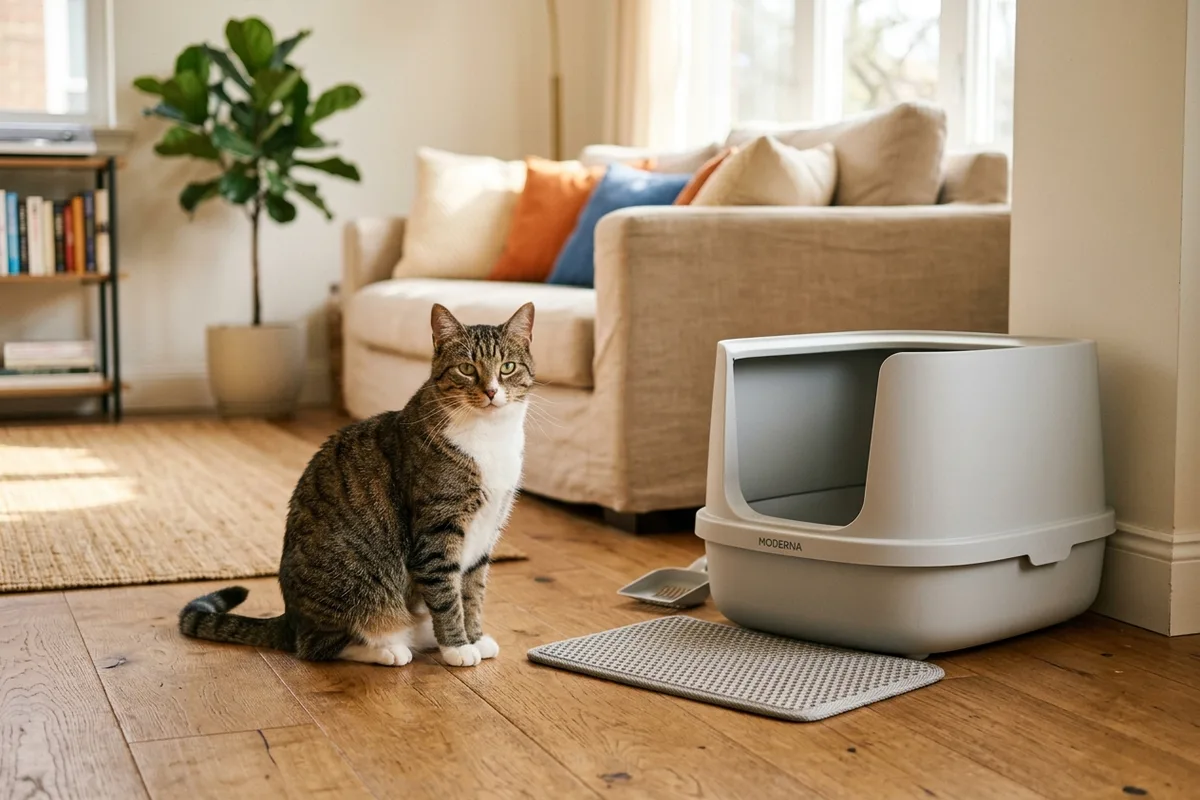
Quick answers
- When is it a life-threatening emergency?If your cat (especially a male) visits the box repeatedly, hunches over straining, and passes no urine or only a few painful drops with crying. This points to a urethral obstruction, which can cause fatal kidney failure and cardiac arrest within 24 to 48 hours.
See emergency signs ↓ - Why are they peeing outside the litter box or in the bathtub?When urination burns, cats associate their litter box with physical agony and seek cool, smooth surfaces (tubs, tiles, clean laundry) hoping to find relief.
See common symptoms ↓ - Is it a bacterial infection?In young to middle-aged cats, bacterial urinary tract infections account for less than 2 to 3% of cases. The vast majority suffer from feline idiopathic cystitis (sterile inflammation triggered by stress) or urinary crystals.
See causes of FLUTD ↓ - How can you prevent it at home?Increase moisture intake through daily wet food, provide fresh running water fountains, keep litter boxes spotless in quiet zones, and minimize environmental stress.
See home care and prevention ↓
In this guide
Urethral obstruction: the fatal danger in male cats
While cystitis strikes males and females equally, complete urethral blockage occurs almost exclusively in male cats.
The reason is anatomical: the male feline urethra is significantly longer, narrower, and follows a tapered curve towards the penis. Any small collection of mineral crystals (struvite or calcium oxalate), an inflammatory mucus plug, or muscular spasms triggered by pain can seal the passage shut.
When urine cannot escape:
- The bladder swells to maximum capacity, and pressure backs up through the ureters into the kidneys.
- The kidneys quickly lose the ability to filter waste, causing acute renal failure within hours.
- Potassium levels in the bloodstream spike (hyperkalemia), destabilizing cardiac electrical conduction and potentially causing sudden death within 24 to 48 hours.
Emergency treatment involves gentle urethral unblocking under sedation with a specialized urinary catheter, intravenous fluid therapy to flush toxins, and several days of hospital monitoring.
Common symptoms of urinary problems in cats
When a cat is not blocked but has an inflamed bladder, guardians often notice subtle behavioral shifts before obvious physical distress:
- Pollakiuria (frequent visits): visiting the box 10 to 15 times a day, producing only a few droplets each time.
- Periuria (inappropriate urination): urinating on beds, carpets, cool tiled floors, or inside sinks. This is not spite or bad manners; the cat is communicating pain or seeking cool relief.
- Overgrooming the lower abdomen: many cats with bladder discomfort lick away the fur on their lower belly, leaving smooth, symmetric bald spots.
- Stiff gait and hunched posture: moving cautiously to protect the sensitive pelvic area from jarring pressure.
- Uncharacteristic irritability: withdrawing to quiet closets or hissing when touched near the flanks.
What causes urinary issues? FLUTD and idiopathic cystitis
FLUTD is an umbrella term covering all conditions affecting the feline bladder and urethra. The most common causes identified by the American Association of Feline Practitioners (AAFP) include:
1. Feline Idiopathic Cystitis (FIC)
This is the single most frequent diagnosis in cats under 10 years old, accounting for 55 to 65% of all urinary cases. "Idiopathic" means no infectious agent, stone, or tumor is responsible. It is a neuroendocrine condition: emotional or environmental stress overstimulates the sympathetic nervous system, stripping away the protective glycosaminoglycan (GAG) barrier that shields the bladder wall from irritating acidic urine.
2. Urinary stones and crystals (Urolithiasis)
Representing 15 to 20% of cases, the two predominant mineral types are:
- Struvite (magnesium ammonium phosphate): commonly forms in alkaline (high pH), concentrated urine. These crystals and small stones can often be dissolved medically using specialized prescription urinary diets formulated to gently acidify urine.
- Calcium oxalate: develops in more acidic urine or states of chronic dehydration. These stones cannot be dissolved with diet and typically require surgical removal (cystotomy) or endoscopy if they threaten to obstruct urine outflow.
3. Urethral plugs
A soft paste composed of inflammatory proteins, shed bladder lining cells, and microscopic crystals. Plugs are the leading mechanical cause of complete blockage in young male cats experiencing an active flare-up.
4. Bacterial Urinary Tract Infections (UTIs)
Unlike humans and dogs, true bacterial bladder infections are rare in young cats (less than 2%). However, in senior cats over 10 years of age, or cats with chronic kidney disease or diabetes, protective urine concentration drops, making bacterial UTIs much more common. Therefore, antibiotics should never be given empirically to young cats without a sterile urine culture.
The critical role of stress in bladder health
Domestic cats retain the sensitive neurobiology of a solitary hunter that also exists as prey in nature. Their stress response system is intimately wired to their bladder lining. Common triggers include:
- Moving homes, home renovations, or unfamiliar loud noises.
- Bringing home a new pet, long-term guests, or a new baby.
- Unspoken social tension in multi-cat households (resource guarding, blocked hallways, stare-downs).
- Dirty litter boxes, scented litters that irritate sensitive paws, or boxes placed near noisy laundry appliances.
- Chronic boredom and a lack of vertical territory to survey and climb.
In susceptible cats, acute stress spikes cause neurogenic inflammation, bladder spasms, and flare-ups that tend to recur in cycles unless underlying environmental stressors are resolved.
Veterinary diagnosis: what tests to expect
To establish a definitive diagnosis and rule out a blockage, your veterinary care team will perform:
- Gentle abdominal palpation: checks bladder firmness, size, and pain response. A tensed, melon-sized bladder indicates immediate catheterization is needed.
- Complete urinalysis: ideally collected via cystocentesis (a sterile needle draw guided by ultrasound). This measures specific gravity, pH, protein, occult blood, crystals, and bacteria.
- Abdominal ultrasound: evaluates bladder wall thickness, detects suspended cellular sediment ("bladder sludge"), polyps, and non-radiopaque stones.
- Radiographs (X-rays): essential for pinpointing the exact size, shape, and location of dense mineral stones throughout the urinary tract.
- Serum biochemistry: evaluates creatinine, blood urea nitrogen (BUN), and potassium to verify kidney function and detect post-renal failure.
Home care and prevention: water and environmental enrichment
Long-term management of feline urinary wellness rests on two foundational pillars: diluting urine with superior hydration and providing an enriched, predictable environment.
1. Maximize moisture consumption
Dilute urine reduces chemical irritation against the bladder wall and prevents minerals from crystallizing.
- Introduce wet food daily: dry kibble provides only 8 to 10% water, whereas canned wet foods provide 75 to 82% natural moisture. Transitioning half or all of a cat’s calories to wet food cuts cystitis recurrence rates in half.
- Use circulating water fountains: cats are naturally drawn to moving, aerated water rather than stagnant bowls.
- Multiple drinking stations: distribute wide ceramic or stainless steel bowls across several rooms, well separated from feeding dishes and away from litter boxes.
2. Gold standard litter box etiquette (N+1 rule)
- Maintain one litter box per cat plus one extra (a two-cat household needs three boxes).
- Place them in quiet, easily accessible rooms with clear exit routes.
- Scoop waste at least once to twice daily, and change litter regularly.
- Use unscented, soft, fine-grained clumping litter that feels gentle on paws.
3. Environmental enrichment and vertical space
- Provide secure cat trees, window perches, and wall shelving so your cat can survey their territory from above.
- Schedule two to three 10-minute interactive play sessions daily using wand toys to satisfy hunting instincts.
- Consider synthetic feline facial pheromone diffusers (such as Feliway) to reinforce environmental security during changes.
Frequently asked questions
Why is my cat peeing outside the box when they were perfectly trained before?
Sudden house-soiling usually stems from physical pain experienced inside the box. The cat associates the litter pan with burning agony and seeks out cool or soft spots. Dirtiness, frightening noises, or bullying by other pets can also cause box aversion. Always rule out a medical urinary condition with your vet before suspecting behavioral issues.
Can feline cystitis resolve on its own?
Mild idiopathic cystitis episodes may appear to settle after 4 to 7 days, but they are intensely painful and have a high recurrence rate if root environmental triggers remain unaddressed. Without veterinary examination, you cannot know if dangerous crystals are building up or if your cat is on the verge of a fatal urethral obstruction.
What is the best food for cats with urinary problems?
If your veterinarian diagnoses struvite or calcium oxalate crystals, they will prescribe a specialized urinary care diet with controlled magnesium and phosphorus, GAG precursors, and targeted urine pH buffers. Never feed these diets without veterinary guidance, as the wrong formula can disrupt pH balance and form opposite stones.
Are neutered cats at higher risk for cystitis?
Neutering does not shrink the urethra or cause cystitis directly according to modern scientific studies. However, neutered indoor cats tend to be more sedentary, burn fewer calories, and drink less water, all of which contribute to weight gain and concentrated urine—the primary risk factors for FLUTD.
Can I give my cat human pain relievers for bladder discomfort?
Never. Everyday human medications like acetaminophen (Tylenol/paracetamol), ibuprofen (Advil/Motrin), aspirin, and naproxen are lethal to feline red blood cells and liver enzymes. Even tiny doses can cause fatal toxicity within hours. Only a veterinarian can safely prescribe cat-safe pain management and antispasmodics.
Caring for a cat? Keep their health in your pocket
Register your cat on Nekolife to track vaccination history, weight, and get advice from loving cat parents.
- Vaccine & weight records
- Supportive cat community
- Earn Meow Points & badges
Related pages
Sources
- "Feline Lower Urinary Tract Disease (FLUTD)". Cornell Feline Health Center, Cornell University College of Veterinary Medicine. vet.cornell.edu
- "Feline Idiopathic Cystitis". International Cat Care (iCatCare). Updated 2025. icatcare.org
- "Urolithiasis in Small Animals". Merck Veterinary Manual. Updated 2024. merckvetmanual.com
- "2020 AAFP Feline Retrovirus and Environmental Management Guidelines". American Association of Feline Practitioners (AAFP). catvets.com
- "Management of Feline Lower Urinary Tract Signs (FLUTS)". World Small Animal Veterinary Association (WSAVA) Global Medical Guidelines. wsava.org
Know someone who needs this?