Fleas in cats: how to get rid of them and keep them from coming back
To get rid of fleas on your cat, treat them with a cat flea product your vet recommends and clean the house thoroughly. Never use dog products: some can kill your cat.
In this guide
How to tell if your cat has fleas
Fleas are hard to spot, because the cat swallows many while grooming. Sometimes the only thing you notice is that they scratch more than usual or that you have bites on your ankles.
Check especially the nape of the neck and the base of the tail, where fleas most often bite.
The wet paper test:
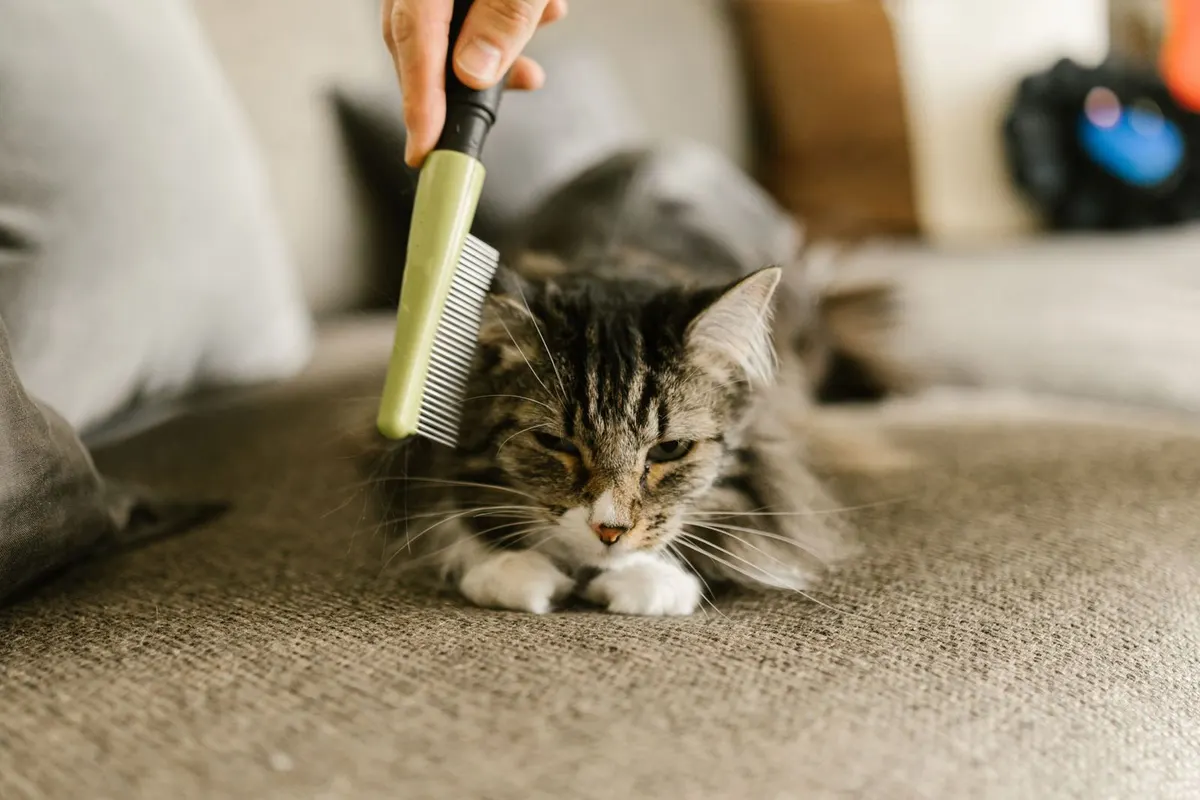
- Run a flea comb (fine teeth) through your cat’s fur over a white surface, such as a large sheet of paper.
- If black or brown specks fall out, place them on a damp cotton ball or paper towel.
- If they dissolve and leave reddish or reddish-brown stains, that is “flea dirt”: flea feces made of digested blood.
Even if you don’t see any adult fleas, that reddish stain confirms fleas are present.
Other signs:
- Reddish bumps with scabs, especially on the back, neck, and face, or bald patches. They may be a flea bite allergy.
- Segments that look like rice grains near the anus or stuck to the fur in that area. Those are pieces of tapeworm (Dipylidium caninum), a parasite the cat picks up by swallowing an infected flea.
How to get fleas off your cat
Always use products for cats, never for dogs. There are many flea treatments and not all are equally safe or effective, so ask your vet to recommend one.
- Some sold in supermarkets or pet stores may not be safe for cats or may work less well than clinic products.
- The products themselves can harm your cat or you if used incorrectly or swallowed by accident.
Spot-ons, tablets, and collars: differences
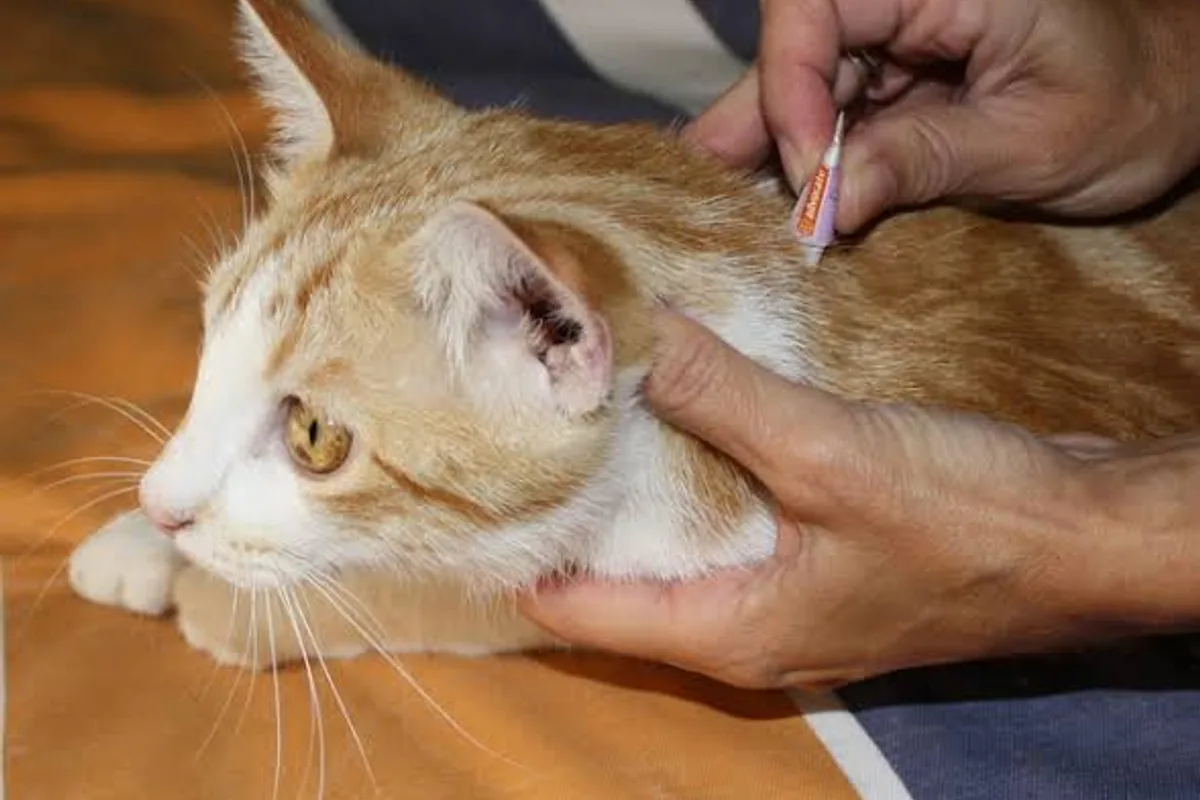
- Spot-ons (pipettes): applied to the nape of the neck. There are many, but they vary in safety and efficacy.
- Tablets: a good option if your cat will take them; they must be recommended by your vet and authorized for cats.
- Collars: International Cat Care only recommends those advised and sold by the clinic, not store or supermarket ones.
- Pump sprays (not aerosol): can help, but the cat will lick the product, so it must be safe for cats.
- Flea growth regulators: break the life cycle but do not kill adult fleas, so they are combined with a product that does.
- Flea powders and aerosols: International Cat Care does not recommend them.
Each product’s leaflet states which animals and ages it is suitable for. Always read the fine print and keep the leaflet.
Never use dog products on your cat
- Some dog flea treatments contain permethrin or similar compounds that can kill a cat.
- Even a very small amount can make them seriously ill, so “using less” does not help.
- A cat can also be poisoned by contact with a recently treated dog: by rubbing against them or sitting on the same sofa.
- If you have a dog and a cat, choose a permethrin-free flea product for the dog; if you use one with permethrin, keep them apart for 72 hours.
- If your cat gets sick after you apply a product, take them to the vet along with the leaflet.
How long until it works
Many products do not kill the flea on contact, so you may still see some for a while. Controlling an infestation usually takes 2 to 3 months.
Fleas on baby kittens and 2-month-old kittens
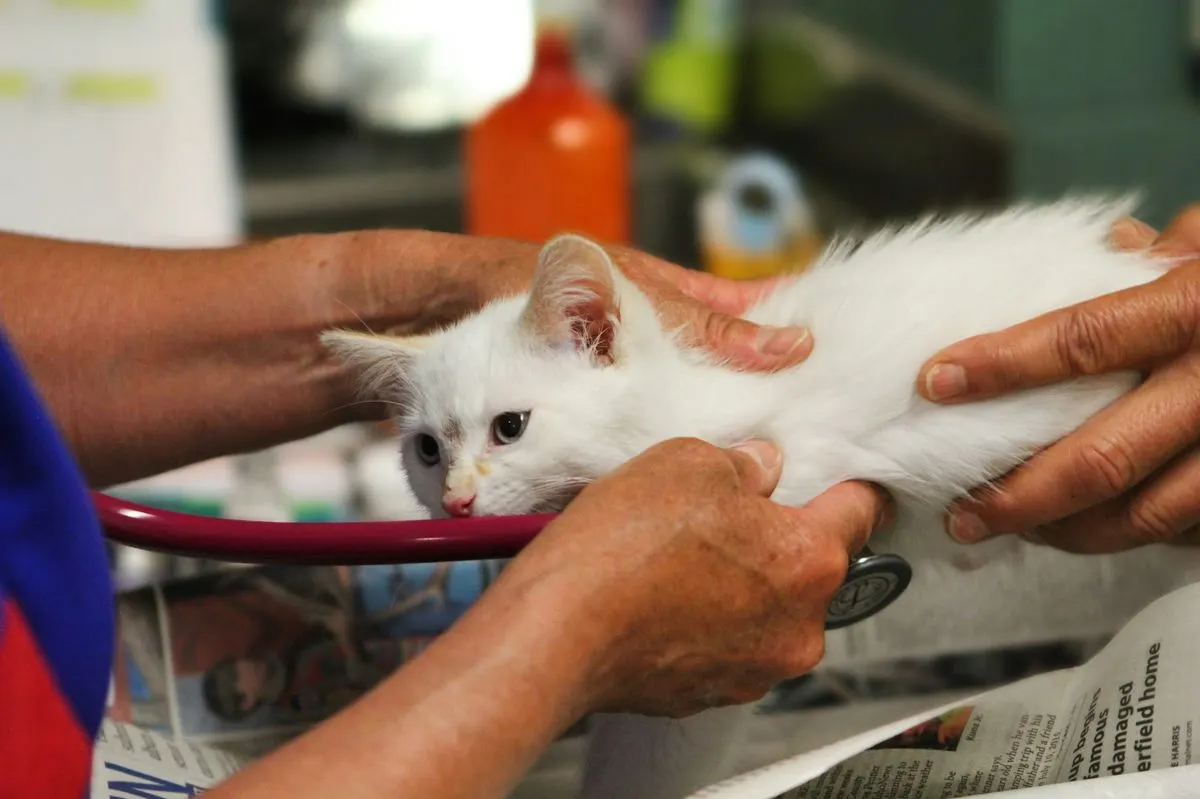
In a kitten, many fleas sucking blood can cause anemia, which can put their life at risk.
Your kitten may not be old enough for certain flea treatments. Check that the product clearly says it is suitable for kittens and ask the vet for the most appropriate treatment. The same applies to a pregnant or nursing cat.
If your kitten is about 2 months old
Kittens usually arrive in their new home between 8 and 12 weeks. International Cat Care advises for that arrival:
- Ask whoever gave you the kitten whether they were already treated for fleas and with which product.
- Talk with your vet about an appropriate treatment for them.
- Treat them even if you don’t see fleas, because fleas can transmit tapeworms.
- Never use dog products on them: those with permethrin can be fatal in small kittens.
Do home remedies work for fleas?
They are not proven like veterinary products, and some are dangerous for your cat.
Many “natural” flea products have been suggested, such as concentrated eucalyptus oil, neem oil, pennyroyal oil, tea tree oil, citrus oils, or D-limonene. According to International Cat Care:
- Many of these remedies have not gone through the safety and efficacy testing required of veterinary products.
- Some are potentially toxic to cats and other animals.
- None is likely as effective as an authorized product from your vet.
Garlic is toxic to cats. Cats are the species most sensitive to garlic and onion: they can damage red blood cells and cause anemia that appears several days later. Garlic is 3 to 5 times more toxic than onion, and concentrated forms (powder or dehydrated) are the most dangerous. Do not give it to your cat in any form.
Also keep in mind that when grooming, the cat swallows everything on their fur or paws. If your cat ate garlic or you applied a home remedy and they seem lethargic, weak, or have pale or yellowish gums, take them to the vet.
My cat never goes outside: can they still have fleas?
An indoor-only cat can still have fleas. People can bring fleas indoors without noticing, and a dog or cat with fleas can carry them inside, where they lay eggs that hatch into new fleas. Even pets that go outside only briefly can get infested.
Also, the adult flea can wait a long time inside its cocoon until it detects an animal or person nearby, then jump onto its host.
That is why International Cat Care recommends routine flea prevention. Ask your vet which plan suits your cat.
Can cat fleas spread to people or dogs?
To dogs
Yes. The most common flea in both cats and dogs is the cat flea, Ctenocephalides felis. That is why you need to treat every pet in the house, each with products for their own species.
To people
Cat fleas can bite people and cause very itchy bites, especially on the ankles. They can also carry agents that cause disease in people, such as the bacterium Bartonella henselae of cat scratch disease.
The tapeworm Dipylidium caninum also affects people: they get it the same way as the cat, by swallowing an infected flea. Most reported cases are in children. The best prevention for pets and people is to control fleas; also teach children to wash their hands after playing with dogs and cats.
How to eliminate fleas from your home
About 95% of fleas are in the house, not on the cat. Eggs fall from the fur onto beds, carpets, and floors; larvae flee from light and burrow into the depths of carpets and upholstered furniture.
- Vacuum often furniture, rugs, and carpets. Focus on the crevices of armchairs and sofas, under beds and chairs, and the gaps between floorboards. Vacuuming reduces fleas but does not eliminate them completely.
- Throw away the vacuum bag right away and carefully; if your vacuum has no bag, disinfect the canister thoroughly.
- Wash the cat’s blankets, small rugs, and carriers. If a bed is heavily infested, throw it away.
- Environmental insecticide: if needed, ask the vet for one that is safe to use with cats in the home. Some household sprays contain permethrin, so keep the spray off your cat, and cover aquariums, because some are very toxic to fish. Foggers or “bombs” usually work less well than sprays.
- Repeat: cocoons resist treatment strongly, so sometimes you need to retreat the cat and the house. In severe infestations a second home treatment at 7–10 days may be needed.
- If you call an exterminator, tell them you have cats and consider removing the cat from the house during and for a while after the treatment.

Prevention
- Keep flea treatment up to date. International Cat Care recommends routine prevention even if your cat shows no symptoms. Your vet will tell you which product to use and how often, based on your cat.
- Treat every animal in the house at the same time, each with products for their species.
- Keep cleaning the house even after the cat is treated. If you treat the cat but not the environment, the problem does not go away.
- Internal deworming: because the cat gets the Dipylidium tapeworm by swallowing fleas, ask your vet whether they also need an internal dewormer. We explain it in Deworming your cat.
- Use brushing as a check: it’s a good time to look for fleas and other parasites.
When to go to the vet
Go to the vet if:
- You see fleas or flea dirt on your cat: they will help you choose a safe, effective treatment and a prevention plan.
- You have a kitten with fleas: they can develop life-threatening anemia.
- Your cat has irritated skin, scabs, bumps, or bald patches: they may need additional treatment.
- You see rice-grain segments near the anus or in the feces.
- Your cat is pregnant or nursing and needs flea treatment.
Go immediately if you put a dog flea product on your cat, or if they had contact with a dog treated with permethrin. Signs of poisoning include tremors, twitching, spasms, excessive sensitivity to touch and noise, a wobbly walk, and in severe cases seizures. The sooner it is treated, the better the outlook. Bring the product packaging or leaflet.
Frequently asked questions
How do I know if my cat has fleas?
Run a flea comb over white paper and put any black specks that fall onto a damp cotton ball. If they leave reddish stains, your cat has fleas. Other clues: they scratch more than usual or you have bites on your ankles.
What is the best way to get rid of fleas?
A cat flea product recommended by your vet (spot-on, tablet, or other), plus cleaning the house. There is no single “best” product: it depends on your cat.
How do I get fleas off a baby kitten?
Take them to the vet. Some flea products are not suitable for kittens depending on age, and fleas can cause severe anemia. Use only products whose leaflet says they are suitable for kittens.
Can an indoor cat have fleas?
Yes. People and other pets can bring fleas indoors without noticing.
Do cat fleas bite people?
Yes, especially on the ankles. They can also transmit some infections, such as cat scratch disease.
Do home remedies work?
They are not recommended. Essential oils and other “natural” remedies have not passed safety and efficacy tests, and some can be toxic. Garlic, for example, is toxic to cats.
How often should I apply flea treatment?
It depends on the product: each one states its interval on the leaflet, and many sold by vets are given once a month. The important thing is not to stop prevention; your vet will tell you the plan.
Can I use a dog spot-on on my cat?
No. Some dog spot-ons contain permethrin, which is highly toxic to cats: even a very small amount can make them seriously ill or kill them. If you already applied one, call the vet immediately.
Caring for a cat? Keep their health in your pocket
Register your cat on Nekolife to track vaccination history, weight, and get advice from loving cat parents.
- Vaccine & weight records
- Supportive cat community
- Earn Meow Points & badges
Related pages



Sources
- "Fleas". Cornell Feline Health Center, Cornell University College of Veterinary Medicine. vet.cornell.edu
- "Fleas and flea control in cats". International Cat Care (iCatCare). Updated September 26, 2025. icatcare.org
- "Fleas of Cats" (owner section). Merck Veterinary Manual. Reviewed August 2018, updated March 2026. merckvetmanual.com
- "Permethrin Poisoning". International Cat Care (iCatCare). Updated September 26, 2025. icatcare.org
- "About Dog or Cat Tapeworm Infection". Centers for Disease Control and Prevention (CDC). May 4, 2026. cdc.gov
- "Caring for your new kitten" (PDF booklet). International Cat Care (iCatCare). icatcare.org
- "Garlic and Onion (Allium spp) Toxicosis in Animals". Merck Veterinary Manual. Reviewed September 2024. merckvetmanual.com
- "People Foods to Avoid Feeding Your Pets". ASPCA Animal Poison Control Center. aspca.org
Know someone who needs this?