British Shorthair Cat: Complete Guide to the Teddy Bear of Cats
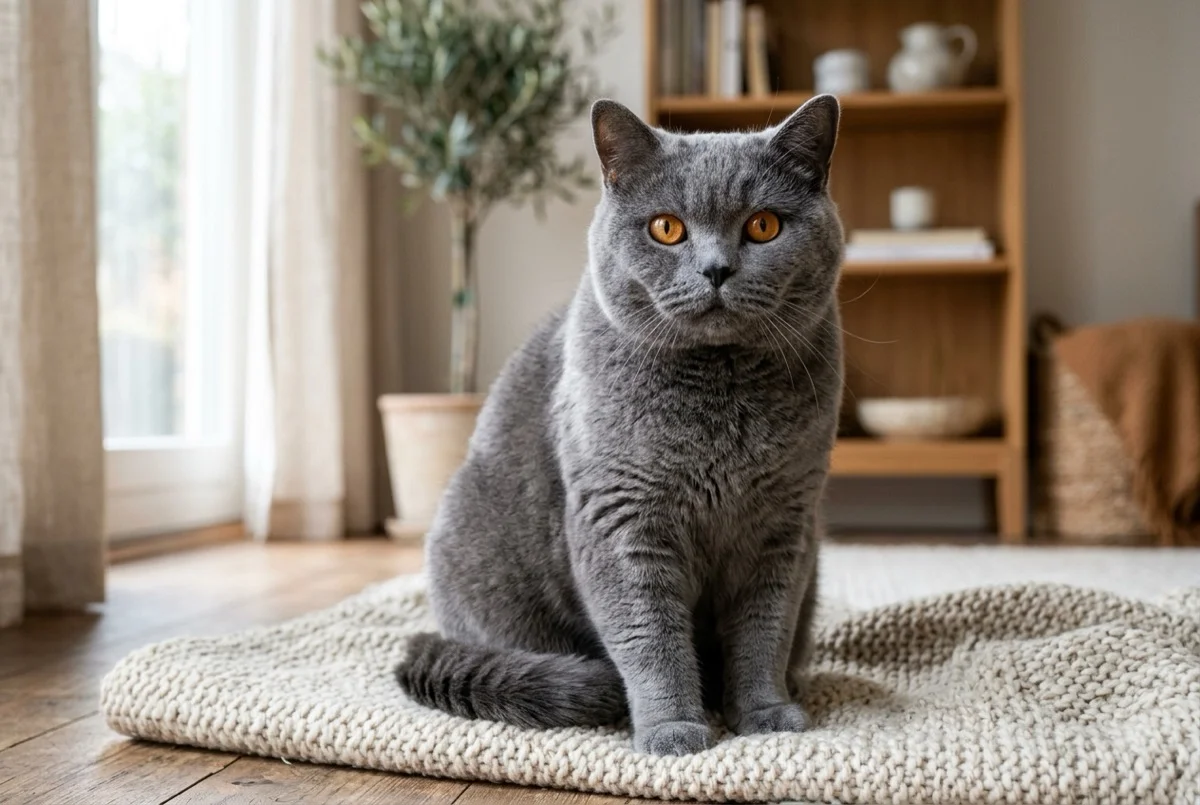
Famous for its round teddy-bear face, chubby cheeks, and calm gentle demeanor, the British Shorthair is one of the oldest, most beloved pedigree cat breeds in the world. As the historical inspiration for Lewis Carroll's Cheshire Cat, this British icon combines aristocratic dignity with an easygoing, affectionate companionship.
Quick facts
In this guide
Breed Origin and History
The roots of the British Shorthair trace back to the first century AD when Roman legions brought domestic cats to the British Isles. These working felines interbred with native European wildcats, developing a thick, weather-resistant coat to survive the damp English winters. In 1871, at London's Crystal Palace, pioneer Harrison Weir championed the breed at the world's first formal cat show.
After both World Wars severely reduced breeding populations, breeders introduced crosses with Persians and Russian Blues, giving the breed its modern facial roundness and plush coat texture.
Physical Characteristics and Standard
- Head and Expression: Broad and round with full chubby cheeks in adult males (jowls). Padded whisker pads form a gentle, permanent smile.
- Eyes: Large, round, set wide apart, typically vivid copper, amber, or gold.
- Ears: Small to medium with rounded tips, set broad at the base.
- Body and Limbs: Cobby structure with a broad chest, muscular back, and short sturdy legs.
- Tail: Thick at the base with a rounded tip.
The Unique "Crisp" Coat
The coat of the British Shorthair does not lie flat against the body. It is a dense double coat that springs back when touched, described by feline judges as crisp and plush like fine velvet.
Temperament and Living with a British Shorthair
The British Shorthair embodies feline calm and patience:
- Affectionate without Clinginess: Devoted to its family, preferring to sit beside you on the sofa rather than being a lap cat or being picked up.
- High Tolerance: Excellent with children and friendly dogs, rarely reacting with aggression.
- Quiet Voice: Has a soft, infrequent meow, communicating through expressive glances and gentle head-butts.
Grooming and Daily Care
Coat Brushing
- Regular Care: 1 to 2 weekly brushings with a firm slicker brush or metal comb to remove loose undercoat.
- Seasonal Shedding: Brush daily during spring and autumn to prevent hairballs (trichobezoars).
- Dental Hygiene: The compact jaw can lead to crowded teeth; routine enzymatic brushing helps prevent periodontitis.
Veterinary Health and Genetic Screening
Polycystic Kidney Disease (PKD)
An inherited condition causing fluid-filled cysts in renal tissue. Reputable breeders test breeding stock with a painless DNA cheek swab for the PKD1 gene.
Hypertrophic Cardiomyopathy (HCM)
Thickening of the left ventricular heart muscle. Annual or biennial echocardiograms are recommended for adult cats.
Weight Management and Joint Health
Because of their sedentary, easygoing nature, British Shorthairs can become obese after neutering, stressing their joints.
> Digital health passport: Use the Nekolife Official Passport to log weight trends, PKD DNA certificates, and echocardiogram reports.
Nutrition and Weight Management
- Portion Control: Measure daily food rations with a kitchen scale to prevent obesity.
- Large Kibble Shape: Encourages chewing, slows ingestion, and promotes mechanical dental cleaning.
- Environmental Enrichment: Use puzzle feeders and daily 15-minute interactive playtime with wand toys.
When to See an Emergency Veterinarian
Seek immediate medical attention if you notice:
- Open-mouth breathing, sudden lethargy, or rapid abdominal respiration.
- Straining in the litter box or inability to urinate (urinary emergency FLUTD).
- Persistent vomiting or total refusal to eat for over 24 hours.
References
- The Cat Fanciers' Association (CFA): British Shorthair Breed Standard, 2024.
- The International Cat Association (TICA): British Shorthair Championship Profile, 2023.
- Governing Council of the Cat Fancy (GCCF): British Shorthair Breeding Policy.
- Journal of Feline Medicine and Surgery: PKD1 screening in British Shorthair cats.
Frequently asked questions
Do British Shorthair cats shed a lot?
Yes, due to their dense plush undercoat. Regular weekly brushing minimizes shedding on furniture and reduces hairballs.
Are all British Shorthairs blue (gray)?
No. While British Blue is the most recognized classic variety, standards accept over 100 color varieties, including lilac, chocolate, golden tipped, silver tabby, and bi-color. ---
Caring for a cat? Keep their health in your pocket
Register your cat on Nekolife to track vaccination history, weight, and get advice from loving cat parents.
- Vaccine & weight records
- Supportive cat community
- Earn Meow Points & badges
Related pages
Know someone who needs this?