Sphynx Cat: Complete Guide to Characteristics, Skin Care and Health
The Sphynx cat is one of the most remarkable and recognizable breeds in the feline world. Its lack of a normal fur coat is the result of a naturally occurring genetic mutation paired with selective breeding beginning in the 1960s. Far from being cold, the Sphynx radiates warm body heat, possesses an energetic and affectionate personality, and requires a dedicated dermatological care routine.
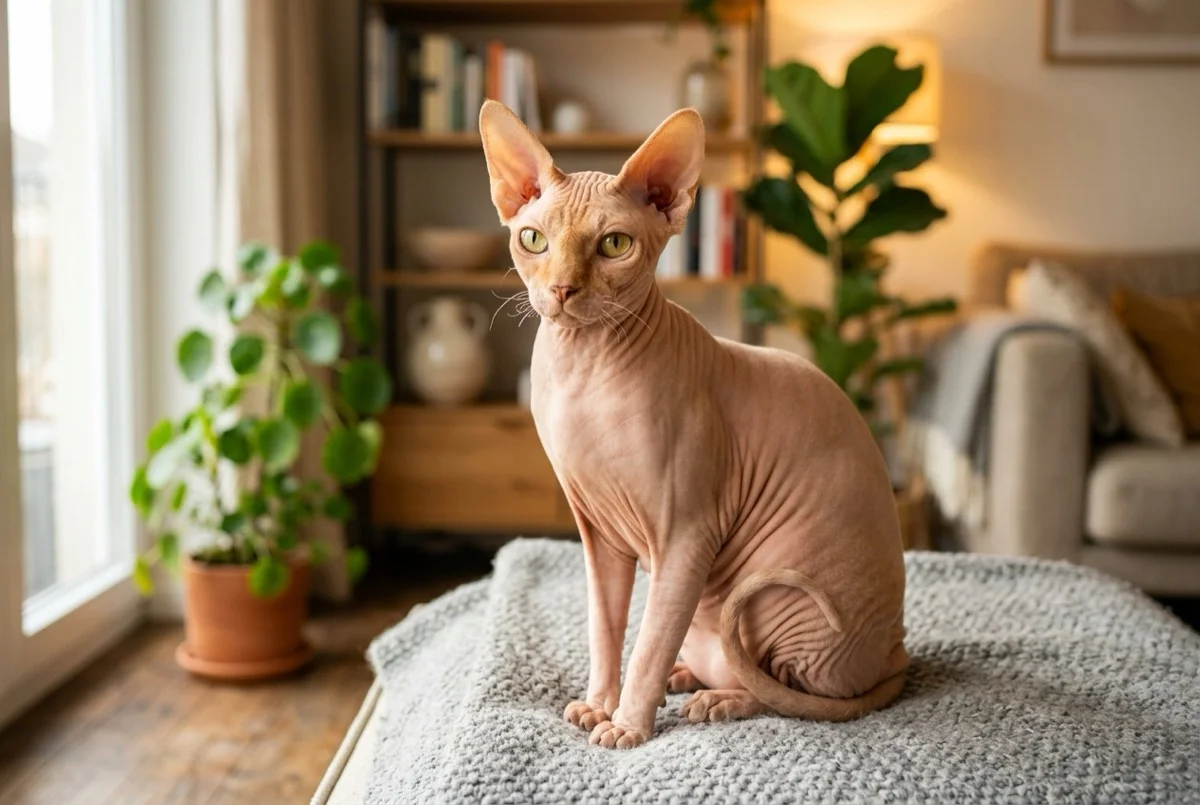
Quick facts
In this guide
Breed Origin and Genetics
While historical accounts describe hairless cats in pre-Columbian Aztec civilizations, the modern Canadian Sphynx lineage began in Toronto, Canada, in 1966. A domestic shorthair cat named Elizabeth gave birth to a hairless kitten named Prune. In the mid-1970s, similar spontaneous mutations occurred in Minnesota and Oregon. Breeders crossed these lines with Devon Rex and American Shorthairs to strengthen genetic diversity.
The KRT71 Gene Mutation
Hairlessness in the Sphynx is governed by an autosomal recessive allele (hr) in the keratin 71 gene (KRT71). The hair follicle cannot form a rigid hair shaft, resulting in hair that breaks at the skin surface or forms a fine peach fuzz. Two copies of the recessive allele (hr/hr) are required for a cat to be hairless.
Physical Characteristics and Standard
- Head and Expression: Modified wedge with prominent cheekbones and a gentle nose stop.
- Ears: Exceptionally large, broad at the base, and open, lacking protective internal ear hair.
- Eyes: Large, lemon-shaped, set at a slight upward angle toward the ears.
- Skin and Wrinkles: Natural folds and wrinkles around the muzzle, between the ears, and over the shoulders. Feels like warm chamois leather.
- Potbelly: A rounded, full abdomen characteristic of the breed that reflects a healthy digestive tract without being obese.
Temperament and Living with a Sphynx
The Sphynx behaves more like a loyal dog or playful toddler than an aloof feline:
- Heat Seeker: Because it lacks insulating fur, it constantly seeks warmth, curling under blankets or riding on its owner's shoulders.
- High Sociability: Enjoys companionship and gets along well with other pets and children. It dislikes long periods of isolation.
- Curious and Playful: Agile climbers who enjoy puzzle toys and interactive agility games.
Skin Care and Hygiene Routine
Sebum Management and Baths
In coated cats, sebum is absorbed by the hair shaft. In the Sphynx, natural oils remain on the skin:
- Bathing Frequency: Every 2 to 4 weeks using a mild veterinary shampoo with physiological feline pH (~6.5). Overbathing triggers excess oil rebound.
- Ears and Claws: Clean the outer ear canal weekly with a ceruminolytic ear cleanser. Wipe the nail beds to remove dark reddish-brown sebaceous buildup.
- Sun and Temperature: Strict indoor living is recommended. Window sunbathing requires UV-blocking film to prevent sunburn and squamous cell carcinoma.
Veterinary Health and Screening
Hypertrophic Cardiomyopathy (HCM)
HCM is the most common cardiac condition in Sphynx cats. The left ventricular heart walls thicken, impairing circulation. Breeding cats should receive annual Doppler echocardiograms by a board-certified veterinary cardiologist.
Hereditary Myopathy
An autosomal recessive condition causing muscle weakness and neck ventroflexion. DNA testing helps breeders prevent passing the mutation to offspring.
> Track medical records seamlessly: Use the Nekolife Official Passport to record annual echocardiograms, vaccinations, and skin care logs with automated alerts.
Nutrition and High Caloric Needs
Due to continuous thermoregulation, the Sphynx has a higher metabolic rate:
- Caloric Demand: Requires 20% to 30% more calories than a coated cat of equivalent weight.
- High-Quality Protein and Fats: Quality animal proteins and omega fatty acids support skin barrier integrity.
- Fresh Water: Constant access to running water fountains is essential.
When to See an Emergency Veterinarian
Seek immediate medical attention if your Sphynx exhibits:
- Open-mouth breathing, sudden lethargy, or panting after brief play (cardiac red flags).
- Severely reddened, weeping, or crusty skin with intense scratching (bacterial or Malassezia infection).
- Persistent shivering or cold extremities (hypothermia risk).
References
- The Cat Fanciers' Association (CFA): Sphynx Breed Standard & Care Guidelines, 2024.
- The International Cat Association (TICA): Sphynx Breed Group Standard, 2023.
- UC Davis Veterinary Genetics Laboratory: Sphynx Cat Hairless Mutation Research.
- Journal of Feline Medicine and Surgery: Hypertrophic Cardiomyopathy screening in pedigree cats.
Frequently asked questions
Are Sphynx cats completely hypoallergenic?
No. Cat allergies are primarily caused by the Fel d 1 protein present in feline saliva and sebaceous glands. Because the Sphynx grooms itself, saliva is deposited directly onto the skin. While it does not shed fur carrying dander, sensitive individuals can still react upon direct contact.
Does a Sphynx need sweaters all the time?
Not in a climate-controlled home (20 °C to 24 °C). During colder seasons, soft breathable cotton shirts and heated pet beds provide adequate thermal support without trapping excessive oils. ---
Caring for a cat? Keep their health in your pocket
Register your cat on Nekolife to track vaccination history, weight, and get advice from loving cat parents.
- Vaccine & weight records
- Supportive cat community
- Earn Meow Points & badges
Related pages
Know someone who needs this?