Russian Blue Cat: The Aristocrat with Emerald Eyes and Silver Fur
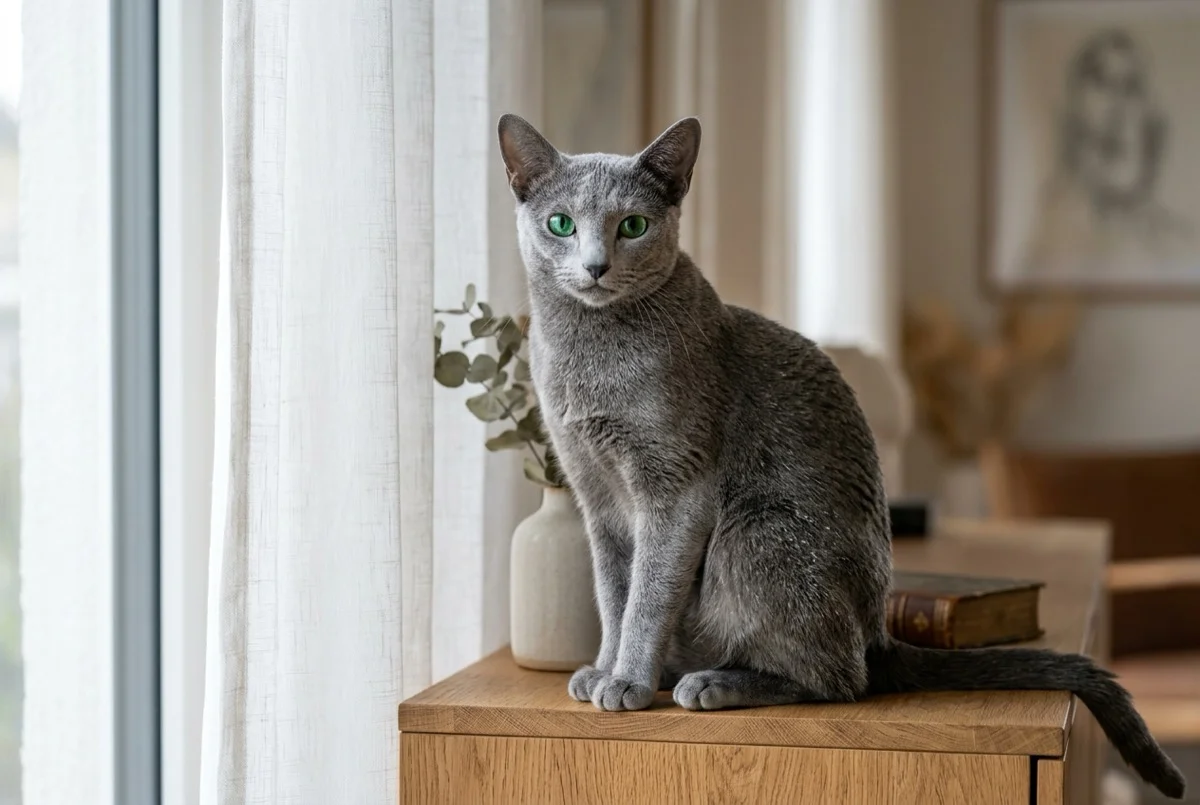
Famed for its shimmering silver-tipped blue coat, striking vivid emerald-green eyes, and mysterious gentle "Mona Lisa smile", the Russian Blue is one of the most noble, intelligent, and naturally hardy breeds in the feline world. Beneath its graceful aristocratic presence lies a devoted, quiet, and exceptionally long-lived companion.
Quick facts
In this guide
Breed Origin and History
The Russian Blue is an ancient natural landrace breed originating from the northern port city of Arkhangelsk (Archangel) on the White Sea in Russia. Their dense double coat evolved naturally to withstand harsh subarctic winters. British sailors brought these "Archangel cats" to England in the 1860s, where they competed at London's Crystal Palace in 1875.
Following World War II, dedicated breeders in the UK and Scandinavia restored the breed to its original purity, refining the distinctive foreign conformation and emerald-green eye color.
Physical Characteristics and Standard
- Head and Expression: Smooth modified wedge with seven flat planes. The corners of the mouth turn slightly upward, creating a subtle Mona Lisa smile.
- Eyes: Large, rounded almond shape, set wide apart. Kittens are born with yellow eyes that turn to vivid emerald green by 4 to 12 months.
- Ears: Large, pointed, wide at the base, with thin translucent skin.
- Body and Legs: Graceful, fine-boned foreign type with firm lean musculature and mauve or lavender paw pads.
The Silver-Tipped Double Coat
The Russian Blue possesses a rare true double coat where the undercoat and guard hairs are identical in length. The tips of the guard hairs are devoid of pigment, refracting light like crushed silver or morning frost.
Temperament and Living with a Russian Blue
The Russian Blue is quiet, elegant, and affectionate:
- Devoted Bond: Forms a deep attachment to its chosen family members, greeting you at the door and following you quietly room to room.
- Polite Caution: Reserved with strangers, preferring to observe visitors from a safe perch before interacting.
- Routine Lover: Enjoys a predictable feeding and play schedule, thriving in calm home environments.
- Soft Melodic Voice: Has a very quiet, melodious meow, communicating primarily through body language.
Hypoallergenic Potential and Science
No cat is 100% hypoallergenic. However, the Russian Blue is frequently recommended for mild allergy sufferers because:
- Lower Fel d 1 Production: Studies show it produces less of the Fel d 1 protein in its saliva and sebaceous glands than average domestic cats.
- Dense Undercoat Trap: Its double coat traps dander near the skin, reducing airborne allergen dispersal.
Grooming and Daily Care
- Weekly Brushing: Brush once a week with a soft natural bristle brush. Avoid sharp de-shedding blades that can damage the silver tips.
- Pristine Litter Box: Russian Blues are exceptionally fastidious. If the litter box is not scooped daily, they may refuse to use it.
Veterinary Health and Longevity
As a natural breed free from extreme physical exaggerations, the Russian Blue has minimal genetic health flaws:
- Remarkable Longevity: Commonly lives 15 to 20 years with proper preventative care.
- Urinary Health (FLUTD): Ensure adequate hydration with wet food and filtered water fountains to prevent bladder crystals.
- Appetite Monitoring: They love food; monitor portions to maintain their sleek, athletic frame.
> Digital health passport: Track vaccinations, annual blood panels, and preventative care with the Nekolife Official Passport for lifetime wellness.
Nutrition and Hydration
- High-Digestibility Protein: Premium animal protein supports lean muscle and hair luster.
- Wet Food Integration: Combining high-moisture canned food with dry kibble protects kidney and urinary health.
When to See an Emergency Veterinarian
Seek immediate medical attention if your cat shows:
- Frequent, painful straining in the litter box or producing little to no urine (urinary blockage emergency).
- Sudden changes in behavior, profound lethargy, or hiding.
- Unexplained weight loss or excessive thirst (early signs of renal disease in senior cats).
References
- The Cat Fanciers' Association (CFA): Russian Blue Breed Profile & Standard, 2024.
- The International Cat Association (TICA): Russian Blue Standard, 2023.
- Fédération Internationale Féline (FIFe): Russian Blue Breed Standard.
- Journal of Allergy and Clinical Immunology: Fel d 1 distribution in feline breeds.
Frequently asked questions
Are Russian Blue kittens born with green eyes?
No. All Russian Blue kittens are born with blue/yellowish eyes. The definitive emerald-green color emerges gradually between 4 and 12 months of age.
How do they differ from Chartreux or Korat cats?
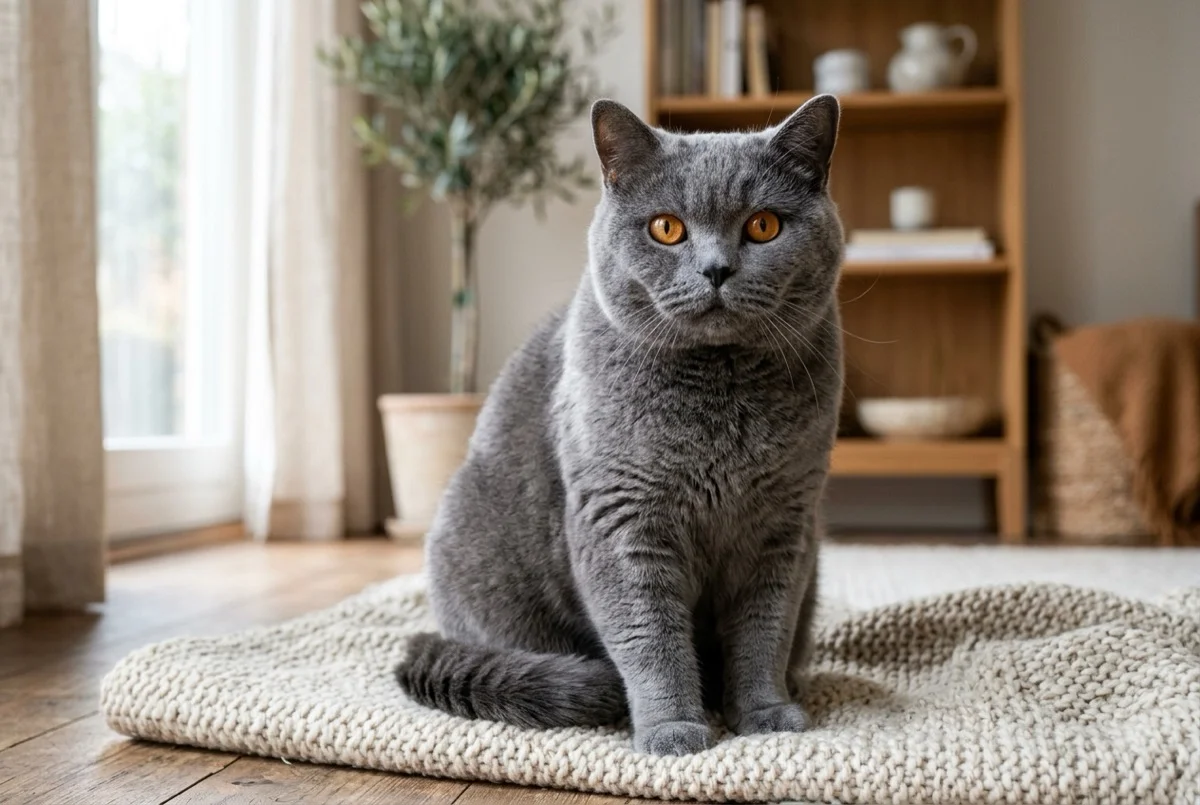
The Russian Blue has a foreign, slender build with emerald-green eyes. The Chartreux is stockier (cobby) with copper eyes. The Korat has a heart-shaped head and luminous peridot-green eyes. ---
Caring for a cat? Keep their health in your pocket
Register your cat on Nekolife to track vaccination history, weight, and get advice from loving cat parents.
- Vaccine & weight records
- Supportive cat community
- Earn Meow Points & badges
Related pages
Know someone who needs this?