Cat Stress and Anxiety: Clinical Guide to Body Language, Health Impacts, and Treatment
Cats are evolutionarily hardwired to conceal pain and vulnerability. As both a predator and a prey species, demonstrating fear, weakness, or physical distress in the wild invites predation or territorial displacement. Because of this survival instinct, chronic feline stress and anxiety rarely present as obvious hysteria or frantic vocalization. Instead, cats manifest distress through nuanced shifts in body language, inappropriate urination outside the litter box, compulsive over-grooming, or subtle withdrawal that owners often dismiss as "laziness" or "moodiness." Left unaddressed, chronic stress serves as the primary pathophysiological trigger for serious medical conditions, most notably Feline Idiopathic Cystitis (FIC) and psychogenic alopecia.
In this guide
Acute vs. Chronic Stress: The Invisible Toll
Understanding feline physiology requires distinguishing between two distinct bodily responses:
- Acute Stress (Adaptive): A transient physiological response to an immediate, perceived threat (doorbell ringing, dropped pan, presence of the travel carrier). Sympathetic nervous activation floods the system with adrenaline, preparing the cat to fight, flee, or freeze. Once the threat passes, heart rate and hormonal levels reset to baseline within minutes or hours.
- Chronic Stress (Maladaptive & Pathological): Occurs when stressors remain unremitting in the cat's territory (neighboring construction, inter-cat conflict, lack of resource autonomy, prolonged confinement without enrichment). The Hypothalamic-Pituitary-Adrenal (HPA) axis remains chronically stimulated, elevating systemic cortisol levels. Prolonged hypercortisolemia suppresses cell-mediated immunity, compromises bladder wall integrity, alters gastrointestinal motility, and disrupts normal REM sleep cycles.
---
Body Language: Decoding Subtle Feline Distress
Cats communicate emotional states through minute postural adjustments:
1. Mild to Moderate Stress (Early Anxiety)
- Airplane Ears: Ears rotated outward and flattened downward.
- Facial Tension: Wide eyes with pupils dilated wider than ambient light warrants, accompanied by whiskers held flat against the cheeks.
- Lip Licking & Dry Swallowing: Rapid tongue flicks over the nose without food presence.
- Skin Rippling: Involuntary spasms or tremors running down the dorsal lumbar coat.
- Tail Tip Twitching: The tail rests against the floor while the final 2–3 inches twitch rhythmically.
2. Severe to Chronic Distress (Shutdown State)
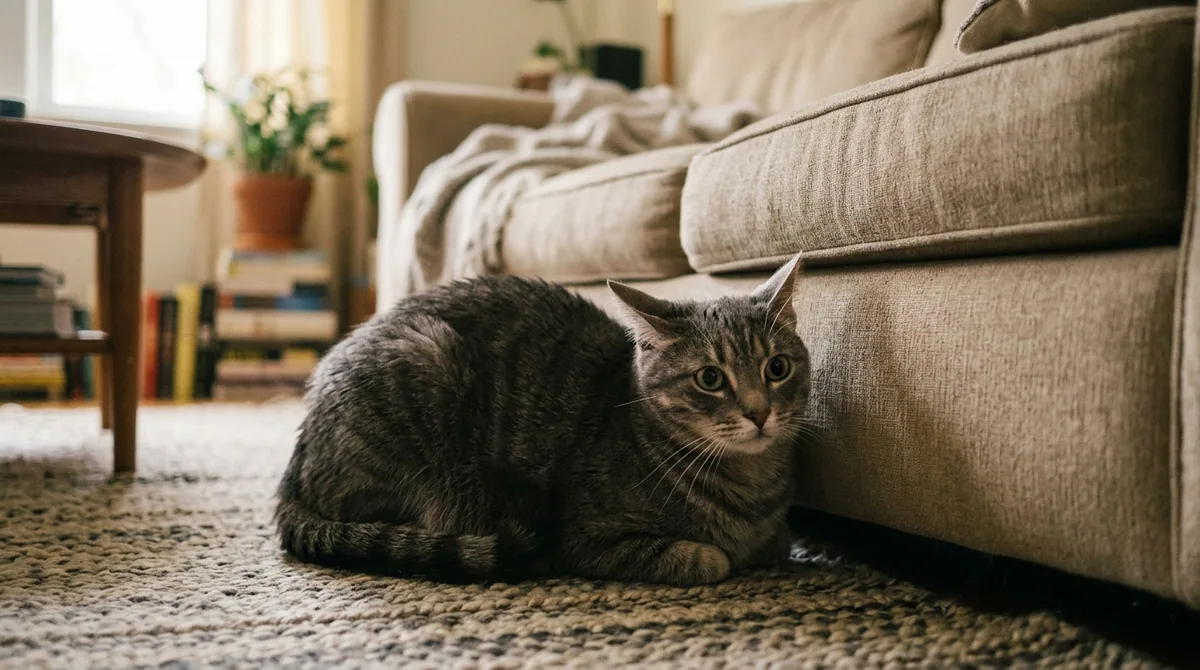
- Sphinx-Like Tight Crouch: The cat tucks all four paws completely beneath its torso, keeps its head drawn close to the chest, and wraps its tail tightly against its flank, minimizing its visible silhouette.
- Hypervigilance & Fragmented Sleep: The cat rests with eyes half-open; the slightest whisper or floor vibration triggers an immediate, dilated-pupil startle response.
- Chronic Seclusion: Spending daylight hours hidden under beds, inside closets, or atop high cabinets, venturing out only during quiet night hours to feed or eliminate.
---
Somatic Manifestations: The Mind-Body Veterinary Link
Stress is not simply emotional; it drives systemic physical disease:
1. Feline Idiopathic Cystitis (FIC)
The inner lining of the bladder is protected by a specialized glycosaminoglycan (GAG) layer. Chronic sympathetic activation breaks down this protective barrier, allowing concentrated, acidic urine to come into direct contact with sensory bladder nerve endings.
- Clinical Signs: Straining in the litter box (stranguria), frequent unproductive visits (pollakiuria), painful vocalization while posturing, blood in urine (hematuria), and urinating on cool, smooth surfaces like bathtubs or tile floors.
- Life-Threatening Emergency: In male cats, inflammatory debris, cellular casts, and crystals can form a plug, resulting in acute urethral obstruction—a fatal condition if not relieved within 24–48 hours.
2. Gastrointestinal Disturbances (IBD & Bilious Vomiting)
Elevated stress hormones alter mucosal permeability in the feline gut, predisposing the animal to stress-induced diarrhea, bacterial dysbiosis, and early-morning bilious vomiting.
3. Psychogenic Alopecia
Because grooming triggers dopamine and endorphin release, anxious cats latch onto it as a soothing loop. They repeatedly tongue the same anatomical zones until the hair shafts break off cleanly, leaving completely bald, symmetrical patches on the belly, inner thighs, or flank without primary bacterial or fungal dermatitis.
---
The 5 Most Prevalent Household Stressors
Resolving feline anxiety requires auditing the environment through territorial feline eyes:
- Resource Scarcity & Competition: The fundamental rule in feline veterinary medicine is N+1: for 2 cats, provide 3 litter boxes, 3 separate water stations, and multiple discrete feeding zones. Forcing cats to share resources in close proximity creates invisible territorial intimidation.
- Unpredictability and Loss of Control: Cats thrive on routine. Chaotic visitor schedules, sudden furniture rearrangement, unpredictable feeding times, or moving to a new home destabilize their scent-marked cognitive maps.
- Predatory Frustration & Boredom: Confinement indoors without sensory enrichment or interactive simulated hunting causes restless energy to manifest as neurotic anxiety or redirected aggression.
- Punishment and Human Aggression: Spraying a cat with water, shouting, or clapping loudly never works. Cats cannot associate punishment with their prior action; they simply learn that their human is an unpredictable predator, eroding the human-animal bond.
- Outdoor Feline Intruders: Seeing unfamiliar neighborhood cats through low windows or patio doors triggers extreme territorial panic, often leading to redirected aggression against household companions or family members.
---
Separation Anxiety: Protocol for Working Owners
Cats left alone for extended periods frequently experience severe attachment distress:
- Calm Departures and Arrivals: Avoid emotional, protracted goodbyes or energetic greetings that elevate arousal states.
- Foraging and Puzzle Feeders: Scatter morning kibble across interactive puzzle toys or hide freeze-dried treats around the home before leaving.
- Acoustic Masking: Background white noise or species-specific cat music (calibrated to feline purr frequencies) dampens jarring hallway noises.
- Scent Transfer: Leave a freshly worn t-shirt in their favorite sleeping spot to provide comforting olfactory security.
---
Environmental Management and Behavioral Solutions
Treating feline stress relies on a structured, multi-modal environmental plan:
1. Three-Dimensional Territory (Catification)
- Elevated Safe Havens: Cats feel secure when viewing their world from high perches. Install sturdy cat trees, wall walkways, and window hammock beds.
- Open Escape Routes: Ensure all essential resources (especially litter boxes) have multiple clear lines of escape rather than being placed in cramped dead-end closets.
2. Pheromone Therapy and Nutraceuticals
- Synthetic Pheromone Diffusers (Feliway Classic / Optimum): Place diffusers in the room where your cat spends the most time. Maintain uninterrupted use for at least 30 consecutive days to judge efficacy.
- Evidence-Based Nutraceuticals: Calming compounds such as alpha-casozepine (derived from milk protein hydrolysate), L-tryptophan (serotonin precursor), and L-theanine support neurological balance without sedation. Always discuss dosing with your veterinarian.
3. Structured Predatory Play Cycle
Engage your cat in two 15-minute wand-toy play sessions daily. Simulate the erratic flight and pause of real prey. Conclude every session by allowing the cat to catch the target, followed immediately by a nutritious meal to close the natural neurochemical loop: hunt → catch → eat → groom → sleep.
---
Frequently Asked Questions (FAQ)
How long does it take for a stressed cat to decompress?
Acute stress from a veterinary visit typically resolves within 24 to 48 hours. However, deeply entrenched chronic stress (from a major move or severe inter-cat conflict) requires 4 to 12 weeks of diligent environmental modification and predictable routines to establish clinical improvement.
Are pharmaceutical medications available for severe feline anxiety?
Yes. When environmental modification and nutraceuticals prove insufficient, or when self-mutilation and severe aggression persist, veterinary behaviorists can prescribe prescription psychotropics like fluoxetine or gabapentin. Never administer human medications, as human NSAIDs, acetaminophen, and sedatives are highly toxic and often fatal to felines.
Will getting a second cat cure my cat's anxiety?
Rarely. Unless dealing with an energetic kitten in need of peer socialization, introducing an unfamiliar cat to an already anxious adult cat almost always exacerbates territorial distress. First stabilize your existing cat's emotional security before considering any new animal.
---
Veterinary References and Research
- AAFP / ISFM (2024): Feline Environmental Needs Guidelines: Five Pillars of a Healthy Feline Environment, J Feline Med Surg.
- Buffington, C.A.T. (2011): Idiopathic Cystitis in Domestic Cats—Beyond the Lower Urinary Tract, J Vet Intern Med.
- Heath, S. (2018): Understanding Feline Emotions and Their Role in Problem Behaviors, Vet Clin North Am Small Anim Pract.
- DePorter, T. et al. (2019): Evaluation of a New Feline Pheromone Complex in Multicat Households, J Feline Med Surg.
Caring for a cat? Keep their health in your pocket
Register your cat on Nekolife to track vaccination history, weight, and get advice from loving cat parents.
- Vaccine & weight records
- Supportive cat community
- Earn Meow Points & badges
Related pages
Know someone who needs this?