Why Does My Cat Sleep on Top of Me? Thermoregulation, Scent, and Attachment
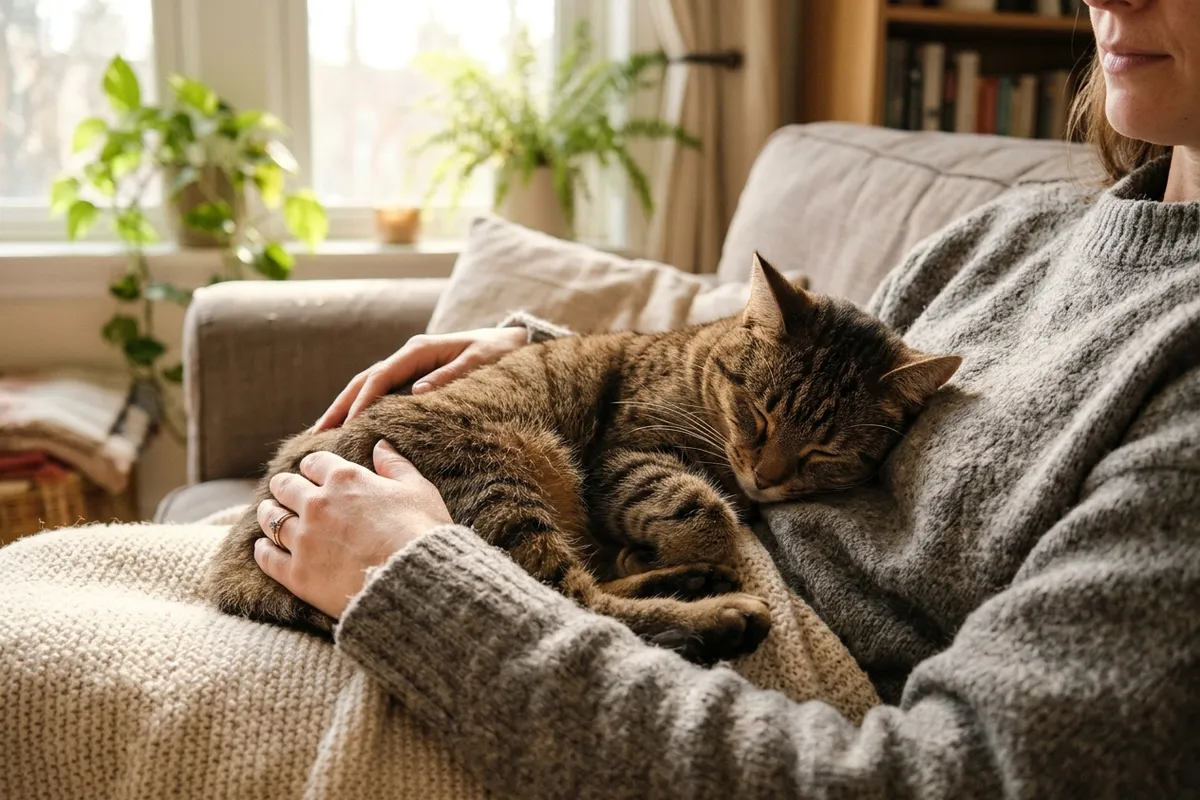
Few experiences in sharing life with a cat are as profoundly comforting as feeling your feline settled heavily on your chest, curled onto your lap, or wrapped around your head like a living pillow. While historical myths painted cats as aloof or detached creatures, modern animal behavioral science (feline ethology) confirms that direct sleep contact is the highest expression of biological trust, thermal resource conservation, and social cohesion.
In this guide
1. Metabolic Thermoregulation: The Human Radiator Effect
Domestic cats originate from the African wildcat (Felis lybica), an arid-zone feline adapted to warm climates with a thermoneutral zone well above ours (between 30 °C and 38 °C / 86 °F to 100 °F).
During REM sleep, feline core temperature drops by approximately 1 °C. A resting human adult radiates 60 to 80 watts of continuous thermal energy, allowing your cat to preserve vital metabolic calories and glycogen without burning energy to stay warm.
---
2. What Does Their Chosen Sleeping Spot Mean?
| Sleeping Location | Primary Behavioral Motivation | Bonding Level |
|---|---|---|
| On Your Chest | Heartbeat rhythm, rhythmic lung movements, immediate eye contact on waking | Supreme attachment and unconditional dependence |
| On Your Head or Neck | Highest heat dissipation point of the human body; minimal involuntary movement during sleep | Maximum thermal efficiency and steady support |
| On Your Lap or Legs | Soft support with a quick defensive escape route if you move unexpectedly | Comfort paired with flexible mobility |
| Between Your Legs (Under Covers) | Den-like burrowing shelter; complete tactile security | Maximum desire for sound isolation, darkness, and warmth |
---
3. Human Health Benefits and Best Practices
From a lifestyle and psychological wellness standpoint, co-sleeping with a healthy cat provides evidence-based health perks:
- Cortisol reduction and blood pressure stability: Feline purring frequencies (20–140 Hz) promote endorphin release and reduce sleep latency in humans.
- Companionship and stress relief: Alleviates nighttime restlessness linked to anxiety or solitude.
When to Avoid Co-Sleeping
Restrict bedroom access if you have severe Fel d 1 protein allergies, if the cat roams outdoors without current parasite prevention, or around infants under one year old due to smothering hazards. Review our guide on internal parasites in cats to maintain optimal home hygiene.
---
Scientific Sources & References
- Crowell-Davis, S. L. et al. (2004): Social organization in the cat: A modern understanding, JFMS, 6(1), 19-28.
- Vitale, K. R. et al. (2019): Attachment bonds between domestic cats and humans, Current Biology, 29(18), R864-R865.
- Bradshaw, J. (2013): Cat Sense: How the New Feline Science Can Make You a Better Friend to Your Pet, Basic Books.
Caring for a cat? Keep their health in your pocket
Register your cat on Nekolife to track vaccination history, weight, and get advice from loving cat parents.
- Vaccine & weight records
- Supportive cat community
- Earn Meow Points & badges
Related pages
Know someone who needs this?