Feline Cognitive Dysfunction: Signs of Dementia, Sleep Inversion, and Brain Support
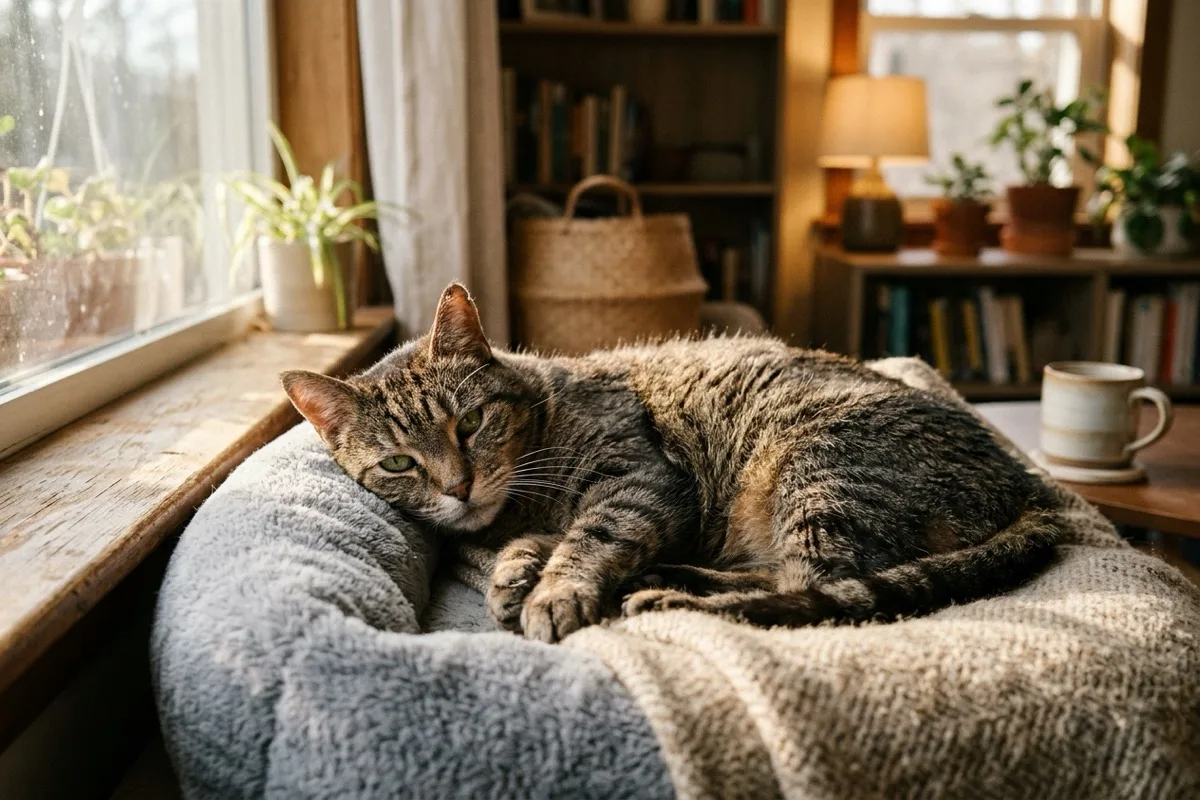
Feline Cognitive Dysfunction Syndrome (FCDS)—often termed cat dementia or feline Alzheimer's—is a progressive neurodegenerative condition affecting over 50% of cats aged 15 and older, and nearly 28% of cats between 11 and 14 years. It is characterized by an insidious decline in memory, spatial learning, social interactions, and circadian sleep-wake cycles.
In this guide
1. Pathophysiology: Inside the Aging Feline Brain
Similar to human Alzheimer's disease, the feline geriatric brain undergoes specific microstructural changes:
- Beta-Amyloid Deposition: Extracellular amyloid plaques accumulate within the cerebral cortex and hippocampus, impairing spatial processing and memory consolidation.
- Cerebral Microvascular Ischemia: Amyloid angiopathy thickens vascular walls, reducing oxygen perfusion and causing microinfarcts.
- Neuronal Atrophy & Free Radical Load: Brain volume decreases alongside depleted neurotransmitters like acetylcholine, dopamine, and serotonin.
---
2. Recognizing the DISHA Signs
International veterinary neurology classifies feline dementia using the DISHA framework:
| Letter | Cognitive Domain | Typical Household Presentation |
|---|---|---|
| D | Disorientation | Staring blankly at walls, getting trapped behind open doors, wandering aimlessly |
| I | Interactions | Overly clingy and anxious, or withdrawing into uncharacteristic isolation |
| S | Sleep-Wake Cycles | Deep sleep by day, restless pacing and hollow vocalizations at 3 AM |
| H | House-Soiling | Eliminating right beside the litter tray or forgetting where the box is |
| A | Activity Changes | Repetitive pacing in loops, or complete cessation of sensory exploration |
---
3. Medical Rule-Outs Before Diagnosing Dementia
FCDS is a diagnosis of exclusion. Elderly cats displaying disorientation require a complete medical evaluation:
- Serum Total T4: Hyperthyroidism induces restless agitation and nighttime crying.
- Doppler Blood Pressure: Hypertension triggers headaches and acute retinal detachment, causing blinding confusion.
- Orthopedic Pain Exam: Stiff joints prevent stepping over high litter box sides; review how to tell if your cat is in pain.
- Renal Biochemistry & Urinalysis: Uremic encephalopathy from late-stage kidney failure alters mental alertness.
---
4. Neuroprotective Therapies and Nutritional Support
While brain aging cannot be reversed, progression can be moderated:
- Marine Omega-3s (DHA & EPA): High-dose DHA from feline salmon oil supplements preserves neuronal membrane fluidity.
- S-Adenosylmethionine (SAMe): Enhances brain glutathione concentrations and cognitive vitality.
- Pheromones (Feliway Optimum): Eases ambient anxiety and dampens nocturnal agitation.
- Antioxidants (Vitamins E & C): Neutralize free-radical lipid peroxidation in brain tissue.
---
5. Home Modifications for Dementia-Affected Cats
- Plug-In Night Lights: Place soft night lights along hallways and near litter boxes so the cat never wakes in total darkness.
- Low-Entry Litter Trays: Cut down entryway rims so elderly limbs can walk in without stepping up.
- Heated Orthopedic Beds: Soothe concurrent joint stiffness and encourage uninterrupted sleep.
- Predictable Daily Structure: Keep meal times, interaction routines, and feeding stations completely consistent.
---
6. Critical Red Flags: When to Seek Emergency Care
If confusion strikes suddenly in under 24 hours, or if the cat exhibits head tilting, circling toward one side, tremors, unequal pupils, or seizures, this is not chronic dementia. Seek immediate care at a 24/7 emergency veterinary hospital to evaluate for stroke, vestibular syndrome, or intracranial mass.
---
Scientific Sources & References
- Journal of Feline Medicine and Surgery (2023): Feline Cognitive Dysfunction Syndrome: Brain Aging, Clinical Diagnosis, and Environmental Therapeutics.
- American Association of Feline Practitioners (AAFP, 2022): Senior Feline Care Guidelines: Cognitive Assessment and Quality of Life.
- Veterinary Clinics of North America: Small Animal Practice (2024): Neurobiology and therapeutic interventions in feline neurodegenerative decline.
Caring for a cat? Keep their health in your pocket
Register your cat on Nekolife to track vaccination history, weight, and get advice from loving cat parents.
- Vaccine & weight records
- Supportive cat community
- Earn Meow Points & badges
Related pages
Know someone who needs this?