Feline Hepatic Lipidosis: Fatty Liver Disease, Anorexia Dangers and Treatment
Updated: October 31, 2026 · Scientific sources and references
In this guide
1. Pathophysiology: Why Feline Hepatic Lipidosis Develops
Under negative energy balance, a cat's body mobilizes peripheral fat stores. Free fatty acids flood into the liver to be packaged into very-low-density lipoproteins (VLDL).
However, synthesizing and exporting VLDLs requires dietary proteins and essential amino acids (methionine, taurine, carnitine). When food intake ceases:
- Intracellular overload: Triglycerides become trapped within hepatocytes, causing the liver to swell up to three times its normal volume.
- Intrahepatic cholestasis: Swollen hepatocytes compress microscopic bile canaliculi, halting bile drainage and spilling bilirubin into the bloodstream.
- Secondary coagulopathies: Vitamin K absorption plummets, creating severe hemorrhage risks.
---
2. Warning Signs and Clinical Presentation
- Complete anorexia or severe hyporexia: The cat approaches food, sniffs, and turns away with lip-smacking or salivation (nausea).
- Icterus (Jaundice): Bright yellow pigment in the sclera, oral mucosa, and ear flaps.
- Extreme weakness & cervical ventroflexion: Severe hypokalemia leaves the cat unable to lift its head.
- Intermittent vomiting and pale stools.
- Rapid muscle wasting: Noticeable hollows along the spine and hips while the abdomen remains distended.
---
3. Clinical Management: Enteral Feeding as Life-Saving Therapy
The sole effective medical therapy for hepatic lipidosis is consistent, high-protein enteral nutrition. Syringe force-feeding at home is strictly contraindicated due to the high risk of food aversion and fatal aspiration pneumonia.
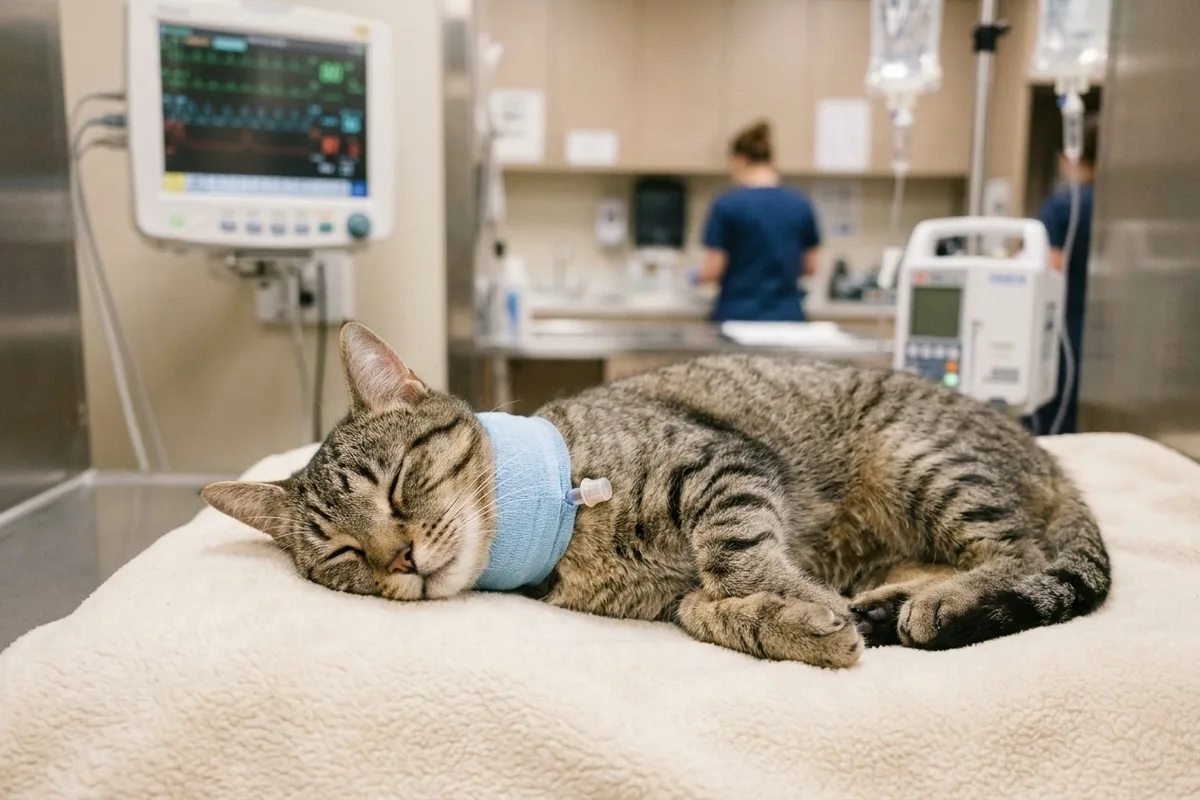
Placement of an esophagostomy feeding tube (E-tube) under light sedation is the clinical standard:
- Enables stress-free delivery of veterinary liquid recovery diets, fluids, and medications.
- Remains comfortably in place for 2 to 6 weeks until voluntary appetite returns and liver values stabilize.
- Tutors can easily manage tube feedings at home following veterinary discharge.
---
4. Prevention and Early Intervention
- Never let an overweight cat go without eating for more than 24 to 48 hours. Offer warm canned food or tasty broths immediately.
- In therapeutic weight-loss plans, caloric reduction must be gentle, targeting no more than 1% to 1.5% body weight loss per week.
- Address underlying triggers such as feline pancreatitis or oral pain promptly.
---
Scientific Sources and References
- Center, S. A. (2005). Feline hepatic lipidosis. Veterinary Clinics of North America: Small Animal Practice, 35(1), 225-269.
- Armstrong, P. J., & Blanchard, G. (2009). Hepatic lipidosis in cats. JFMS, 11(3), 203-216.
- ISFM Consensus Guidelines on Feline Liver Disease, 2021.
Caring for a cat? Keep their health in your pocket
Register your cat on Nekolife to track vaccination history, weight, and get advice from loving cat parents.
- Vaccine & weight records
- Supportive cat community
- Earn Meow Points & badges
Related pages
Know someone who needs this?