Caring for an Orphan Bottle-Fed Kitten: Formula, Warmth, and Anogenital Stimulation
Finding an abandoned litter of newborn kittens or losing a mother cat during queening presents an around-the-clock intensive care challenge. Neonatal kittens (0 to 4 weeks old) are biologically fragile: they cannot regulate their core body temperature, lack voluntary bowel and bladder reflexes, and cannot digest cow's milk.
In this guide
1. Creating the Thermal Nest: Preventing Neonatal Hypothermia
Until 3 to 4 weeks of age, kittens cannot shiver to generate internal body heat:
- The nesting box: Use a high-sided cardboard box lined with clean fleece or smooth towels free of loose loops.
- Indirect heat source: Place a heating pad on the lowest setting (or a hot water bottle wrapped in a thick towel) covering strictly half of the box. The kitten must be able to crawl toward the unheated side if it becomes uncomfortably hot.
- Ideal nest temperature:
- Week 1: 30 °C - 32 °C (86 °F - 90 °F).
- Weeks 2 & 3: 26 °C - 28 °C (79 °F - 82 °F).
- Week 4 onward: 22 °C - 24 °C (72 °F - 75 °F).
---
2. Proper Bottle Feeding Technique and Sizing
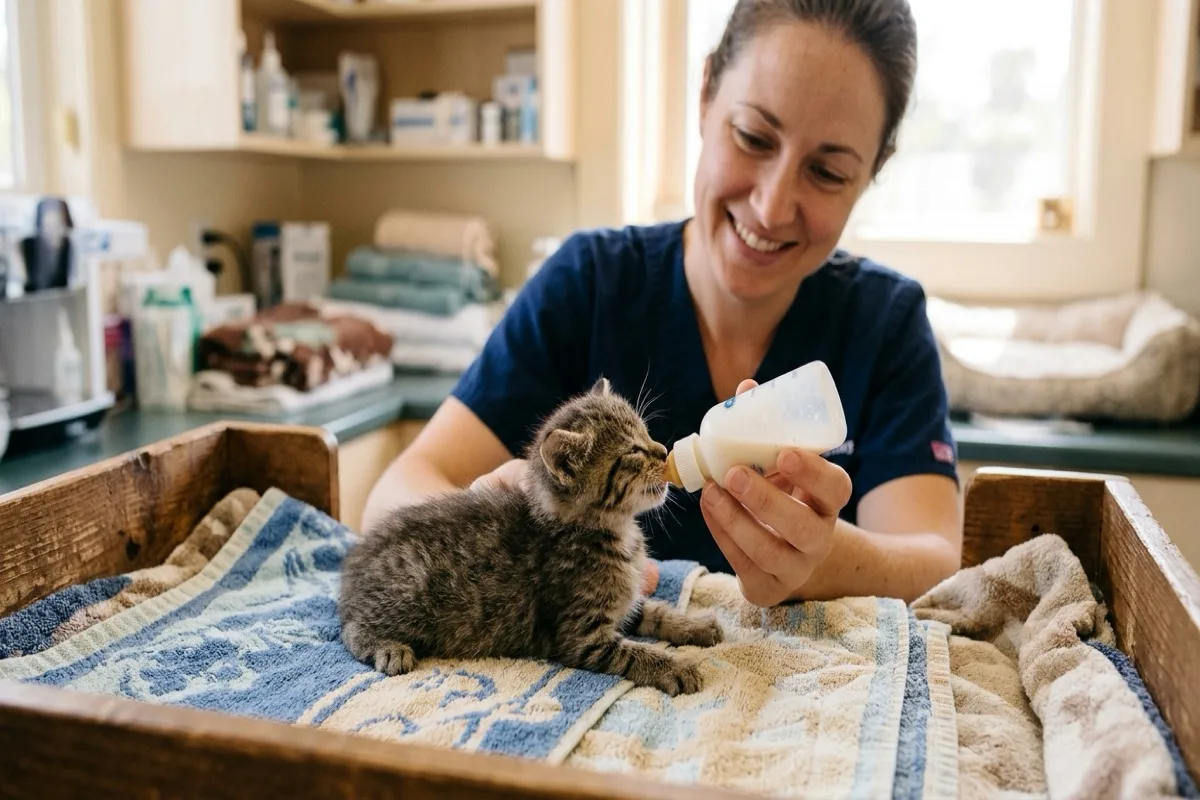
- Natural feeding posture: Lay the kitten belly-down on a towel. Hold the bottle at a 45-degree angle, allowing the kitten to latch and suckle actively. Do not squeeze the bottle aggressively into its mouth.
- Nipple aperture: When inverted, the bottle should release a slow, single droplet. If formula streams out, the hole is too large (aspiration risk); if you must squeeze forcefully, the kitten will exhaust itself before feeding.
- Bubbling at the nostrils (Red Alert): If formula bubbles through the nose, halt feeding immediately. Hold the kitten head-downward for 2 to 3 seconds to clear the airway and blot gently with a tissue.
---
3. Anogenital Stimulation for Elimination
In nature, a queen constantly grooms her kittens' perineum to stimulate physiological voiding:
- Take a cotton pad or soft gauze moistened with warm water.
- Gently dab and massage the genital opening in circular motions until the kitten begins urinating (urine should appear clear or pale yellow at every meal).
- Continue gently rubbing around the anus until stool is passed (mustard/light brown, toothpaste-like consistency). Kittens should defecate at least once every 24 hours.
---
4. Medical Red Flags and Veterinary Consultation
Neonates can decompensate into hypoglycemia and hypovolemia within hours. Seek veterinary attention immediately if:
- The kitten refuses two consecutive meals or becomes limp and floppy.
- Watery yellow or white diarrhea occurs (imminent life-threatening dehydration).
- You hear clicking, rattling, or wet lung sounds during breathing.
- Weight loss is detected on a digital gram scale (healthy kittens gain 10 to 15 grams daily).
Locate pediatric and neonatal veterinary support in our directory of emergency veterinary clinics.
---
Scientific References and Sources
- Journal of Feline Medicine and Surgery: Kitten survival and neonatal management: Guidelines on hypothermia, nutrition, and failure to thrive.
- UC Davis Koret Shelter Medicine Program: Guide to Orphan Kitten Care: Feeding, stimulation, and disease prevention.
- Veterinary Clinics of North America: Small Animal Practice: Neonatal and Pediatric Care in the Feline Patient.
Caring for a cat? Keep their health in your pocket
Register your cat on Nekolife to track vaccination history, weight, and get advice from loving cat parents.
- Vaccine & weight records
- Supportive cat community
- Earn Meow Points & badges
Related pages

Know someone who needs this?