Kitten vaccination schedule: which vaccines they get and when
A kitten gets their first vaccines between 6 and 9 weeks of age, repeats every 2 to 4 weeks until 16 weeks or later, and then needs a booster. The guidelines do not agree on when that booster is due (at 6 months or at one year), so your vet builds the exact schedule based on where you live and how your kitten lives.
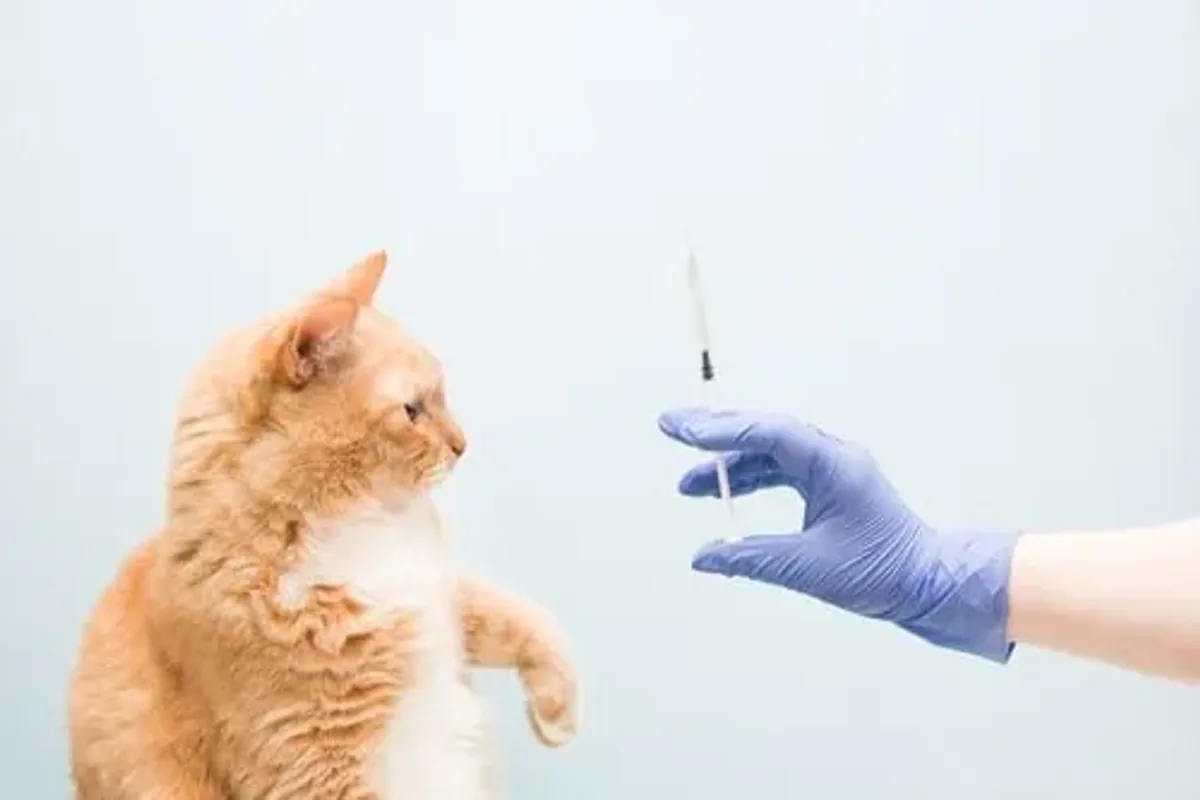
Quick answers
- When is the first vaccine?Between 6 and 8 weeks according to WSAVA; iCatCare says it usually starts at 8–9 weeks.
- How often is it repeated?Every 2 to 4 weeks, until 16 weeks of age or later.
- And the booster?WSAVA recommends it at 26 weeks (6 months) or after; iCatCare places it 12 months after the initial series.
- My kitten never goes outside — do they still get vaccinated?Yes: core vaccines are for all cats, including indoor ones.
- When can they go out?iCatCare advises waiting at least 7 to 10 days after the second vaccine, and even better until they are neutered and identified.
In this guide
Why a kitten needs several doses
At birth, a kitten receives antibodies from their mother. Those antibodies protect them at first, but they can also block the vaccine, and it is not known exactly when they drop in each kitten. That is why guidelines call for several doses in a row and for the last one at 16 weeks or later: that raises the odds that at least one dose will create protection.
Core and non-core vaccines
Core vaccines are recommended for all cats:
- Feline panleukopenia (feline parvovirus or feline "distemper"): a serious and often fatal disease.
- Feline herpesvirus and calicivirus: the main causes of cat flu; the vaccine does not always prevent infection, but it greatly reduces severity.
- Rabies: where rabies is present, and in many countries it is required by law.
Non-core vaccines are given based on each cat's risk: feline leukemia (FeLV), Chlamydia felis, and Bordetella bronchiseptica, among others.
Vaccination schedule by age
| Age | What the guidelines recommend |
|---|---|
| 6–9 weeks | First dose of the trivalent vaccine (panleukopenia, herpesvirus, and calicivirus): from 6–8 weeks according to WSAVA, at 8–9 weeks according to iCatCare. |
| Every 2–4 weeks | Repeat until 16 weeks of age or later. iCatCare: second dose 3–4 weeks later and, increasingly, a third at 16–20 weeks. |
| 26 weeks (6 months) | Booster according to WSAVA, to cover kittens in which the initial series did not work. |
| 12 months later | First booster according to iCatCare (sometimes earlier). |
| Adult | Boosters every 1 to 3 years depending on the vaccine, the disease, and your cat's risk. |
Rabies and non-core vaccines have their own schedules; your vet will tell you when they are due based on the law and the vaccine available in your country.
The guidelines disagree on two points
- The first booster. WSAVA (the World Small Animal Veterinary Association) recommends revaccinating at 26 weeks or after, instead of waiting until 12–16 months. iCatCare talks about a booster 12 months after the initial series, "occasionally earlier."
- Feline leukemia (FeLV). For AAHA/AAFP it is core in cats under 1 year. WSAVA considers it core for young cats only where FeLV is common, and iCatCare treats it as non-core.
No option is "the right one" for everyone: it depends on your country and your cat's lifestyle. Ask your vet which schedule they follow and why.
How to prepare for the vaccine visit
- Bring the history: if you adopted them, ask which vaccines, deworming, and flea treatments they received.
- Use a hard carrier and let them explore it at home with treats so they do not associate it only with the vet.
- Make the most of the visit: it often lines up with the deworming schedule and is a good time to talk about neutering.
- Note dates and batch numbers in a notebook or on the card they give you.
Signs to see the vet
Contact your vet if your kitten:
- Has vomiting or diarrhea, especially if severe or with blood (also see kitten with diarrhea).
- Is very lethargic, not eating, or has a fever.
- Sneezes a lot, has discharge from the eyes or nose, or mouth ulcers.
- Shows signs of an allergic reaction after the vaccine, such as a swollen face or difficulty breathing: that is an emergency.
- You notice a lump at the injection site: tell your vet so they can check it.
Create a Nekolife account
Keeping your kitten's vaccine schedule is easier when you share questions with other caregivers and have the guides at hand.
Create account — It's free and you'll come right back here.
Frequently asked questions
At what age is a kitten vaccinated for the first time?
Between 6 and 9 weeks: WSAVA says 6–8 weeks and iCatCare 8–9 weeks.
How many vaccines does a kitten need?
It depends on the age they start: it is repeated every 2 to 4 weeks until 16 weeks or later, and then they get a booster. That is why there are often 3 or 4 visits in the first year.
Do you need to vaccinate a cat that never goes outside?
Yes. Core vaccines are recommended for all cats, including indoor ones.
I adopted an adult cat and do not know if they are vaccinated — what do I do?
Cornell says an adult cat with no known history is treated as unvaccinated and gets the full series. Your vet will tell you how to do it.
How often is an adult cat vaccinated?
Every 1 to 3 years depending on the vaccine and the risk. Rabies may have deadlines set by law.
Do vaccines have side effects?
The risks are low: mainly short-term allergic reactions and, rarely, a tumor at the injection site (sarcoma) long term. Cornell notes that for most cats, the benefits far outweigh the risks. If you notice anything unusual after a vaccine, contact your vet.
Caring for a cat? Keep their health in your pocket
Register your cat on Nekolife to track vaccination history, weight, and get advice from loving cat parents.
- Vaccine & weight records
- Supportive cat community
- Earn Meow Points & badges
Related pages

Sources
- Squires, R. A. et al. "Guías WSAVA 2024 para la vacunación de perros y gatos" (Spanish version). World Small Animal Veterinary Association (WSAVA), Journal of Small Animal Practice, 2024. wsava.org
- "Vaccinating your cat". International Cat Care (iCatCare). Updated September 26, 2025. icatcare.org
- "2020 AAHA/AAFP Feline Vaccination Guidelines". American Animal Hospital Association and American Association of Feline Practitioners, 2020. aaha.org
- "Caring for your new kitten" (leaflet). International Cat Care (iCatCare). icatcare.org
- "Feline Vaccines: Benefits and Risks". Cornell Feline Health Center, Cornell University College of Veterinary Medicine. vet.cornell.edu
Know someone who needs this?