How to Get a Cat to Drink Water: Clinical Tips and Kidney Protection
Domestic cats inherit a delicate physiological challenge: they descend from the African wildcat (Felis lybica), an arid desert-dweller whose body evolved to obtain almost all its moisture directly from freshly caught prey (birds and small rodents comprising 70% to 75% water). Because of this evolutionary trait, cats have a notoriously low thirst drive and naturally produce highly concentrated urine. When fed exclusively on dry kibble (which contains a mere 8% to 10% moisture), up to 90% of domestic cats live in a state of chronic subclinical dehydration, paving the way for chronic kidney disease, bladder stones, and feline cystitis.
In this guide
1. How Much Water Does a Cat Need and How to Spot Dehydration
Daily fluid requirements in feline veterinary medicine are calculated as follows:
$$\text{Daily Total Water (ml)} = \text{Cat Weight (kg)} \times 50\text{ to }60\text{ ml}$$
| Cat Weight | Total Daily Requirement | Ingestion on 100% Dry Kibble | Ingestion with 1 Can (85g) + Kibble |
|---|---|---|---|
| 3 kg (6.6 lbs) | 150 – 180 ml | Drinks ~40–60 ml (Severe deficit) | ~68 ml from food + drinks ~60 ml (Optimal) |
| 4 kg (8.8 lbs) | 200 – 240 ml | Drinks ~60–80 ml (~140 ml deficit) | ~68 ml from food + drinks ~100 ml (Balanced) |
| 5 kg (11 lbs) | 250 – 300 ml | Drinks ~80–100 ml (~180 ml deficit) | ~68 ml from food + drinks ~140 ml (Balanced) |
10-Second At-Home Dehydration Check
- Skin Turgor Test (Skin Tent): Gently lift the loose skin over your cat's shoulder blades and let go. In a hydrated cat, the skin instantly snaps flat. If it takes longer than 2 seconds to flatten, your cat is experiencing moderate to severe dehydration.
- Gum Check: Touch your cat's gums with a clean finger. They should feel moist, slick, and smooth. If they feel tacky, sticky, or dry, your cat needs moisture.
- Eye Brightness: Sunken eyes or a visible third eyelid are urgent veterinary signs of systemic dehydration.
---
2. The 4 Behavioral Mistakes That Make Cats Avoid Water
Before trying to force a cat to drink, correct these common environmental errors:
```
┌─────────────────────────────────────────────────────────────┐
│ 4 COMMON HOUSEHOLD HYDRATION MISTAKES: │
│ │
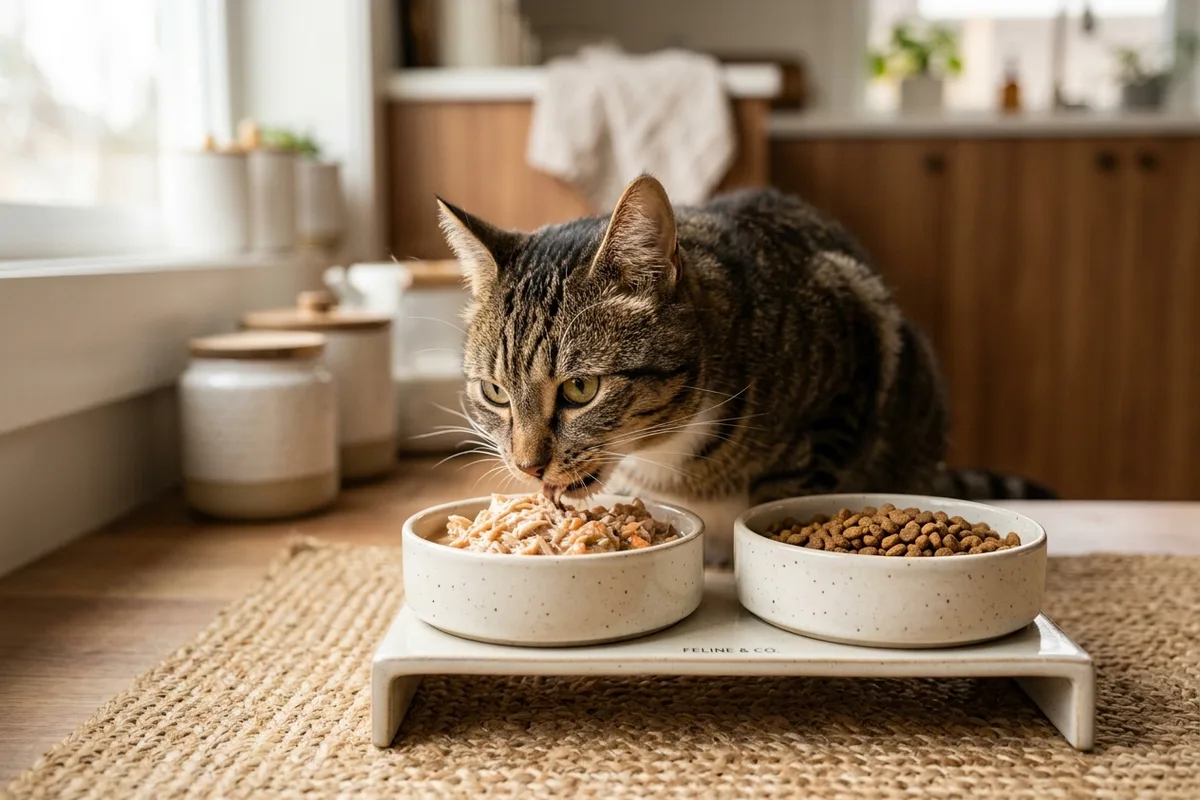
│ 1. Placing the water bowl directly next to food │
│ (In nature, decaying prey contaminates nearby water) │
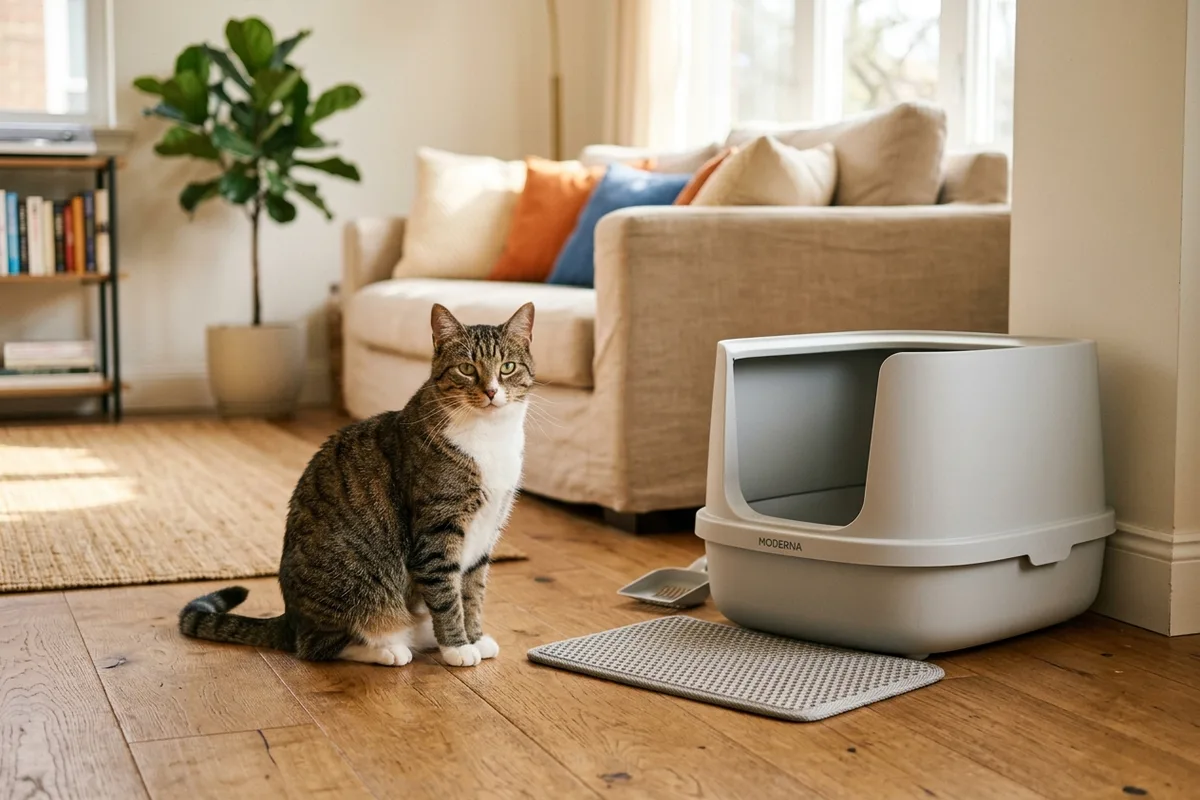
│ 2. Placing water near the litter box │
│ (Fecal bacteria trigger immediate evolutionary disgust) │
│ 3. Using plastic bowls that harbor bacteria and odors │
│ 4. Narrow bowls that cramp and overstimulate whiskers │
└─────────────────────────────────────────────────────────────┘
```
- Separation Rule: In the wild, wildcats avoid water within 6 feet of fresh kills to prevent bacterial contamination. Separate water bowls at least 6 to 10 feet away from food dishes.
- *Whisker Fatigue (Whisker Stress): Feline whiskers (vibrissae*) contain thousands of hypersensitive nerve receptors. If a bowl is narrow and deep, brushing whiskers against the rim causes neurological overstimulation. Use wide, shallow dishes.
- Aversion to Stagnant Water: Evolution teaches cats that still puddles harbor parasites. Flowing water represents cleanliness and safety.
- Plastic and Detergent Odors: Plastic absorbs detergent fragrances and leaches petroleum chemicals that sensitive feline noses find repulsive.
---
3. Water Bowl and Fountain Comparison
| Water Station Type | Key Benefits | Drawbacks | Veterinary Verdict |
|---|---|---|---|
| Stainless Steel Fountain | Non-porous, dishwasher safe, hygienic, constant oxygenation | Requires power outlet and monthly filter changes | #1 Top Recommended Choice |
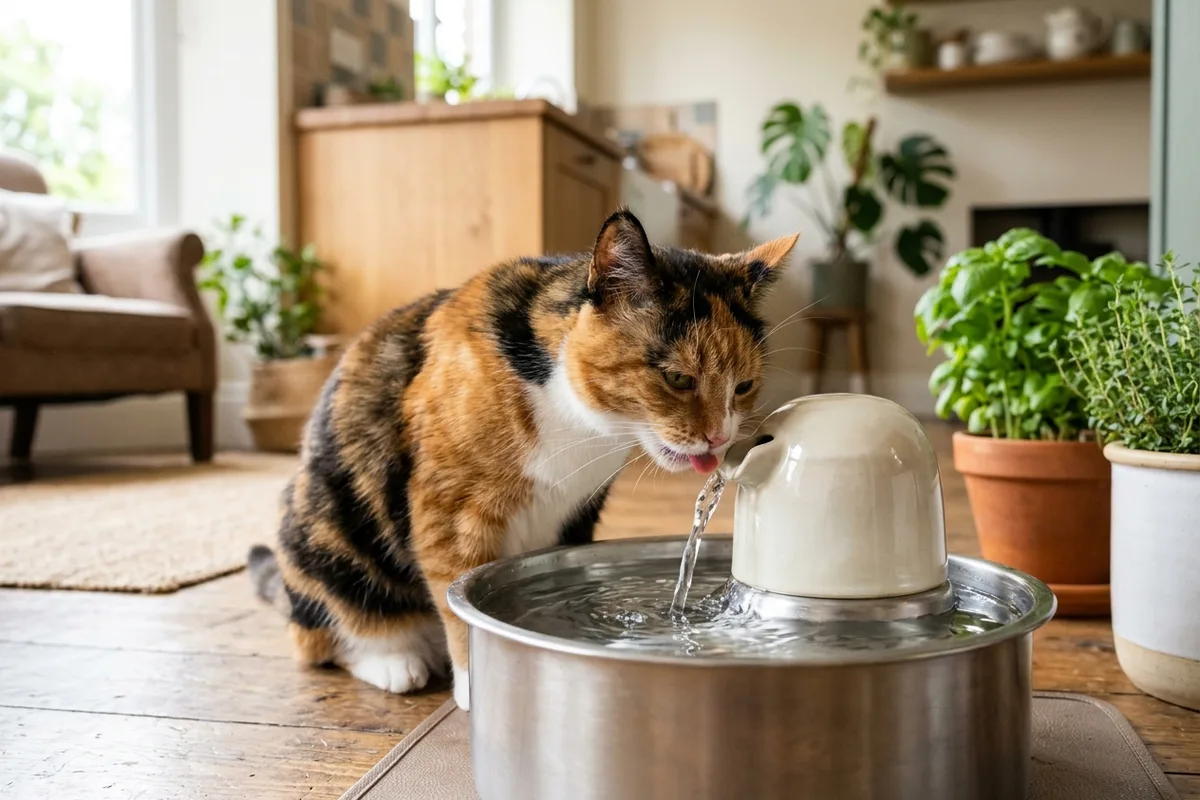
| Ceramic Fountain | Heavy, durable, keeps water naturally cool, easy to sanitize | Fragile if dropped | Excellent Premium Alternative |
| Wide Ceramic/Glass Dish | Affordable, silent, whisker-friendly | Water stagnates and gathers room dust | Good secondary option |
| Cheap Plastic Bowl | Inexpensive | Causes feline chin acne, absorbs bad odors | Strongly Discouraged |
---
4. 7 Clinical Tricks to Skyrocket Water Intake
Apply these proven veterinary and behavioral strategies to boost moisture consumption:
1. Invest in a Circulating Filter Fountain
The gentle ripple and acoustic bubble of moving water trigger hunting curiosity. Clean the motor weekly and replace activated carbon filters every 3 to 4 weeks.
2. Multiply Water Stations (The N + 1 Rule)
Never rely on a single bowl. Provide at least 2 to 3 water stations across different quiet rooms, away from noisy appliances and heavy household foot traffic.
3. Feed Wet Canned Food Daily
The most biologically sound way to hydrate a feline is through diet. A standard 85g (3 oz) can of wet food provides approximately 68 ml of pure moisture. Read our comparison in wet food vs dry kibble for cats.
4. Create "Warm Meat Broth"
When serving canned food or pate, mash it with a fork and mix in 2 to 3 tablespoons of warm water (approx. 30–45 ml). Warmth intensifies meat aromas, encouraging cats to lap up the gravy first.
5. Simmer Unsalted Homemade Bone Broth
Boil chicken or beef bones in plain water for 2 hours without salt, onions, garlic, or spices (onions and garlic cause fatal red blood cell rupture in cats; see toxic plants and foods for cats). Strain, cool, skim off surface fat, and offer a few tablespoons daily.
6. Flavored Ice Cubes
Freeze unsalted bone broth in an ice cube tray. On warm days, float one cube in their water dish; cats love licking the moving, melting ice.
7. Avoid Heavily Chlorinated Tap Water
If your municipal tap water smells strongly of chlorine or minerals, cats will reject it. Offer filtered or low-mineral bottled water.
---
5. Dangerous Conditions Prevented by Proper Hydration
Ensuring lifelong hydration is the ultimate preventive care for felines:
* Chronic Kidney Disease (CKD): Affects over 35% of senior cats. Chronic dehydration strains delicate renal nephrons, accelerating functional decline. Read more in our feline kidney disease guide.
* FLUTD and Urinary Crystals: Dilute urine prevents mineral precipitation into painful struvite or calcium oxalate stones, minimizing life-threatening urethral blockages in males. Review warning signs in our cat urinary health guide.
* Chronic Constipation: A dehydrated body draws moisture from the colon, leaving stools hard, dry, and difficult to pass.
---
6. Frequently Asked Questions
Why does my cat prefer drinking from the sink or bathtub tap?
Because cats instinctively seek fresh, oxygenated, moving water. Running tap water smells fresher than water sitting in a room-temperature dish. A stainless steel fountain satisfies this exact instinct.
What does it mean if my cat suddenly drinks huge amounts of water?
Sudden excessive drinking and frequent large urinations (polydipsia and polyuria) are serious warning signs of feline diabetes, chronic kidney failure, or hyperthyroidism. Seek immediate veterinary examination.
Can I give milk to hydrate my cat?
No. Most adult cats are lactose intolerant. Cow milk causes severe diarrhea, which worsens dehydration. See our guide on cow milk and kittens.
---
Veterinary References and Sources
- American Association of Feline Practitioners (AAFP): Feline Hydration Assessment & Management Guidelines.
- International Society of Feline Medicine (ISFM): Environmental Enrichment and Water Intake Protocols for Domestic Cats.
- Cornell Feline Health Center: The Importance of Hydration in Preventing Feline Lower Urinary Tract Disease (FLUTD).
- World Small Animal Veterinary Association (WSAVA): Global Nutrition Committee: Water Requirements in Carnivores.
Caring for a cat? Keep their health in your pocket
Register your cat on Nekolife to track vaccination history, weight, and get advice from loving cat parents.
- Vaccine & weight records
- Supportive cat community
- Earn Meow Points & badges
Related pages
Know someone who needs this?