How to Travel with a Cat by Car and Plane: Carriers, Gabapentin, and IATA Rules
For a territorial, routine-dependent species with heightened kinetic sensitivity like the domestic cat (Felis catus), travel represents a total disruption of their olfactory anchors and spatial boundaries. Forced confinement, roaring engine vibrations, and atmospheric pressure shifts can trigger extreme tachycardia, hyperventilation, and acute panic states if not addressed with clinical and behavioral foresight.
In this guide
1. Approved Carriers: Selection and Behavioral Habituation
The carrier is your feline’s emotional fortress during transit.
Hard-sided vs. Soft-sided Carriers
- For Automobiles: Choose rigid, impact-resistant plastic crates featuring both front and top metal doors. In sudden deceleration, rigid walls disperse inertia without collapsing inward.
- For Airplane Cabins (PETC): Airlines require soft-sided, IATA-compliant bags that fit beneath the forward seat (typically 18 x 11 x 11 in / 45 x 28 x 28 cm). They must feature breathable mesh on 3 sides and auto-locking zipper sliders.
Step-by-Step Desensitization
- Week 1: Keep the carrier doorless in a sunny room. Spray synthetic pheromones (Feliway Classic) 15 minutes prior.
- Week 2: Feed their favorite wet food vs. dry kibble inside the back of the carrier to create positive metabolic associations.
- Week 3: Reattach the door, close it for 1 minute during mealtime, reward calmness, and conduct a brief 5-minute test drive around your block.
---
2. Veterinary Protocol: Passports, Microchips, and Medication
| Requirement / Drug | Administration & Timing | Clinical Purpose |
|---|---|---|
| ISO 11784/11785 Microchip & Health Certificate | Subcutaneous scan + USDA / EU endorsed passport | Legal mandate for cross-border and commercial air transit |
| Rabies Vaccination | Administered ≥ 21 days before international departure | Mandatory international customs requirement |
| Oral Gabapentin (50–100 mg) | Dosed 90–120 min prior to departure | Targets central nervous system fear pathways with mild relaxation |
| Feline Facial Pheromones (F3) | Spray carrier interior 15 min before cat enters | Mimics natural cheek-marking scents to lower heart rate |
> Veterinary Warning: Never give over-the-counter human sedatives or phenothiazines (acepromazine). Acepromazine traps the cat in a state of chemical restraint where they cannot move, yet external noise and panic perception are heightened.
For cats prone to chronic situational phobias, review our clinical guide on cat stress and anxiety: symptoms and solutions.
---
3. Road Travel: Preventing Motion Sickness and Car Dynamics
- Pre-travel Fasting: Withhold solid food for 3 to 4 hours before departure. Vestibular stimulation combined with full gastric contents induces vomiting and severe nausea.
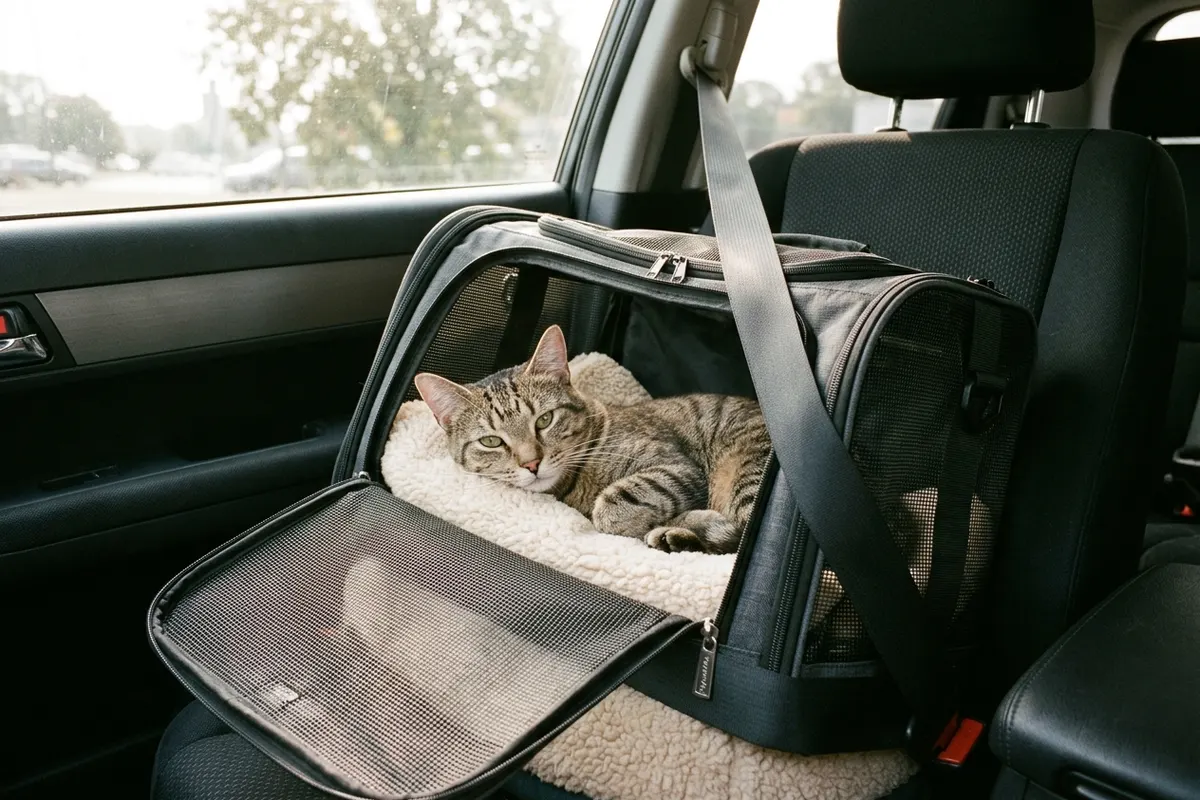
- Carrier Positioning: The safest, lowest-vibration spot is the rear footwell directly behind the front passenger seat. If placing on a car seat, pass seatbelts through reinforced anchor loops.
- Sensory Dampening: Drape a breathable light towel over the carrier to block visual streams of oncoming headlights and passing scenery.
- Rest Stops: Never open the carrier inside an open car door. Offer small amounts of water via syringe or dish while all vehicle doors remain closed.
---
4. Air Travel: IATA Cabin Protocols and Airport Security
- Book Early: Commercial carriers cap cabin pets at 2 to 4 animals per flight. Always confirm your pet reservation before purchasing non-refundable human tickets.
- Airport TSA Security Checkpoint: Security agents will ask you to remove your cat from their carrier so the bag can pass through the X-ray tunnel. Always request a Private Screening Room. If unavailable, secure your cat in a snug harness and leash tucked inside your jacket before opening the bag.
- In-Cabin Comfort: Pack absorbent pee pads at the bottom of the carrier and bring collapsible silicone bowls for airport layovers.
---
Scientific Sources & References
- IATA (International Air Transport Association): Live Animals Regulations (LAR) – Standards for Feline Passenger Travel and Container Specifications.
- AAFP & ISFM (2022): Cat Friendly Transport and Handling Guidelines, Journal of Feline Medicine and Surgery.
- van Haaften, K. A. et al. (2017): Effects of a single preappointment dose of gabapentin on signs of stress in cats during transportation and veterinary examination, Journal of the American Veterinary Medical Association, 251(10), 1175-1181.
Caring for a cat? Keep their health in your pocket
Register your cat on Nekolife to track vaccination history, weight, and get advice from loving cat parents.
- Vaccine & weight records
- Supportive cat community
- Earn Meow Points & badges
Related pages


Know someone who needs this?