Wet Food vs. Dry Kibble: What Is Really Best for Your Cat?
The question of whether to feed a cat exclusively on dry kibble, switch to a 100% complete wet diet (canned or pouches), or offer a structured mixed feeding plan is one of the most critical decisions a pet parent will ever make. Cats are obligate carnivores, a metabolic reality sculpted over millions of years of desert evolution. This unique biology dictates their strict dietary need for animal protein, an inherently low thirst drive, and an enzymatic inability to efficiently process large loads of plant carbohydrates.
In this guide
Feline Digestive Physiology: Why Cats Are Not Small Dogs
Understanding feline nutrition requires recognizing that domestic cats (Felis catus) descend directly from the African wildcat (Felis lybica):
- Weak Innate Thirst Mechanism: In the wild, wildcats absorb over 70% of their daily fluid directly from prey bodies (small rodents and birds consist of 68%–72% water). Their hypothalamic thirst drive is notoriously sluggish. A cat consuming only dry food rarely drinks enough standing water to compensate, living in a state of persistent, low-grade dehydration.
- Obligate Carnivore Nutrients: Felines cannot thrive on plant-based alternatives because they lack the metabolic enzymes to synthesize critical nutrients:
- Taurine: An essential free amino acid required for retinal health and cardiac muscle integrity.
- Arachidonic Acid: An essential fatty acid that cats cannot synthesize from vegetable oils.
- Preformed Vitamin A (Retinol): Cats cannot convert plant beta-carotene into active vitamin A.
- Protein-Driven Gluconeogenesis: Their liver enzymes constantly break down dietary amino acids to maintain baseline blood glucose levels, regardless of carbohydrate intake.
---
Nutritional Comparison: Complete Wet Food vs. Dry Kibble
| Parameter | Complete Wet Food | Standard Dry Kibble | Premium Grain-Free Kibble |
|---|---|---|---|
| Biological Moisture | 75% – 82% | 8% – 10% | 8% – 10% |
| Protein (Dry Matter Basis) | 45% – 65% | 28% – 34% | 38% – 46% |
| Animal Fat (Dry Matter) | 18% – 30% | 10% – 16% | 16% – 22% |
| Net Carbohydrates | < 5% – 12% | 35% – 50% | 20% – 30% (potato/peas) |
| Caloric Density | Low (~70–95 kcal/100g) | Very High (~380–420 kcal/100g) | Very High (~390–430 kcal/100g) |
| Renal Osmotic Load | Minimal (healthy, dilute urine) | Heavy (concentrated urine) | Heavy (concentrated urine) |
---
Major Health Benefits of Wet Food
1. Guarding Against FLUTD and Bladder Crystals
Dry diets cause concentrated, low-volume urine with a specific gravity frequently exceeding 1.050. This creates an optimal environment for microscopic minerals to precipitate into struvite or calcium oxalate crystals, leading to severe feline idiopathic cystitis or life-threatening urethral obstruction. High moisture intake produces voluminous, dilute urine that continually flushes the bladder.
> [!NOTE]
> Learn more about identifying urethral blockages and urinary emergency signs in our clinical guide on cat urinary problems.
2. Lifelong Kidney Protection
Chronic Kidney Disease (CKD) affects more than one in three senior cats. Glomerular nephrons work under continuous filtration pressure when blood volume is poorly hydrated. Natural moisture in every meal preserves renal perfusion and delays subclinical functional decline. Review early warning signs in our guide on chronic kidney disease in cats.
3. Satiety and Healthy Weight Management
Wet food is volumetrically substantial while naturally modest in calories per gram. Cats feel physically full and satisfied because water stretches gastric receptors, preventing excessive begging and sedentary overeating.
---
The Dental Health Myth: Why Kibble Doesn't Clean Teeth
The marketing claim that dry kibble "brushes cat teeth" has been extensively reevaluated in modern veterinary dentistry:
- Dentition Anatomy: Feline carnassial teeth are designed to shear meat and snap bone, not grind flat surfaces.
- Immediate Crushing: Standard dry kibble shatters immediately at the tooth tip upon bite pressure, crumbling before reaching the cervical margin where periodontal tartar actually accumulates.
- Carbohydrate Residue: Starch particles mixed with feline saliva can adhere to teeth, fostering oral plaque bacteria.
Effective oral healthcare requires daily brushing with enzymatic feline toothpaste, veterinary dental chew supplements, or professional ultrasonic scaling when recommended.
---
Preventing Feline Diabetes and Obesity
Type 2 feline diabetes is intimately connected to high-carbohydrate dry diets combined with sedentary indoor lifestyle. Commercial kibble extrusion requires starch (corn, wheat, rice, tapioca, or peas) to hold the biscuit shape together.
Free-feeding dry kibble leads to continuous postprandial glucose spikes, demanding constant insulin secretion from pancreatic beta cells. Over time, this causes insulin receptor downregulation and beta-cell exhaustion. Transitioning cats to a high-protein, low-carbohydrate wet diet is the foundational medical step for both prevention and clinical remission (see our comprehensive guide on feline diabetes).
---
Reading the Label: Complete vs. Complementary Pet Food
When browsing pet stores, the most crucial label distinction is between complete meals and treats:
- Complete Pet Food: Fully formulated with added taurine, essential vitamins (A, D3, E), calcium, and phosphorus. Can safely serve as a cat's sole diet throughout life. Textures include smooth pate, fine mousse, or tender shredded meat in broth.
- Complementary / Topper: Contains only cooked muscle meat in water or jelly (e.g., pure tuna loin or plain chicken breast). Lacks vital taurine supplementation and balanced calcium-to-phosphorus ratios. It must never exceed 10%–15% of daily calories.
Quality Checklist:
- Specific Named Animal Meat: Look for "Chicken 70% (muscle meat, heart, liver)" rather than ambiguous "meat and animal derivatives."
- Zero Added Sugars or Artificial Caramel: Quality foods never add sugars or wheat gluten to thicken gravies.
- Guaranteed Taurine: Minimum 1,000 to 1,500 mg/kg on dry matter basis.
---
Structured Mixed Feeding: The Practical Compromise
For households balancing busy schedules and food budgets, structured mixed feeding delivers outstanding benefits:
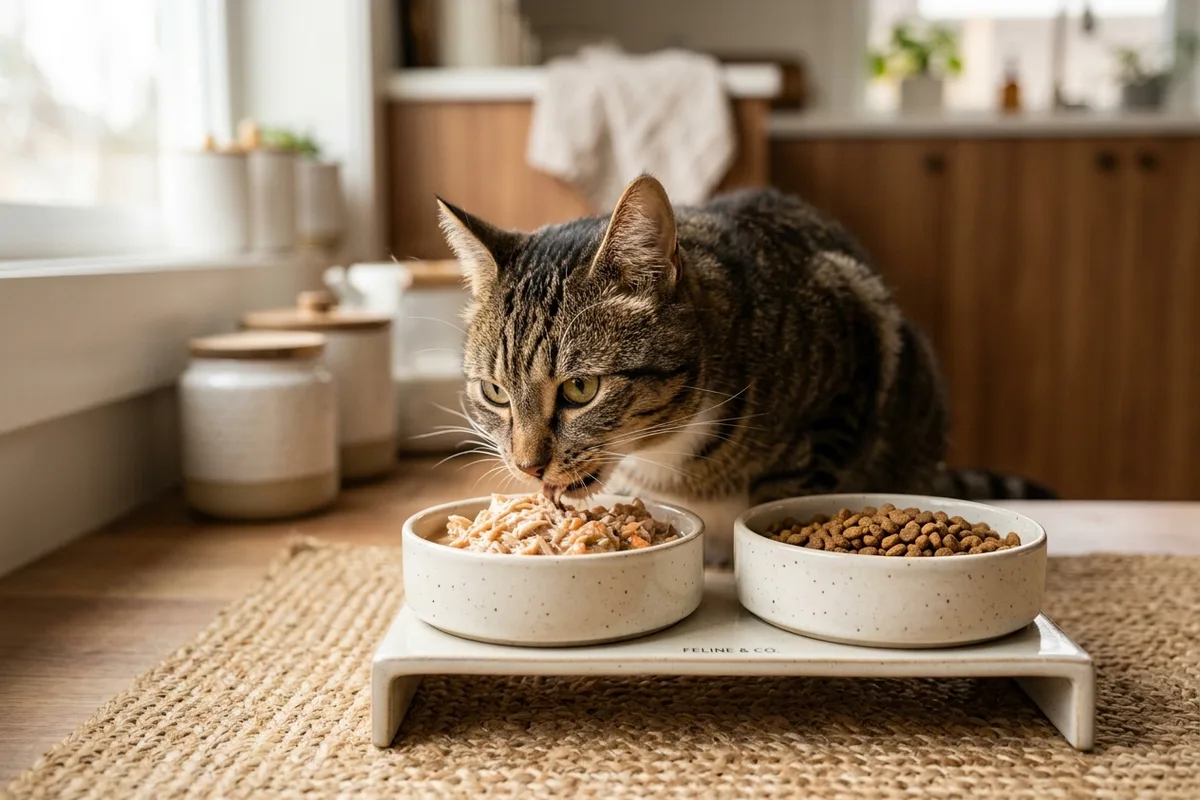
- Morning and Evening: Fresh complete wet food served in clean ceramic bowls (50–80 grams per serving). Pick up uneaten food after 30–40 minutes to prevent oxidation.
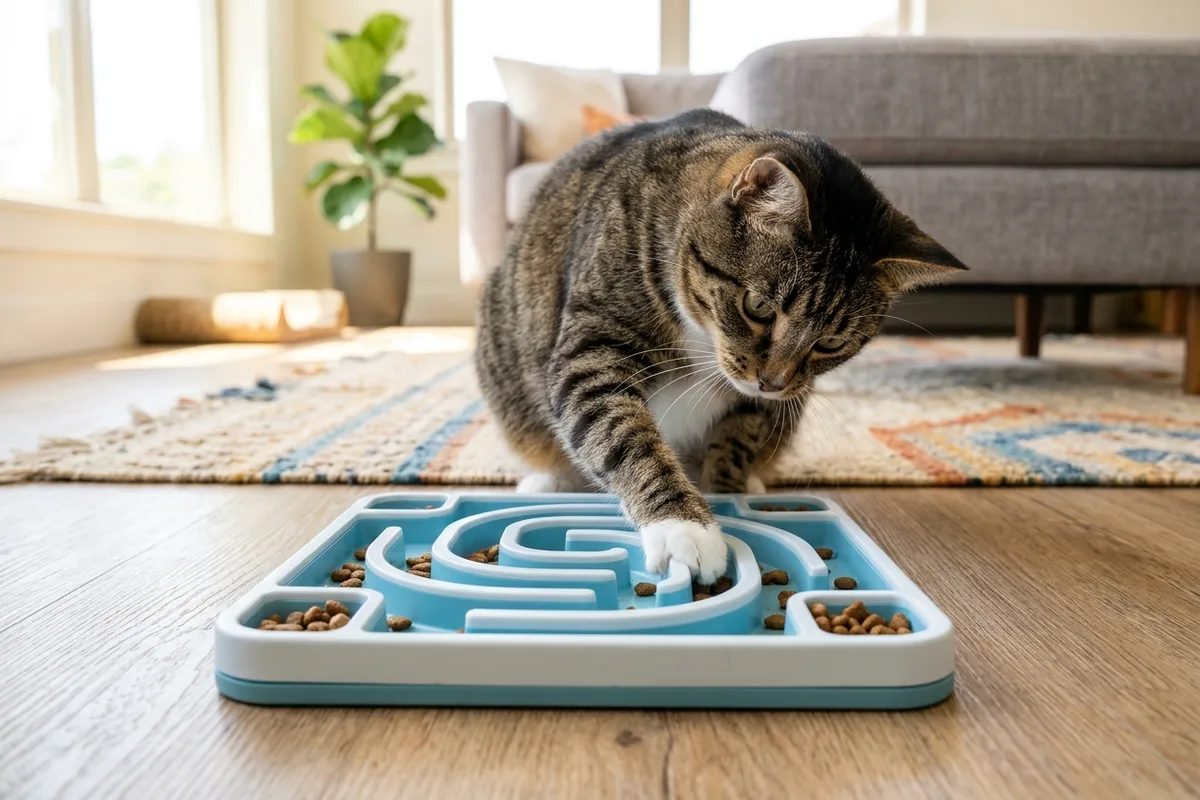
- Daytime Activity: A measured portion of high-protein dry kibble offered exclusively inside interactive puzzle feeders to stimulate natural hunting instincts and prevent gorging.
---
10-Day Gradual Transition Protocol
Help your cat's gut microbiome and olfactory preferences adapt smoothly with this stepped protocol:
```
Days 1–3: 80% current kibble + 20% new wet food
Days 4–6: 60% current kibble + 40% new wet food
Days 7–8: 40% current kibble + 60% new wet food
Days 9–10: 20% current kibble + 80% new wet food
Day 11+: 100% target wet food (or desired permanent mixed ratio)
```
> [!TIP]
> Tips for Picky Cats:
> - Warm It Up: Place the can or pouch in a bowl of warm water for a few minutes to reach body temperature (~100°F / 38°C). Warmth releases rich aromatic volatile fats.
> - Topper Magic: Dust a pinch of crushed freeze-dried meat treats or nutritional yeast on top.
> - Texture Variety: If your cat dislikes dense pate, try tender morsels in gravy or shredded cuts in broth.
---
Frequently asked questions
Isn't feeding wet food significantly more expensive?
While the daily cost of premium wet food is higher than bulk dry kibble, veterinary data clearly shows that wet feeding prevents astronomical medical bills down the road: emergency urethral unblocking surgeries, repeat cystitis treatments, insulin therapies, and renal intensive care.
Can opened cans be kept in the refrigerator?
Yes, sealed with an airtight silicone pet can lid to prevent oxidation and odor absorption. Refrigerated wet food remains fresh for 48 to 72 hours. Always allow the portion to sit at room temperature for 15 minutes before serving.
What about raw biologically appropriate diets (BARF)?
Carefully designed raw diets offer high moisture and digestibility, but require rigorous nutritional balancing and strict microbiological handling to prevent Salmonella and parasites. For most pet parents, complete commercial canned food delivers the same cellular hydration with certified sterile safety. ---
Caring for a cat? Keep their health in your pocket
Register your cat on Nekolife to track vaccination history, weight, and get advice from loving cat parents.
- Vaccine & weight records
- Supportive cat community
- Earn Meow Points & badges
Related pages
Sources
Know someone who needs this?