Indoor Cat Environmental Enrichment: Cat Trees, Catios, and Brain Games
Living exclusively indoors protects cats from traffic accidents, territorial street fights, and infectious diseases, but it introduces a subtle, profound challenge: chronic boredom and sensory deprivation. In the wild, an active feline spends 6 to 8 hours each day patrolling territory, stalking prey, and processing thousands of visual and olfactory cues. When we compress their universe into four static walls and an effortless food bowl, common behavioral disorders inevitably erupt: shredded sofas, litter box avoidance, nocturnal yowling, obesity, and psychogenic over-grooming driven by anxiety.
In this guide
1. The 5 Pillars of Feline Environmental Enrichment
The American Association of Feline Practitioners (AAFP) and ISFM establish that a feline-friendly indoor habitat must span five core dimensions:
```mermaid
graph TD
A[Comprehensive Environmental Enrichment] --> B[1. Physical Space & Verticalization]
A --> C[2. Foraging & Puzzle Feeding]
A --> D[3. Sensory Stimulation: Sight, Smell, Sound]
A --> E[4. Interactive Human Play]
A --> F[5. Safe Resting Refuges]
```
- Physical: Three-dimensional climbing circuits, elevated lounging shelves, and multi-textured scratching posts.
- Occupational / Cognitive: Brain teasers and foraging puzzles requiring active problem-solving to extract food.
- Sensory: Botanical aromas, tactile substrates, and moving visual outdoor stimuli.
- Social: Predictable, gentle, and positive interactions with their human family.
- Security: Quiet, enclosed hideouts where cats can sleep undisturbed without fear of ambushes.
---
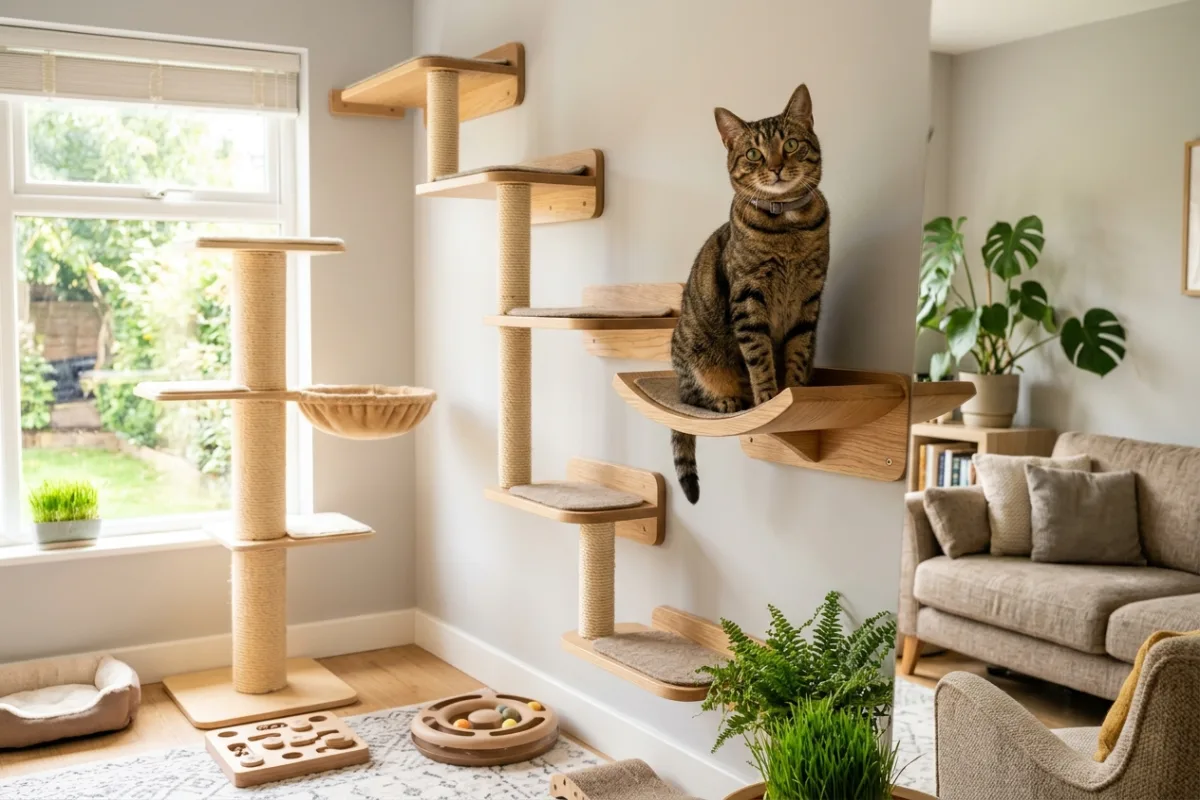
2. Verticalization: Creating Square Footage on Your Walls
In feline ethology, height equals social confidence and emotional calm. In nature, wild felines ascend trees to survey hunting grounds and avoid larger ground predators:
| Vertical Element | Recommended Height | Feline Behavioral Benefit |
|---|---|---|
| Heavy-base cat tree | 1.60 m to 2.00 m (5 to 6.5 ft) | Allows full-body vertical clawing and panoramic territorial surveillance from the top crow's nest. |
| Staggered wall shelves | 1.20 m to 2.20 m (4 to 7 ft) | Creates overhead aerial highways across rooms; essential in homes with toddlers or dogs. |
| Window suction perches | Level with the window sill | Provides direct thermal sunbathing and uninterrupted street watching (cat TV). |
| Elevated box caves | 1.00 m to 1.50 m (3 to 5 ft) | Cozy blind spots where a timid cat can nap deeply while feeling invisible. |
> [!TIP]
> The sturdy post rule: A scratching post must measure at least 80 to 90 cm (32 to 36 inches) of continuous sisal rope height and rest on a heavy, wobble-free base. If the post shakes when your cat leans into a scratch, they will abandon it in favor of your solid, heavy sofa.
---
3. Catios and Cat-Proof Balconies: Outdoor Air Without Hazards
A Catio (cat + patio) is an escape-proof exterior enclosure granting cats the sights, breezes, and scents of nature without the dangers of traffic, poisons, or high-rise falls:
* Heavy-duty safety netting: On apartment balconies, install wire-reinforced polyethylene cat netting (3x3 cm mesh) secured with rigid aluminum rails or masonry eyelet hooks.
* Catio furnishings: Weatherproof untreated tree limbs with coarse bark, multi-tiered cedar shelves, artificial grass rugs, and sheltered sun pods.
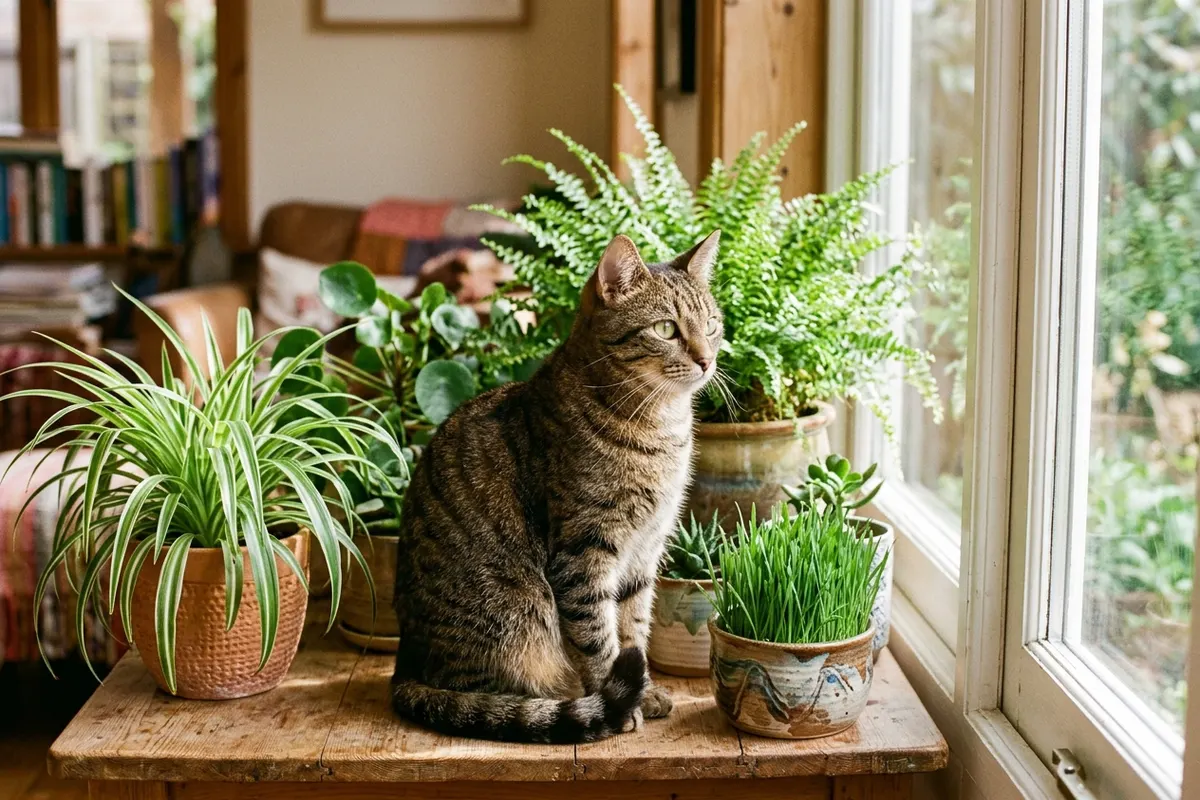
The feline sensory garden: Pots of organic cat grass (Nepeta cataria*, wheatgrass, barley sprouts) enabling safe grazing and digestive hairball clearance.
---
4. Interactive Foraging: Banishing the Boring Food Bowl
In a typical home, a cat walks two feet to a metal bowl, swallows their dry food in 40 seconds, and falls back asleep. This profound lack of physical and mental engagement directly fuels feline obesity and boredom:
Types of puzzle feeders
- Tower mazes: Multi-level acrylic towers with paw-sized cutouts requiring the cat to maneuver individual kibbles down to the tray.
- Snuffle foraging mats: Dense fleece mats where dried treats or crunchy kibble are hidden among fabric folds, stimulating the cat's acute sense of smell.
- DIY cardboard treat rolls: Cardboard paper rolls with taped ends and hand-cut holes that dispense food as they are rolled across the floor.
- Elevated food scattering: Placing tiny 5-kibble portions across various high shelves and bookcases to encourage active daily patrolling.
---
5. Play Routine: Replicating the Predatory Sequence
To relieve stress and satisfy ancestral instincts, indoor play must replicate the neurobiological stages of a real hunt:
```mermaid
graph TD
A[1. Stalk: Dilated pupils, crouched posture] --> B[2. Chase: High-speed sprint pursuit]
B --> C[3. Pounce: Tooth grasp & rear leg bunny kicks]
C --> D[4. Feast: High-protein meat reward]
D --> E[5. Groom & Deep restorative sleep]
```
* Ideal session duration: Two 10- to 15-minute sessions daily, timed around dawn and dusk (peak crepuscular hunting hours).
* Top toys: Feather wands, leather ribbons, and wire toys that move with the darting, erratic cadence of birds or rodents.
* The laser pointer hazard: Red laser dots cannot be physically caught. Chasing an uncatchable beam generates chronic behavioral frustration unless concluded with a tangible toy and a savory treat.
---
6. Olfactory and Auditory Enrichment
A cat's olfactory system is up to 14 times more sensitive than a human's. Introducing sensory novelty revitalizes indoor environments:
Alternative euphoric botanicals: Beyond traditional catnip, offer Silvervine (Actinidia polygama)* and Tatarian honeysuckle wood. Nearly 30% of cats immune to catnip exhibit joyful, rolling responses to silvervine.
* Outdoor sensory discovery boxes: Bring clean pine cones, autumn leaves, or non-toxic tree bark inside for inspection.
Feline-calibrated acoustic landscapes: Ambient soundtracks incorporating feline purr rhythms and ultrasonic frequencies (Cat Music* by David Teie) played at gentle volumes.
---
Veterinary References and Guidelines
American Association of Feline Practitioners (AAFP) & ISFM: Feline Environmental Needs Guidelines* (Journal of Feline Medicine and Surgery).
Herron, M. E., & Buffington, C. A. T.: Environmental Enrichment for Indoor Cats* (Compendium: Continuing Education for Veterinarians).
Ellis, Sarah L. H.: Environmental Enrichment: Practical Strategies for Improving Feline Welfare* (Feline Advisory Bureau).
Overall, Karen L.: Manual of Clinical Behavioral Medicine for Dogs and Cats* (Elsevier).
Frequently asked questions
How much does it cost to enrich a small apartment?
Very little. The most impactful enrichment requires zero expensive renovation: cardboard boxes with cutout holes, toilet paper roll puzzle toys, cleared spaces on top of wardrobes, and a cushioned chair beside a sunny window cost almost nothing.
Does getting a second cat resolve boredom?
Not automatically. While well-matched cats can play together, introducing another cat into a resource-poor home without adequate vertical territory and litter boxes can create chronic territorial friction rather than relief.
What are the main signs of a bored, depressed cat?
Boredom presents as excessive sleep (over 18 hours daily with zero playful bursts), spontaneous compulsive vocalization, neurotic over-grooming creating bald spots (psychogenic alopecia), or binge-eating out of boredom. ---
Caring for a cat? Keep their health in your pocket
Register your cat on Nekolife to track vaccination history, weight, and get advice from loving cat parents.
- Vaccine & weight records
- Supportive cat community
- Earn Meow Points & badges
Related pages
Know someone who needs this?