Safe Plants for Cats: Non-Toxic Houseplants, Sensory Stimulation, and Catio Greenery
Living with cats doesn't mean you have to surrender your dream of a lush, thriving indoor garden. While several popular houseplants pose severe or even fatal poisoning hazards (most notably true lilies, sago palms, and dieffenbachia), there is an abundant variety of 100% feline-safe houseplants certified by the ASPCA (American Society for the Prevention of Cruelty to Animals). Not only are these botanical companions non-toxic if your feline decides to nibble, but they also serve as an invaluable pillar of indoor cat environmental enrichment.
In this guide
1. Top 7 Safe Houseplants for Cat-Friendly Homes
Every species in this curated selection has been cross-referenced with the ASPCA Animal Poison Control Center database:
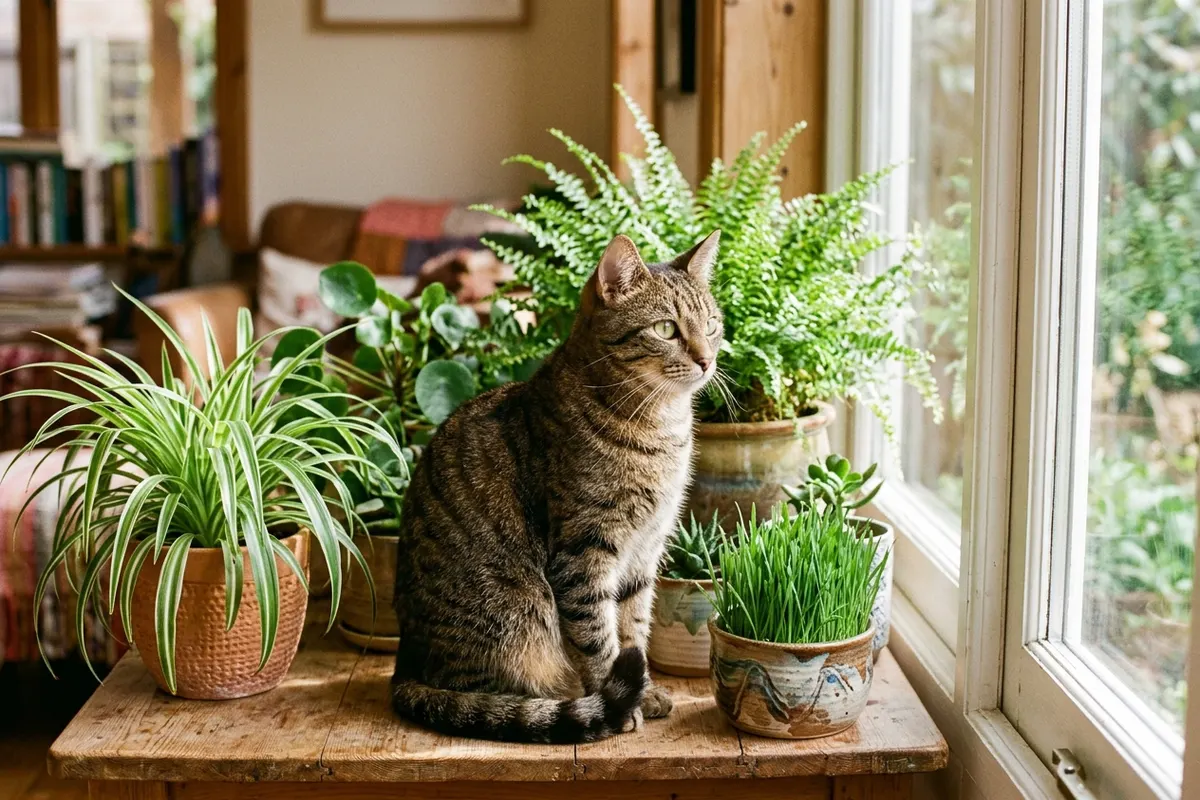
1. Spider Plant (Chlorophytum comosum)
The gold standard for cat owners. Virtually unkillable, outstanding air purifier, and tolerant of low light. Its cascading runners mimic interactive string toys. Interestingly, spider plants produce a mild, safe hallucinogenic or euphoric effect in some felines, explaining why cats gravitate toward their leaf tips like magnets.
2. Boston Fern (Nephrolepis exaltata)
Unlike asparagus ferns (which trigger contact dermatitis and toxic vomiting), the true Boston fern is completely non-toxic. Its lush, arching fronds add dramatic volume to high shelving and thrive in bathroom humidity.
3. Prayer Plant Family (Calathea, Maranta, Ctenanthe)
Celebrated for their magnificent striped foliage and nocturnal leaf-folding dance. Every cultivar within the Marantaceae botanical family is non-toxic to both cats and dogs.
4. Areca Palm (Dypsis lutescens) or Parlor Palm (Chamaedorea elegans)
Brings breezy tropical elegance to any living room. The slender, feathery fronds are completely non-poisonous, though playful kittens frequently treat them as feathered teaser wands.
5. Pilea Peperomioides (Chinese Money Plant)
Its charming, pancake-shaped circular leaves on upright stems are completely harmless. Compact and slow-growing, it is ideal for home office desks.
6. Cat-Safe Succulents: Haworthia and Echeveria
While popular succulents like Jade plants (Crassula) and Aloe Vera are dangerously toxic, Haworthia (Zebra cactus) and Echeveria rosettes are 100% safe if an inquisitive paw bats at a plump leaf.
7. Fresh Living Cat Grass
Cultivated pots of organic wheatgrass, oat grass, or barley shoots. Offering dedicated cat grass satisfies your feline's natural craving for fresh vegetation while effectively steering them away from your prized ornamental specimens.
---
2. Aromatic Herbs for Outdoor Catios and Balconies
Enrich your protected catio or screened porch with feline-safe aromatic greenery:
- *Catnip (Nepeta cataria):* Triggers joyful rolling and playful zooming through the volatile compound nepetalactone.
- *Valerian (Valeriana officinalis):* Earthy root and leaf scents act as an intoxicating stimulant for cats indifferent to traditional catnip.
- Culinary Herbs (Thyme and Rosemary): Sturdy, woody herbs that release earthy scents and are entirely safe if investigated.
---
3. Planter Safety: Soils, Fertilizers, and Heavy Pots
Often, the greatest danger in an indoor greenhouse comes from the substrate rather than the plant tissue:
- Eliminate liquid chemical fertilizers: Concentrated systemic synthetic plant foods leach onto saucer runoff where thirsty cats might lap it up. Stick to organic worm castings, fish emulsion, or diluted natural compost.
- Discourage soil digging: Curious cats may mistake large indoor planters for secondary litter boxes. Arrange smooth, heavy river rocks across the top of the soil to prevent digging while allowing water drainage.
- Opt for heavy earthenware: Lightweight plastic pots topple easily when a cat rubs against them or attempts a high-speed launch. Weighted terracotta, stone, or ceramic planters keep both cat and foliage secure.
---
Frequently Asked Questions (FAQ)
Why does my cat vomit after eating cat grass?
Cats lack the digestive enzymes required to break down raw cellulose. Chewing cat grass is an evolved biological instinct: the rough fiber tickles the stomach lining, facilitating the natural regurgitation of trapped hairball mats or helping propel fur bundles downward through the intestines.
Are Jade plants or Aloe Vera safe for cats?
No. Aloe Vera contains saponins and anthraquinones that trigger diarrhea, anorexia, and tremors. Jade plants (Crassula ovata) cause vomiting, depressed heart rates, and incoordination. Always keep these away from cats.
---
Scientific and Botanical References
- American Society for the Prevention of Cruelty to Animals (ASPCA). "Toxic and Non-Toxic Plants Database." Animal Poison Control Center, 2024.
- European Feline Advisory Bureau (FAB). "Household hazards and safe gardening for cats." Cat Care International, 2021.
- Cortinovis, C., & Caloni, F. "Household food and plant toxicosis in dogs and cats." Veterinary Sciences, 2017.
Caring for a cat? Keep their health in your pocket
Register your cat on Nekolife to track vaccination history, weight, and get advice from loving cat parents.
- Vaccine & weight records
- Supportive cat community
- Earn Meow Points & badges
Related pages
Know someone who needs this?