Pumpkin and Fiber in Cats: Dual Digestive Action, Precise Dosage and Hidden Hazards
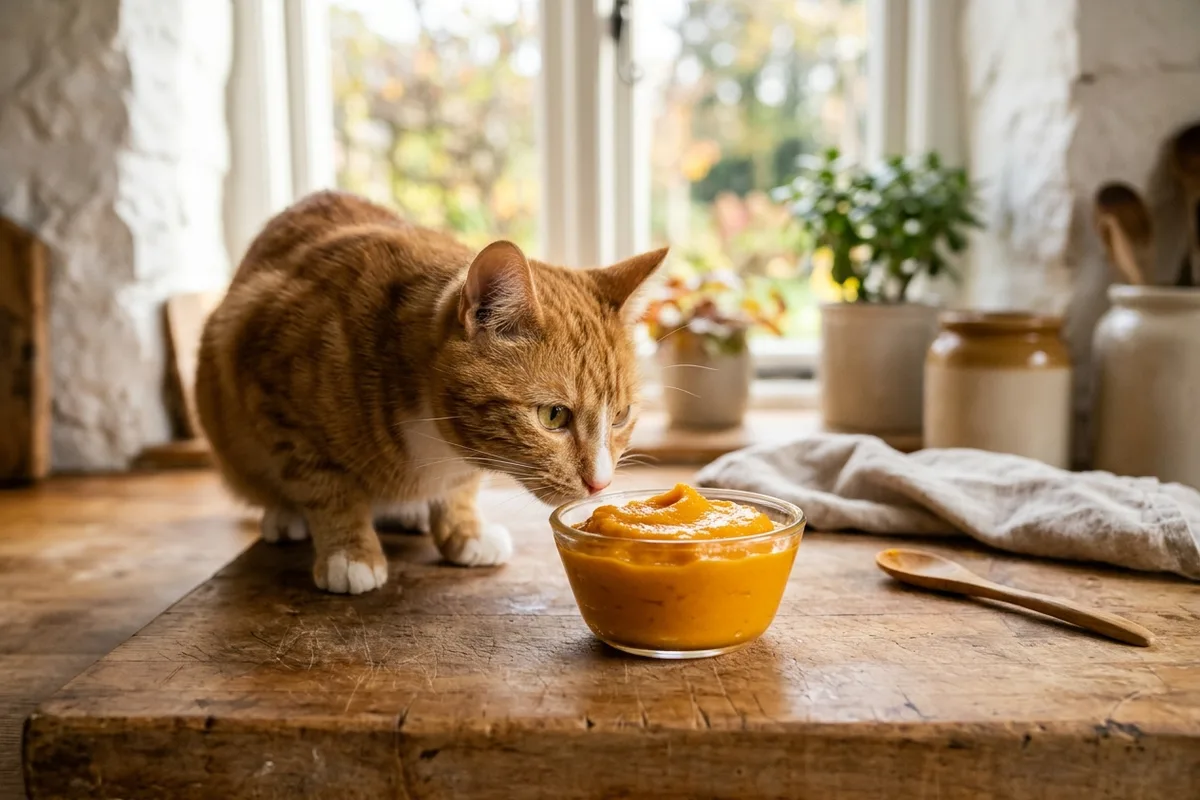
Steamed pure pumpkin is among the most widely prescribed natural digestive aids in modern feline practice. Its clinical effectiveness relies on an amphoteric mechanism: combining pectin (soluble fiber) and cellulose (insoluble fiber). This enables it to normalize sluggish intestinal motility, soften dry compacted stools, or absorb excessive liquid in soft bowel movements.
In this guide
1. Soluble vs Insoluble Fiber: The Dual Functionality
Within the feline intestinal lumen, fiber fractions behave differently:
- Soluble fiber (pectin): Forms a protective mucilage gel upon contacting water. It slows rapid gastric transit, feeds commensal microbiota, and absorbs fluid during runny stool episodes.
- Insoluble fiber (cellulose & lignin): Remains mostly intact, giving mechanical mass to the stool. This mass stretches the colon wall and triggers rhythmic peristaltic contractions.
This twofold action explains why a modest spoonful of pumpkin helps both the cat producing hard pebbles and the cat recovering from a minor dietary indiscretion.
---
2. Preventing Hairballs (Trichobezoars)
Grooming felines ingest dead hair daily. In long-haired breeds or during seasonal shedding peaks, ingested fur accumulates in the stomach. While malt pastes and salmon oil supplements supply lipid lubrication to glide trichobezoars, pumpkin provides peristaltic propulsion to move hair through the digestive tract before it is regurgitated.
| Feature | 100% Pure Pumpkin | Classic Malt Paste |
|---|---|---|
| Mechanism | Peristaltic bulk & prebiotic fermentation | Lubricant oil film |
| Caloric Impact | Negligible (~25 kcal/100g) | High (sugars, malt extract, fats) |
| Overweight / Diabetic Cats | Highly beneficial for satiety | Requires strict portion restriction |
| Recommended Frequency | Daily or 3-4 days per week | 2-3 times weekly |
---
3. Preparation and Weight-Based Dosing
To avoid displacing vital animal proteins, follow this standard preparation protocol:
- Single ingredient: Fresh culinary pumpkin or butternut squash, peeled and deseeded.
- Neutral cooking: Steam or boil in plain water for 15 minutes. Absolutely no salt, butter, onion, garlic, or seasonings.
- Puree and freeze: Blend thoroughly into a smooth paste. Freeze in standard ice cube trays for easy weekly single-portion defrosting.
Daily Serving Guidelines:
- Cats 3 to 5 kg (6.6 to 11 lbs): 1/2 teaspoon (2.5 g) mixed into daily wet food.
- Cats over 5 kg (11+ lbs): 1 level teaspoon (5 g) per day.
> [!WARNING]
> Never purchase canned pumpkin pie mix. These cans frequently contain nutmeg (myristicin, neurotoxic to cats), cinnamon, sugar, and artificial sweeteners such as xylitol which cause acute feline liver necrosis.
---
4. When to Avoid Pumpkin: Emergency Red Flags
Fiber cannot clear structural blockages. If your cat has been straining unproductively in the litter box for over 48 hours, vocalizing in pain, vomiting bile, or exhibiting severe lethargy, adding fiber will consolidate a life-threatening fecal impaction (megacolon).
If you observe continuous biliary vomiting, severe abdominal pain, or complete obstipation, immediately consult our directory of 24/7 veterinary emergency hospitals to rule out mechanical foreign body ingestion.
---
5. Frequently Asked Questions
Can I feed raw pumpkin to my cat?
No. Raw pumpkin is excessively fibrous and difficult to masticate for carnivore dentition. It can cause choking, severe gastric irritation, or painful intestinal fermentation.
Does pumpkin help an overweight cat feel full?
Yes. Its high moisture and fiber content create bulk in the gastric reservoir, prompting stretch receptors to signal satiety without adding caloric density.
Is cooked zucchini an acceptable alternative?
Yes, steamed zucchini is safe and provides gentle fiber, though it has slightly less soluble pectin than culinary orange pumpkin.
---
Scientific Sources & References
- Waltham Petcare Science Institute (2023): Dietary fiber and intestinal microbiota dynamics in domestic felines.
- Journal of Feline Medicine and Surgery (2022): Management of chronic feline constipation and obstipation: nutritional fiber vs osmotic laxatives.
- FEDIAF Nutritional Guidelines (2024): Fibre fractions and gut motility considerations in domestic cats.
Caring for a cat? Keep their health in your pocket
Register your cat on Nekolife to track vaccination history, weight, and get advice from loving cat parents.
- Vaccine & weight records
- Supportive cat community
- Earn Meow Points & badges
Related pages
Know someone who needs this?