Why Does My Cat Meow Constantly? Causes, Night Yowling, and How to Calm Them
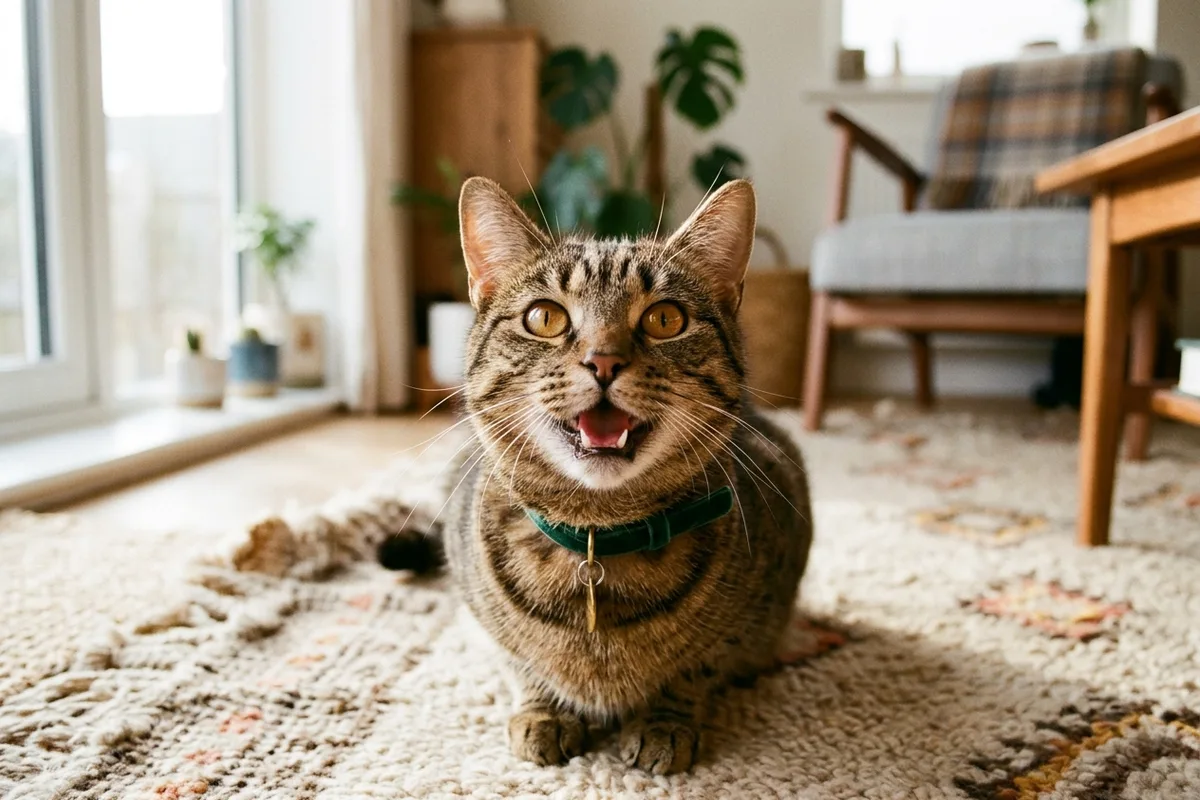
A remarkable fact of feline ethology is that adult cats rarely meow at other cats. In the wild and within feline social colonies, communication relies on scents, pheromones, and subtle ear and tail postures. The adult meow is a vocalization developed almost exclusively to communicate with humans—an acoustic evolutionary bridge that mimics the frequency of human infant distress calls to trigger our nurturing response.
In this guide
Medical Causes: When Meowing Conceals Pain or Illness
If a previously quiet cat suddenly turns vocal, investigate these clinical conditions:
| Condition | Typical Age Profile | Meowing Tone & Pattern | Accompanying Clinical Signs |
|---|---|---|---|
| Feline Hyperthyroidism | Cats aged 8 to 15+ years | Loud, frenzied, erratic meowing | Voracious appetite paired with weight loss, restlessness, rapid heartbeat |
| Systemic Hypertension | Senior or kidney-compromised cats | Hollow, disoriented night yowling | Dilated pupils, sudden vision loss, blood pressure > 160 mmHg |
| Osteoarthritis & Joint Pain | Cats over 7 years old | Low grumble or cry when jumping or using litter box | Reluctance to jump, stiff gait. Review arthritis and osteoarthritis in cats |
| Urinary Urgency (FLUTD) | Any age (especially males) | Agonized vocalization in or near litter box | Straining, blood in urine. Review cat urinary tract infections and FLUTD |
| Cognitive Dysfunction (FCDS) | Senior cats (12+ years) | Aimless wandering and crying at night | Staring blankly at walls, forgetting litter box location |
> Clinical Tip: If you suspect hidden physical discomfort, consult our clinical guide on how to tell if your cat is in pain to evaluate facial grimace scores (FGS).
---
Behavioral and Emotional Causes: What Are They Demanding?
Once clear bloodwork and medical exams rule out illness, evaluate these behavioral dynamics:
1. Learned Attention-Seeking
Cats are masterful observers of our body language. If an insistent meow consistently makes you look up from your laptop, hand over a treat, or open a closed bedroom door, your cat views meowing as an effective remote control.
2. Biological Hunger vs. Boredom Hunger
Cats on purely dry, ultra-processed kibble suffer from rapid glucose spikes and rapid crashes, creating chronic mealtime anxiety. Transitioning to protein-dense wet food vs. dry kibble increases satiety and hydration.
3. Hormonal Heat & Mating Calls
An intact (unsterilized) cat will vocalize with astonishing volume. Females in estrus emit piercing wails to summon mates, while males howl relentlessly when catching the scent of a female in heat blocks away. Spaying or neutering resolves this in 95% of cases; read our guide on neutering your cat.
4. Separation Anxiety and Under-Stimulation
Cats form profound attachments to their human caregivers. Leaving an active cat alone in an unstimulating environment for 10 to 12 hours causes chronic distress that erupts in vocal demands upon your return. See our guide on cat stress and anxiety.
---
Behavioral Protocol: Calming Excessive Meowing
```mermaid
graph TD
A["Cat Meows Excessively"] --> B{"Veterinary Check Clean?"}
B -- No --> C["Treat clinical issue: pain, thyroid, renal"]
B -- Yes --> D{"When does the meowing occur?"}
D -- Night / Dawn --> E["Dusk hunt play + late wet dinner + strict zero response"]
D -- All Day Long --> F["Puzzle feeders + vertical territory + reward quiet moments"]
```
1. The Extinction Protocol
To stop demand meowing at 4:30 or 5:00 a.m.:
- Absolute zero response: Do not speak, sigh, look at the cat, or get out of bed. Even negative attention (scolding) is interpreted as a success.
- The extinction burst: During days 3 through 6 of being ignored, your cat will likely meow louder, longer, and more desperately. This is a normal psychological phenomenon where the cat tests if "raising the volume" works. If you remain unflinching, the vocalization drops off dramatically within two weeks.
2. Hunt-Eat-Groom-Sleep Cycle
Replicate the wild feline biological rhythm:
- 30 minutes before your bedtime, engage in an intense play session using a feather wand, encouraging sprints and high jumps until your cat pants softly.
- Follow up immediately with their main wet food meal. A full belly combined with physical expenditure naturally induces deep restorative sleep.
3. Daytime Food Puzzles
Never leave bowls of free-standing food. Use interactive maze feeders, snuffle mats, or treat-dispensing balls to turn mealtime into a mental workout.
---
Veterinary References and Ethology Sources
- Journal of Feline Medicine and Surgery: Cognitive Dysfunction Syndrome in the Domestic Feline: Recognition and Management.
- AAFP (American Association of Feline Practitioners): Feline Behavior Guidelines: Vocalization Dynamics.
- International Cat Care (iCatCare): Why Cats Meow: Clinical vs. Environmental Drivers.
- Dr. John Bradshaw (University of Bristol): Cat Sense: Understanding Feline Vocal and Social Behavior.
Frequently asked questions
Are certain cat breeds naturally more vocal?
Yes. Oriental breeds such as the Siamese cat and the Balinese cat are renowned for their extroverted, talkative nature and operatic vocal ranges. Conversely, breeds like the Persian cat and the British Shorthair are famously placid and whisper-quiet.
My newly adopted kitten cries all night—what should I do?
Young kittens vocalize due to maternal separation anxiety and sensory loneliness. Follow our specialized survival steps in kitten crying at night: veterinary soothing guide. ---
Caring for a cat? Keep their health in your pocket
Register your cat on Nekolife to track vaccination history, weight, and get advice from loving cat parents.
- Vaccine & weight records
- Supportive cat community
- Earn Meow Points & badges
Related pages
Know someone who needs this?