Why Cats Scratch the Sofa: Feline Ethology and How to Train Scratching Post Use
Coming home to shredded couch corners or splintered door frames is one of the most disheartening experiences for cat caregivers. However, before labeling this destructive behavior as spiteful, rebellious, or malicious, it is critical to recognize an immutable biological fact: cats do not scratch to destroy your furnishings; they scratch because it is an essential physiological, biomechanical, and communicative necessity for their survival and mental well-being.
In this guide
The 4 Biological Reasons Cats Scratch
In nature, a feline that cannot scratch is a compromised predator. This instinctual behavior serves four simultaneous survival functions:
| Biological function | Physiological mechanism | Evolutionary purpose |
|---|---|---|
| 1. Nail hygiene and sheath shedding | Mechanical abrasion of outer keratin layers | Sloughs off dull, frayed outer claw husks to uncover the razor-sharp new claw beneath. |
| 2. Dual territorial scent marking | Visual (vertical score marks) + Chemical (interdigital pheromones) | Advertises occupancy, marks territory boundaries, and provides personal reassurance through familiar scents. |
| 3. Full-body muscular stretching | Traction and spinal decompression of shoulders and back | Warms up dorsal muscles following sleep and preserves elasticity in digital flexor tendons. |
| 4. Emotional discharge & stress relief | Displacement activity during arousal or frustration spikes | Releases endorphins, diffuses excess excitement (such as owner reunions), and alleviates boredom. |
Chemical communication: Interdigital pheromones
Specialized eccrine sweat glands and sebaceous glands reside between the digital pads of feline paws. When a cat anchors its claws into textured fabric and pulls downward, it deposits interdigital pedal pheromones. These invisible chemical signals leave a long-lasting olfactory calling card. Smelling their own pheromones provides essential psychological comfort. Scrubbing a scratched sofa corner with harsh bleaches removes this scent barrier, triggering a compensatory urge in the cat to scratch that exact spot again with greater vigor to restore its scent profile.
---
Why Your Cat Prefers the Couch Over Its Scratcher
Many owners buy a generic scratching post, shove it into a corner of the spare bedroom, and wonder why the cat continues destroying the living room sofa. The cat is making an astute biomechanical choice:
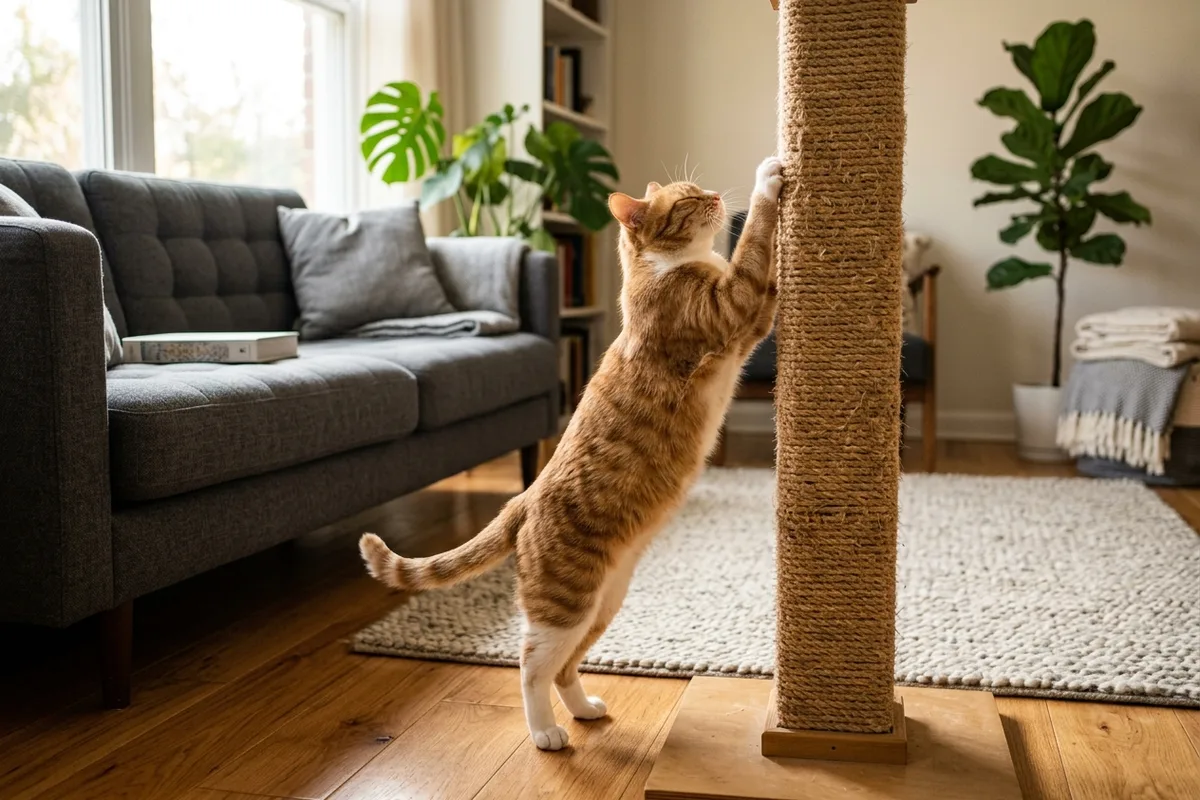
- Structural stability: To exert full force with their back muscles, cats require a fixture that will not shift or topple under 10 pounds of pulling pressure. If a store-bought post wobbles or tips over once, the cat classifies it as dangerous and avoids it permanently. The couch weighs 100 pounds and provides unyielding resistance.
- Prime social real estate: The living room is the nerve center of the home where the family spends the most time and collective scents are concentrated. Felines mark boundaries along prominent thoroughfares and shared social zones. A post hidden in a quiet back hallway holds zero territorial value.
- Inadequate height: Inexpensive commercial posts stand roughly 18 inches tall. An adult domestic cat stretches 28 to 36 inches from rear paws to front claws. If the scratching surface terminates midway through their stretch, the cat naturally migrates to the couch arm.
- Woven fabric resistance: Upholstery fabrics like woven chenille, heavy tweed, or corduroy provide satisfying resistance that lets claws dig in deeply without painful snags.
---
Scratcher Types and Individual Preferences
Every cat displays distinct biomechanical preferences based on age, spine flexibility, and early conditioning:
| Scratcher style | Ideal cat profile | Recommended material | Strategic placement |
|---|---|---|---|
| Tall vertical post (≥ 32 inches) | Cats that shred sofa arms, door casings, or curtains. | Thick, unoiled natural sisal rope wound tightly around solid wood. | Right beside the damaged couch arm or main doorway. |
| Horizontal flat pad | Cats that target area rugs, doormats, or hardwood joints. | Heavyweight corrugated cardboard blocks or woven sisal mats. | Directly over the damaged carpet spot on the floor. |
| Incline / Wedge ramp (45°) | Young kittens, senior cats with arthritis, playful jumpers. | Plywood core wrapped in ribbed carpet or dense cardboard. | Near the cat's favorite sleeping basket. |
| Corner wall-mounted panel | Cats that scent-mark plaster corners and hallway angles. | Rigid sisal board screwed firmly into the wall stud. | Mounted at shoulder height on the damaged drywall corner. |
| Multi-level cat tree | Multi-cat households or cats that seek elevated refuge. | Solid wood posts, plush resting cradles, high crow's nests. | Beside a sunny window with visual access to outdoor birds. |
---
The 5-Step Redirection Protocol (No Punishment)
Redirecting scratching is a behavioral conditioning process. You cannot eliminate the urge to scratch, but you can effortlessly redirect it by making the appropriate alternative infinitely more rewarding:
Step 1: Position the scratcher directly in front of the damage
Place your new, heavy-duty vertical post (at least 32 inches high) directly in front of the exact sofa corner your cat currently scratches, physically obstructing their access to the upholstery. The cat should bump into the sisal before its paws can reach the couch.
Step 2: Apply temporary deterrents to the furniture
Make the couch surface physically unappealing to feline paws:
- Apply wide strips of transparent double-sided cat training tape over the target area. Cats intensely dislike tacky adhesive textures on their sensitive foot pads.
- Smooth clear vinyl guard sheets are also highly effective, preventing claws from catching without disrupting decor.
- Avoid aluminum foil if your cat is anxious, as crinkling metal sounds can elevate ambient household stress.
Step 3: Scent-activate the scratching post
New posts smell of factories, cardboard glue, or packaging plastic. Transform the post into an irresistible magnet:
- Rub fresh, organic catnip or valerian root spray directly into the sisal fibers.
- Take a fleece blanket your cat sleeps on and rub it vigorously over the post to deposit its own facial pheromones.
- You may apply synthetic facial pheromones (such as Feliway Classic spray) onto the damaged sofa fabric to soothe territorial anxiety, while keeping the sisal post chemical-free.
Step 4: Directed play and positive reinforcement
- Use a feather wand or toy mouse, skimming it up the side of the sisal post. As the cat pounces, its claws will naturally sink into the sisal rope.
- The microsecond its claws engage the post, offer praise in a calm, upbeat tone and immediately hand over a high-value treat (like freeze-dried chicken or wet lickable treats).
- Never grab your cat's paws to drag them across the post; forcing interaction causes fear, resistance, and aversion toward the item.
Step 5: Gradual post migration
Once the cat has been voluntarily and exclusively using the scratching post daily for two to three consecutive weeks:
- Carefully peel the adhesive deterrent tape off the couch.
- If you wish to reposition the post elsewhere in the room, move it no more than 4 to 6 inches (10 to 15 cm) per day. Abruptly moving the post across the room overnight will prompt an immediate relapse on the couch.
---
Common Mistakes That Worsen Scratching
Reactive owner responses frequently escalate scratching behaviors instead of resolving them:
- Using spray bottles: Water squirts teach the cat that you are unpredictable and frightening. The cat simply learns to avoid you, continuing to scratch the couch when you are asleep or away from home.
- Throwing away the tattered old scratcher: To humans, a shredded, fuzzy sisal post looks messy. To a cat, that frayed post is an irreplaceable territorial monument soaked in its own scent marks. Keep the old post alongside the new one until the new post has been thoroughly broken in.
- Yelling or physical scolding: Stress and environmental tension are primary drivers of compulsive territorial marking. Raising your voice elevates anxiety, prompting the cat to scratch more frequently to soothe itself.
- The cruelty of declawing (Onychectomy): Declawing is not an advanced manicure; it is the surgical amputation of the last bone of every toe (equivalent to severing human fingers at the first knuckle). It is an inhumane, mutilating surgery banned in dozens of countries. Declawed cats suffer chronic phantom neuropathic pain, permanent gait abnormalities, litter box aversion (gravel hurts their amputated paws), and defensive biting.
---
Regular Nail Trimming: Does It Save Your Furniture?
Trimming your cat's nails does not eliminate the instinct to scratch, but it blunts the needle-sharp tips, minimizing damage to upholstery and preventing painful ingrown claws:
- Recommended frequency: Every 2 to 3 weeks for indoor cats. Senior cats require bi-weekly checks because reduced activity can cause claws to curl around and pierce paw pads.
- Proper technique: Gently press the toe pad between your thumb and forefinger to extend the claw. Use dedicated pet nail trimmers to snip off just the clear, curved hook tip.
- Avoid the quick: Maintain at least a 2 mm margin from the pink internal vein and nerve supply. Keep styptic powder or cornstarch nearby in case of accidental bleeding.
Learn how to desensitize kittens to nail clippers in our complete kitten care guide.
---
Frequently asked questions
Why does my cat scratch the floor around its food bowl?
This is a wild ancestral instinct called "caching." In natural environments, wild felines bury unfinished food under dirt or leaves to prevent predators from detecting the scent. Scratching near the dish simply means your cat is full or saving the rest for later. Check meal portions in our guide on what do kittens eat by age.
Do scratch-resistant sofa covers actually work?
Yes, especially slipcovers made from densely woven high-performance textiles like velvet, tightly woven microfiber, or commercial aquaclean fabric. Because there are no loose loops for claws to latch onto, cats cannot achieve tactile traction and quickly abandon the sofa in favor of sisal.
Can excessive scratching stem from boredom?
Yes. An indoor cat with minimal environmental enrichment often scratches compulsively to vent pent-up energy and relieve boredom. Introducing puzzle feeders, daily interactive wand play, and vertical wall perches dramatically curbs destructive indoor behaviors. --- Understanding your cat's natural instincts builds a peaceful, rewarding bond for life. Create account — It's free and brings you right back here. ---
Caring for a cat? Keep their health in your pocket
Register your cat on Nekolife to track vaccination history, weight, and get advice from loving cat parents.
- Vaccine & weight records
- Supportive cat community
- Earn Meow Points & badges
Related pages


Sources
- "AAFP Feline Behavior Guidelines" (Feline behavioral assessment and management). American Association of Feline Practitioners, 2022. catvets.com
- "Scratching behaviour in cats" (Physiology and environmental post provision). International Cat Care (iCatCare), 2024. icatcare.org
- "The Cat: Its Behavior, Nutrition, and Health". Bradshaw, J. W. S.; Casey, R. A.; Brown, S. L. Cambridge University Press, 2021.
- "Feline Claw and Nail Care: Prevention of Inappropriate Scratching". Journal of Feline Medicine and Surgery. journals.sagepub.com
- "Environmental Enrichment for Indoor Cats". Ohio State University College of Veterinary Medicine (Indoor Pet Initiative). indoorpet.osu.edu
Know someone who needs this?