Abyssinian Cat: Complete Breed Guide, History, and Veterinary Care
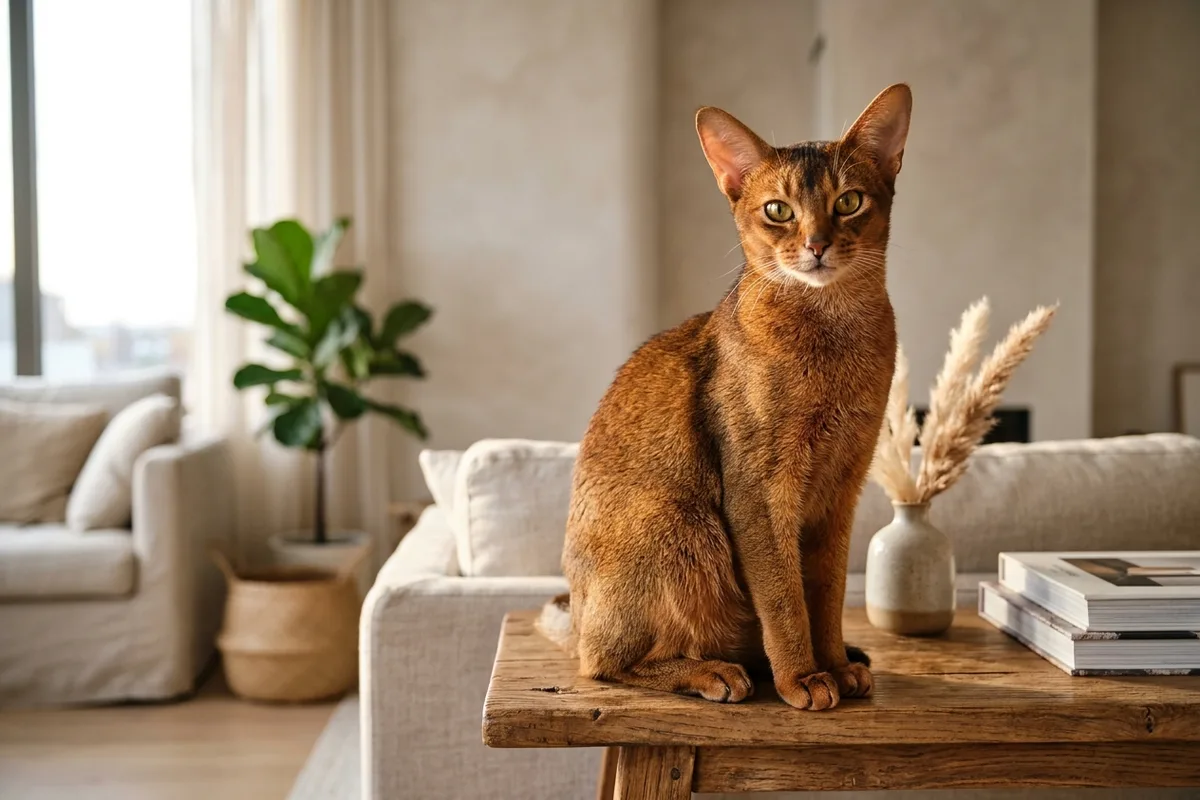
With their lithe athletic silhouette, oversized cupped ears primed to catch the faintest whisper, and a coat shimmering with agouti bands reminiscent of ancient Egyptian sacred tomb murals, the Abyssinian cat is celebrated as one of the world's most captivating, intelligent, and kinetic natural breeds. Affectionately nicknamed the "clowns of the cat kingdom" or the "feline cheetah," living with an Aby turns home life into an endless showcase of vertical agility, inquisitive companionship, and unbounded affection.
In this guide
1. Origin and History: Pharaoh Myth vs. Genomic Reality
For over a century, popular lore maintained that the Abyssinian was the living descendant of the sacred mummified cats worshipped in ancient Egyptian temples of Bastet. Historical records noted that the first cat exhibited in England under this name was Zula, brought back by British soldiers in 1868 following the Abyssinian military expedition.
However, comprehensive feline DNA mapping conducted by Dr. Leslie Lyons revealed a different historical narrative:
- Genetic Markers: Microsatellite analysis demonstrated that the unique ticking mutation allele did not originate in the Horn of Africa, but along the Indian Ocean coastline between Sri Lanka and Singapore.
- Victorian Breed Refinement: British fanciers crossed these imported agouti-patterned cats with domestic shorthairs and British shorthairs, perfecting the foreign body type and codifying the breed standard officially recognized by CFA in the early 20th century.
---
2. Physical Characteristics and the Agouti Ticked Mystery
The Abyssinian standard balances lithe elegance with firm muscular power:
| Conformation Point | CFA / TICA / FIFe Standard |
|---|---|
| Head | Modified slightly rounded wedge, gentle nose arch without an abrupt stop |
| Ears | Strikingly large, broad-based, forward-cupped and alert; often tipped with tufts |
| Eyes | Large, almond-shaped, surrounded by dark "eyeliner" contours; amber, hazel, or green |
| Body & Limbs | Medium foreign type, flexible, muscular; slim legs with small oval feet, walks on tiptoes |
| Coat Texture | Fine, silky, resilient to touch, dense undercoat with pristine ticked agouti distribution |
Official Color Classifications
- Ruddy (Usual): Warm burnt-sienna orange base ticked with rich dark brown/black; black paw pads and spine line.
- Sorrel (Cinnamon): Warm apricot base ticked with warm chocolate-brown; pink pads.
- Blue: Soft warm cream base ticked with slate blue-gray.
- Fawn: Warm oatmeal buff base ticked with soft rose-beige.
---
3. Temperament and Living with an Aby
Living with an Abyssinian is an interactive, high-energy partnership:
- Vertical obsession: Abyssinians rarely stay at human eye level. You will find them balancing atop open doorframes, refrigerators, and high book ledges.
- Canine-like curiosity: They readily learn to fetch crumpled paper, master clicker training, and comfortably walk on a harness and leash when introduced early.
- Social devotion: While they dislike being restrained in a lap, they love perching on shoulders like a parrot and participating in every domestic activity. They suffer when left isolated for long workdays.
---
4. Veterinary Health and Genetic Predispositions
Ethical breeding requires routine DNA testing for known hereditary conditions:
- Pyruvate Kinase Deficiency (PK-Def): An inherited erythrocyte enzyme deficiency that leads to chronic intermittent hemolytic anemia. DNA test is available.
- Progressive Retinal Atrophy (PRA - rdAc gene): Degenerative breakdown of retinal rods and cones causing progressive vision loss. Pre-breeding genetic testing is essential.
- Renal Amyloidosis: Insoluble amyloid protein fibril deposition in kidney glomeruli and medullae, leading to renal insufficiency. Monitor annual bloodwork and consult our guide on chronic kidney disease in cats.
- Dental Health: Prone to early gingivitis and tartar accumulation; maintain oral hygiene and support systemic hydration with wet food vs. dry kibble.
---
Scientific Sources & References
- Lipinski, M. J. et al. (2008): The ascent of cat breeds: Genetic evaluations of worldwide domestic cat breeds, Genomics, 91(1), 12-21.
- Lyons, L. A. (2012): Genetic testing in domestic cats, Feline Medicine and Surgery.
- Cat Fanciers' Association (CFA): Abyssinian Breed Standard and Profile.
Caring for a cat? Keep their health in your pocket
Register your cat on Nekolife to track vaccination history, weight, and get advice from loving cat parents.
- Vaccine & weight records
- Supportive cat community
- Earn Meow Points & badges
Related pages
Know someone who needs this?