Scottish Fold Cat: Complete Guide to Characteristics, Care, and Health
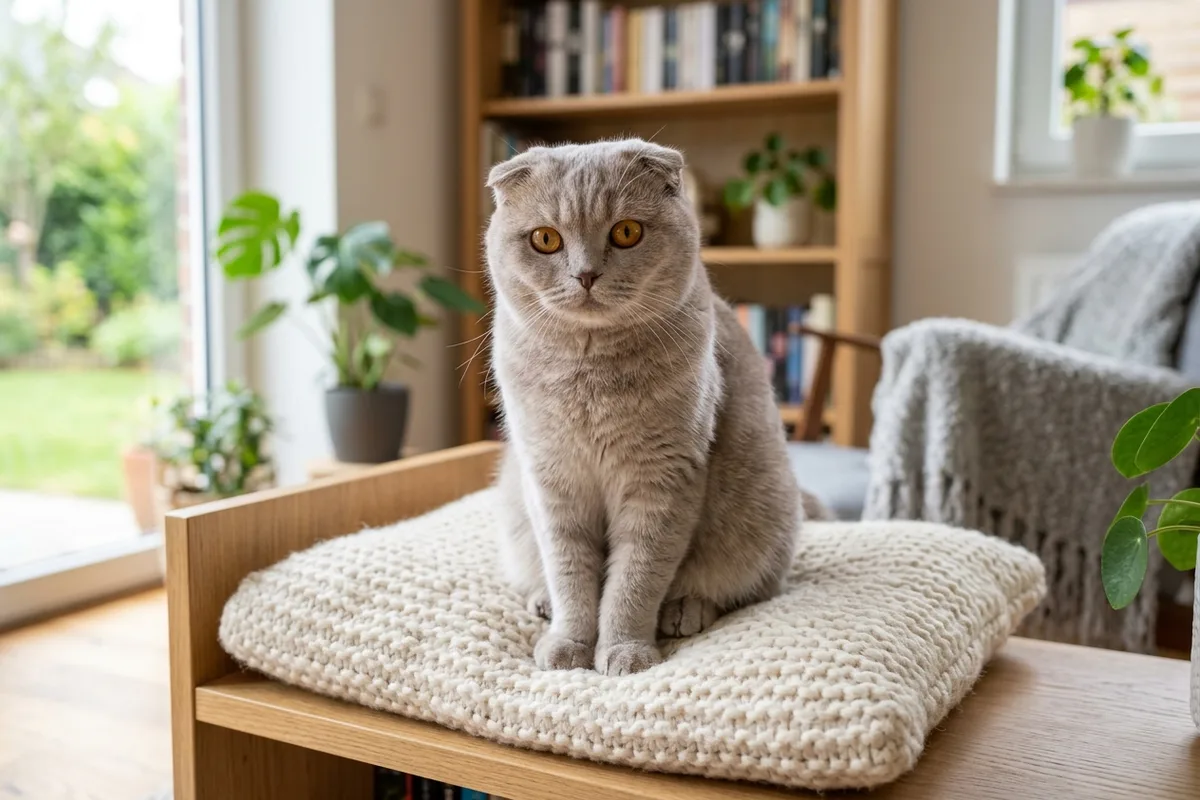
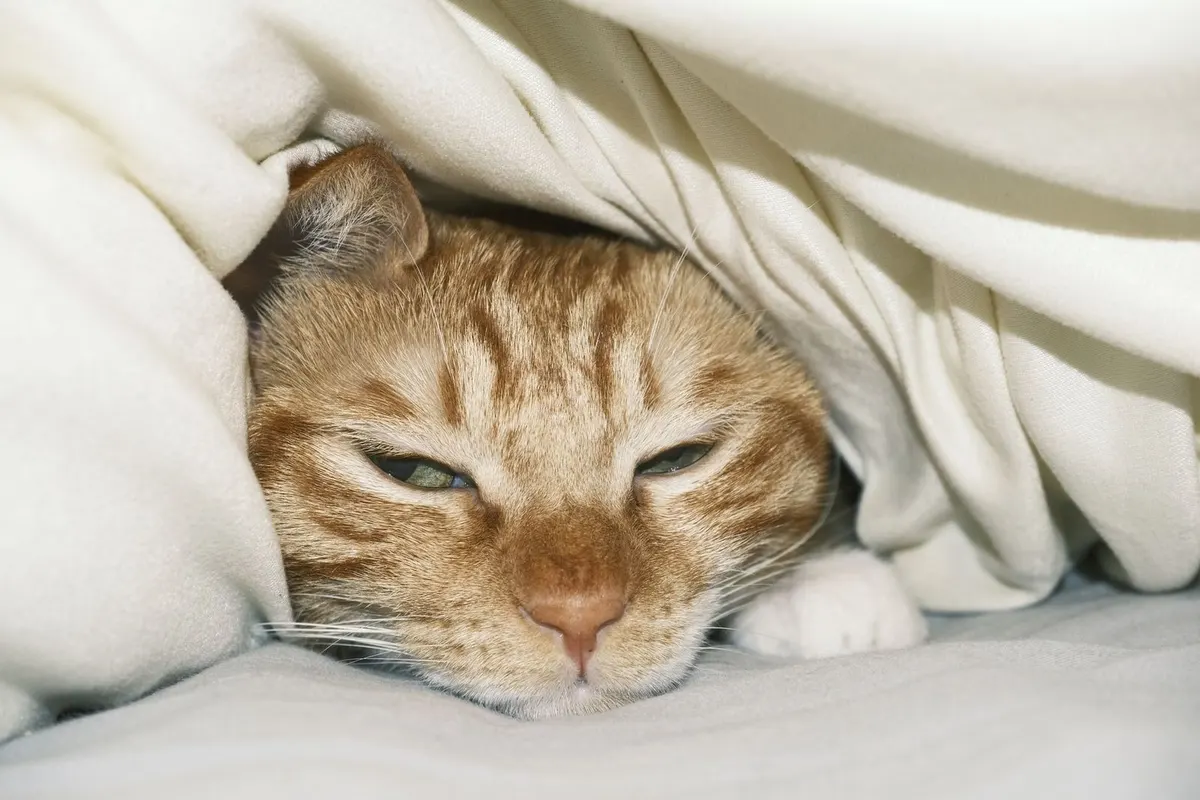
With its rounded owl-like face, wide expressive eyes, and distinctive forward-folded ears that resemble a teddy bear, the Scottish Fold is one of the most beloved and instantly recognizable feline breeds in the world. Yet beneath this endearing appearance lies a profound biological and veterinary reality that every prospective and current owner must understand to ensure their cat lives a pain-free, comfortable life.
In this guide
Historical origins and ethical debate
The breed traces its origins back to 1961 on a farm in Coupar Angus, Perthshire, Scotland. A shepherd named William Ross noticed a white barn cat named Susie who possessed a rare spontaneous mutation: her ears folded tightly forward against her head.
When Susie had a litter, two of her kittens inherited the folded ears. Ross acquired one of the female kittens (Snooks) and, collaborating with British geneticists, initiated a breeding program by crossing her with British Shorthairs and local domestic cats.
However, in the early 1970s, the UK's Governing Council of the Cat Fancy (GCCF) revoked official registration of the breed after veterinarians confirmed that the folded ears were inextricably linked to painful skeletal deformities, fused tail vertebrae, and crippling arthritis. Today, leading veterinary associations such as the British Veterinary Association (BVA) and the Fédération Internationale Féline (FIFe) do not recognize or endorse breeding Scottish Folds for animal welfare reasons, whereas North American registries (like TICA and CFA) allow breeding exclusively through outcrossing with straight-eared cats.
Physical characteristics of the Scottish Fold
Beyond their iconic ears, Scottish Folds possess a distinctively sweet, rounded anatomy:
1. Head and facial structure
- Shape: Broad, well-rounded skull with plump, prominent cheeks, particularly noticeable in mature males.
- Muzzle: Short, curved with well-cushioned whisker pads, giving the face a perpetual sweet "smile."
- Eyes: Large, round, and widely set, separated by a broad nose. Eye color typically harmonizes with the coat (rich gold, amber, or copper).
- Ears: Small with rounded tips, folded forward and downward. They are categorized as single fold (tips fold forward), double fold (closer to head), or triple fold (tightly cap-like against the skull, preferred in show rings).
2. Body conformation
- Body: Medium-sized, sturdy, well-padded, and rounded, with medium-length legs and solid bone density.
- Tail: Must be supple, flexible, and proportional to body length. A short, thick, or rigid tail that resists gentle movement is a classic diagnostic hallmark of osteochondrodysplasia.
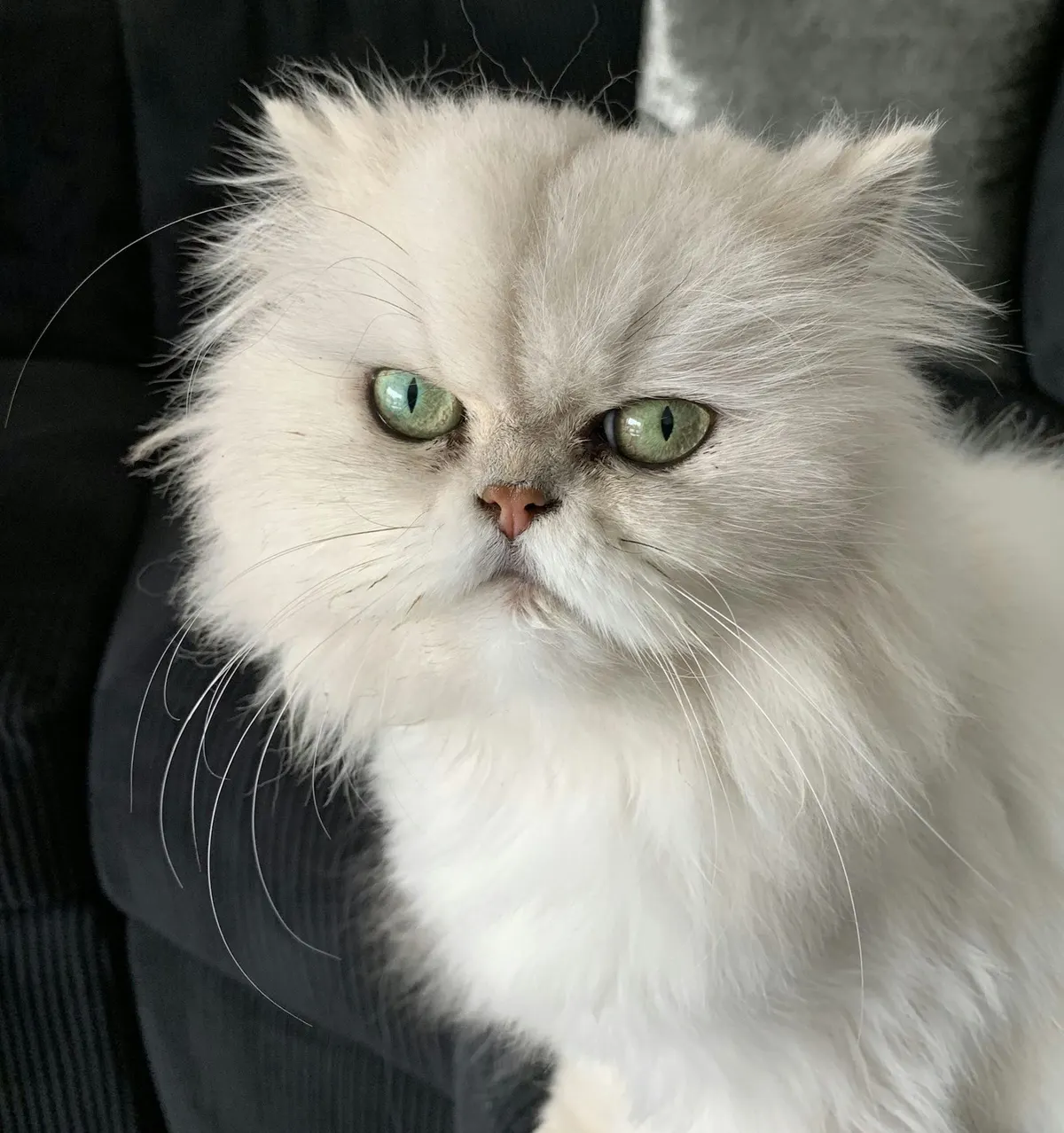
- Coat: Available in short, dense, and plush fur (Scottish Fold) and semi-longhair (known as the Highland Fold), both possessing a soft, insulating undercoat.
Scottish Fold vs. British Shorthair vs. Scottish Straight
These three related varieties share close genetic ties but key structural differences:
| Breed trait | Scottish Fold | Scottish Straight | British Shorthair |
|---|---|---|---|
| Ears | Folded forward (Fd mutation). | Normal upright, medium-sized. | Upright, wide-set with broad base. |
| Cartilage genetics | Carrier of osteochondrodysplasia (Fd/fd). | Normal cartilage (fd/fd), free of OCD. | Normal cartilage (fd/fd), free of OCD. |
| Bone flexibility | Prone to hock/tail stiffness with age. | Flexible joints and supple tail. | Heavy, robust "cobby" build. |
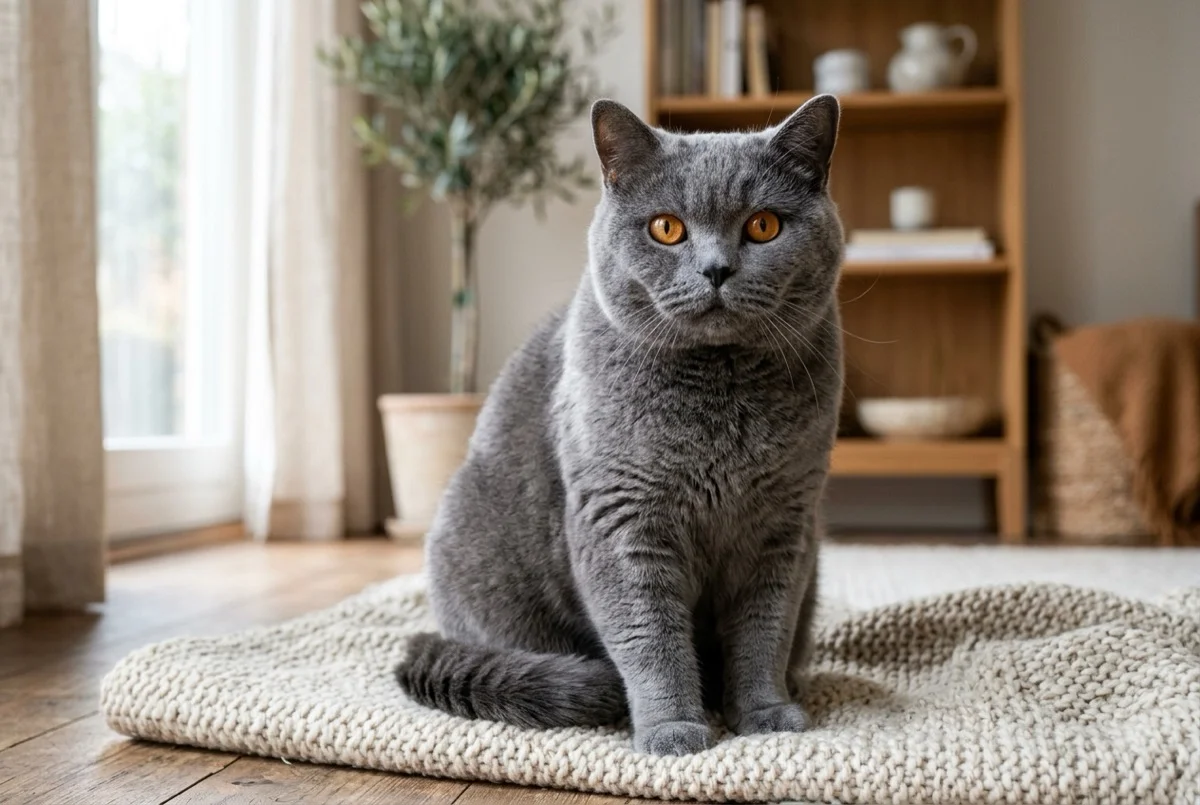
| Head shape | Very round, sweet curved profile. | Very round, identical to Fold except ears. | Broad, massive head with strong jaw. |
Osteochondrodysplasia (OCD) and breed health
Osteochondrodysplasia is not an incidental side effect: it is the exact same genetic mechanism that creates the folded ear. Research has revealed that the TRPV4 mutation impairs chondrocyte function and the production of extracellular cartilage matrix throughout the body.
1. Homozygous vs. heterozygous cats
- *Homozygous (Fd/Fd):* Produced by the unethical crossing of two folded-ear parents. Affected kittens develop devastating skeletal deformities before their first birthday, including massive bony outgrowths (exostoses) around the ankles, fused caudal vertebrae, and crippling lameness.
- *Heterozygous (Fd/fd): Produced by crossing a Fold with a Straight. While symptoms are generally milder and slower to develop, radiographic studies indicate that nearly all heterozygous cats eventually show progressive degenerative joint disease and secondary osteoarthritis*, especially in the hocks, paws, and tail.
2. Subtle pain signs every owner must recognize
Cats instinctively mask chronic pain. Watch closely for these telltale indicators:
- Tail stiffness: The tail becomes thick, inflexible, or uncomfortable when touched near the base.
- Stilted gait: Walking with a stiff-legged, unbending hindlimb stride.
- Reluctance to jump: Hesitating before leaping onto chairs or beds, opting to climb or remaining on the floor.
- Frequent Buddha posture: Sitting back on the haunches with hind legs splayed out to shift weight off sore ankles.
- Grooming changes: Difficulty bending backward to groom the lower spine, hindquarters, or tail.
3. Multimodal veterinary pain management
While the underlying cartilage defect cannot be cured, modern veterinary medicine offers proactive protocols to preserve excellent quality of life:
- Chondroprotective supplements: Daily veterinary-formulated glucosamine, chondroitin sulfate, and high-DHA/EPA marine omega-3 oils to nourish remaining cartilage.
- Strict weight control: Excess weight places catastrophic stress on compromised joints. Maintaining an ideal body condition score (3/5) is essential.
- Targeted analgesia: Judicious use of feline-approved NSAIDs or advanced anti-NGF monoclonal antibody injections (such as frunevetmab) under veterinary supervision.
- Physical therapy and laser treatments: Low-level laser therapy (LLLT) and gentle physiotherapy reduce inflammation and ease periarticular muscle spasms.
4. Additional breed health considerations
Because British Shorthairs and Persians were used in breed development, Scottish Folds are also screened for Polycystic Kidney Disease (PKD) via DNA testing and monitored for Hypertrophic Cardiomyopathy (HCM).
Temperament and household companionship
From a behavioral standpoint, the Scottish Fold is a gentle, peaceful companion:
- Sweet and quiet: Exceptionally calm, trusting, and affectionate. They rarely show aggression or nervous reactivity.
- Loyal family presence: They enjoy following their humans from room to room, quietly curling up nearby without being overbearingly needy.
- Soft voice: They possess tiny, soft vocalizations, expressing themselves with discreet chirps and deep, rhythmic purring.
- Household harmony: Their placid demeanor makes them wonderfully patient with respectful children, gentle dogs, and fellow cats.
Daily care and environmental modifications
Living with a Scottish Fold calls for compassionate adjustments tailored to their physical needs:
1. Ear hygiene and care
- The tight fold traps moisture and prevents natural air circulation, predisposing the ear canal to wax buildup, yeast (Malassezia), and ear mites.
- Inspect ears weekly. Clean outer crevices gently using a cotton pad moistened with veterinary ear cleaner.
- Never insert cotton swabs into the canal and never force the ear flaps backward, which can tear fragile cartilage.
2. Joint-friendly home adaptations
- Provide padded pet ramps or low steps next to sofas and beds so your cat never has to absorb the shock of a high jump.
- Choose litter boxes with ultra-low entry rims so stiff hind legs do not have to hurdle high plastic edges.
- Offer orthopedic memory foam beds or gently heated mats to soothe aching joints in cooler weather.
3. Coat maintenance
- For shorthair Folds, brushing twice weekly with a soft-bristle or rubber grooming mitt removes loose undercoat.
- For longhair Highland Folds, comb every two days to prevent mats from forming under the armpits and around the britches.
Frequently asked questions
Do all Scottish Fold cats have arthritis?
To varying extents, yes. Because osteochondrodysplasia is an autosomal dominant trait affecting all cartilage, every cat with folded ears has altered joint cartilage. With proactive veterinary care, joint supplements, and weight management, many heterozygous cats enjoy happy, comfortable lives well into their senior years.
Can you ever breed two folded-ear cats together?
Never. Fold-to-Fold breeding produces homozygous kittens who suffer severe skeletal malformations and crippling pain from an early age. Ethical breeders only ever cross a Fold with an upright-eared cat (Scottish Straight or British Shorthair).
Why do Scottish Folds stand up like meerkats?
In addition to sitting like a Buddha, Folds frequently stand upright on their hind legs like meerkats when curious. It allows them to get a higher vantage point while redistributing weight along the pelvis and spine.
What is their typical lifespan?
With attentive pain management, excellent nutrition, and regular veterinary checkups, Scottish Folds can live 12 to 15 years with a rewarding quality of life.
Caring for a cat? Keep their health in your pocket
Register your cat on Nekolife to track vaccination history, weight, and get advice from loving cat parents.
- Vaccine & weight records
- Supportive cat community
- Earn Meow Points & badges
Related pages
Sources
- Malik, R., et al. "Osteochondrodysplasia in Scottish Fold cats". Australian Veterinary Journal. pubmed.ncbi.nlm.nih.gov
- Gandolfi, B., et al. "A splice-site mutation in TRPV4 is associated with the Scottish Fold cat phenotype". Human Genetics. pubmed.ncbi.nlm.nih.gov
- British Veterinary Association (BVA). "BVA position on Scottish Fold cats". bva.co.uk
- International Cat Care (iCatCare). "Scottish Fold: Breeding and Welfare Statement". icatcare.org
- Fédération Internationale Féline (FIFe). "Breeding and Registration Rules: Non-recognized breeds". www1.fifeweb.org
Know someone who needs this?