Persian cat: traits, care, and everything you need to know
The Persian cat is a long-haired breed with a round head and a calm temperament, and it demands a serious commitment to grooming. Its flat face can cause problems with eyes, breathing, and teeth, and its parents should ideally have a polycystic kidney disease (PKD) test.
Quick facts
- Origin
- Its name comes from Persia, its supposed country of origin; in 1626 an Italian merchant brought a long-haired cat from there to Europe
- Size
- Medium to large; looks larger than it is because of its coat
- Coat type
- Long, dense, with a thick undercoat
- Brushing
- Daily combing with a metal comb
- Temperament
- Sweet, affectionate, and calm
In this guide
Persian cat traits
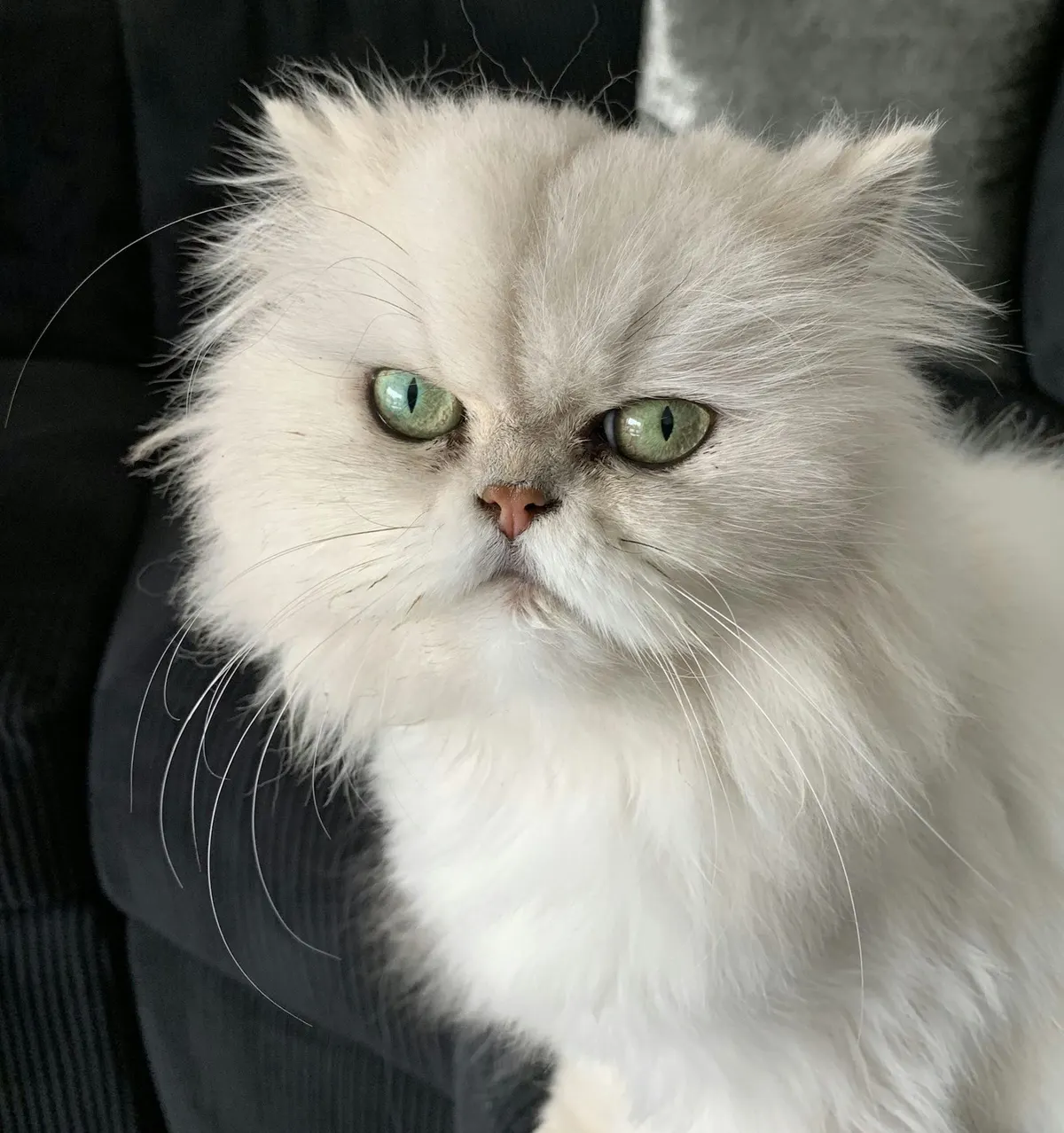
The Persian is round from head to toe. According to the Cat Fanciers' Association (CFA), its eyes, head, muzzle, body, and even the tips of its ears give an impression of circles.
- Body: cobby type (compact and solid), with a broad chest, short thick legs, and a short tail.
- Head: round and large, with a short wide nose, full cheeks, small ears, and large round eyes.
- Coat: long and dense, with a large ruff around the neck.
At home it is a calm cat: it may play with a toy, but it prefers attention and affection. The CFA describes it as a cat that would rather keep its paws on the floor than climb the curtains.
Persian types: classic, extreme, Himalayan, and Exotic
Classic (“doll face”) and extreme
All Persians are brachycephalic (short-faced), but the degree varies. There are less extreme lines called doll-faced, open-type, or classic Persians, and others with a much flatter face called peke-faced or ultra-type. Health problems linked to the flat face can be more serious the more extreme it is. Below, under “Health,” we explain why this matters when you choose.
Himalayan
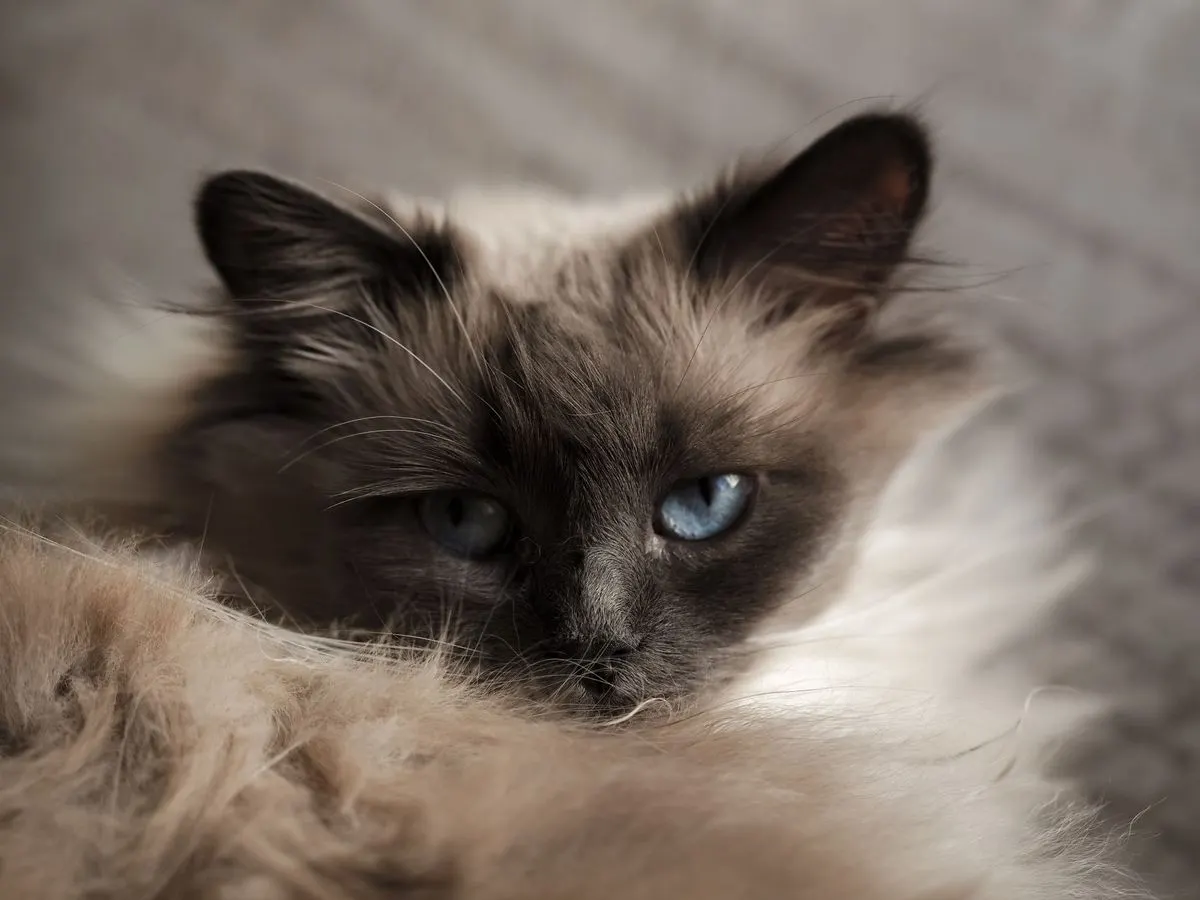
It is a Persian with a point pattern: light body and darker points (ears, legs, tail, and mask), with blue eyes. Each association classifies it differently: in the CFA it is a color division of the Persian; in The International Cat Association (TICA) it is its own breed within the Persian Group.
Exotic
It has the body and head of the Persian, but with a short, dense, plush coat. Its CFA standard is identical to the Persian’s except for the coat description. In TICA it is part of the same Persian Group. Some Exotics are born long-haired, and in the CFA they can compete in Persian color classes.
Persian cat colors
The Persian comes in many colors and patterns. The CFA groups them into 7 divisions:
- Solids (white, blue, black, red, cream, chocolate, lilac)
- Tabby
- Silver and golden
- Shaded and smoke
- Particolor (such as tortoiseshell and blue-cream)
- Calico and bicolor
- Himalayan (point pattern)
If you are looking for a “gray Persian” or an “orange Persian,” in the CFA standard those colors are called blue and red.
Eye color is also part of the standard: many colors call for brilliant copper, silver and golden for green or bluish green, and Himalayans for deep blue.
Persian cat care
Owning a Persian means a serious commitment to grooming. Many Persians cannot keep their coat free of mats on their own.
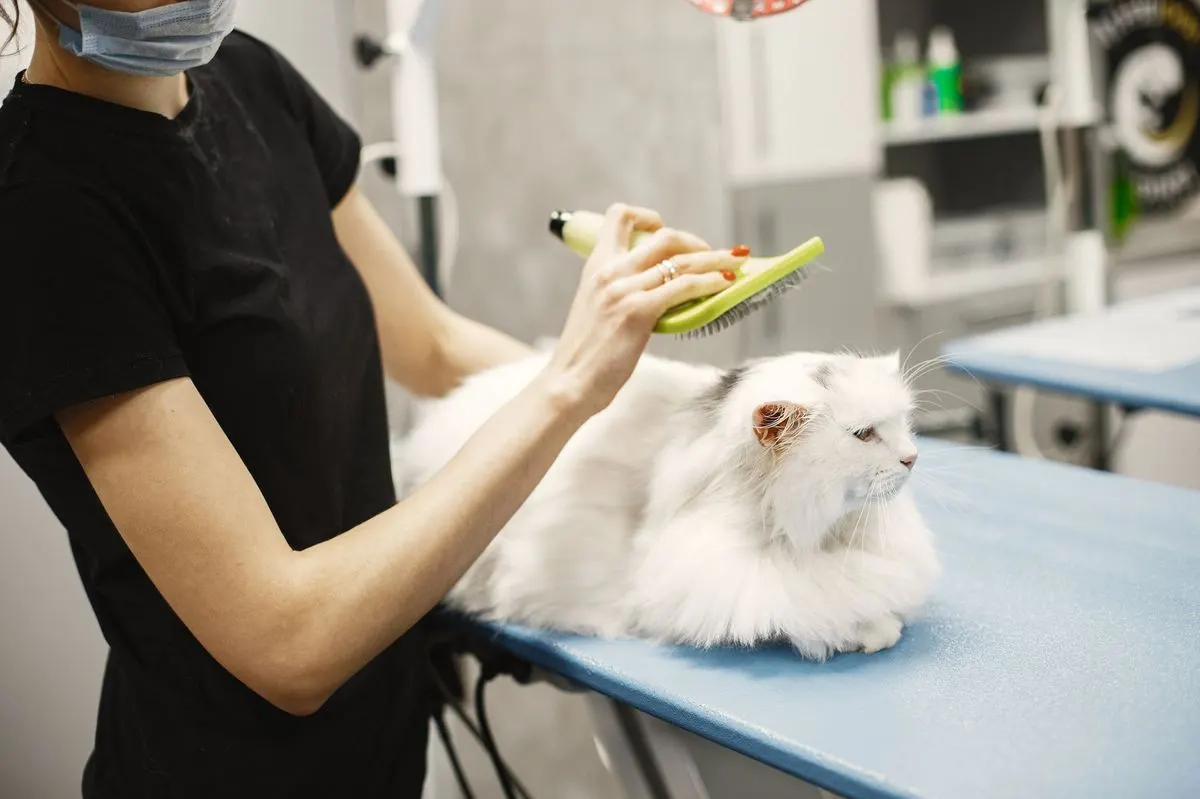
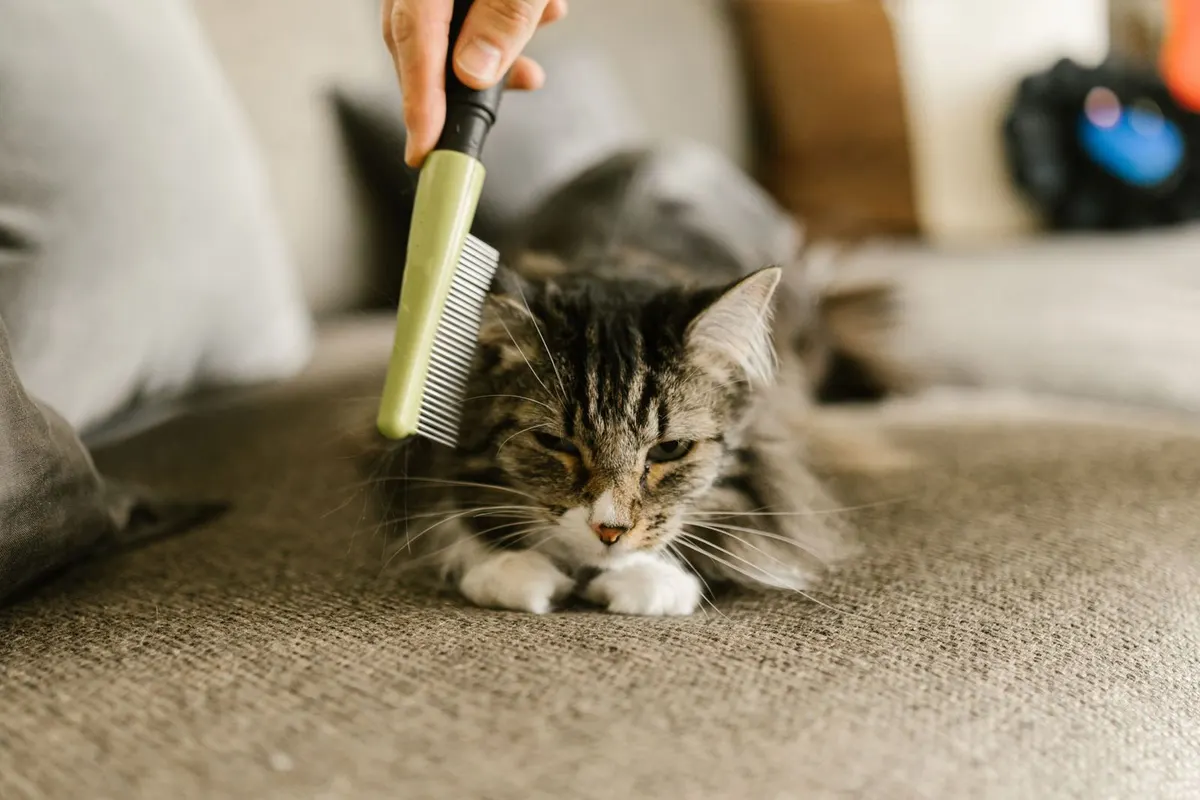
- Daily combing with a metal comb, to prevent tangles that turn into mats and to remove loose hair that could form hairballs. The CFA recommends a steel or Teflon-coated comb with long, thick, and fine teeth.
- Eyes and face: their large eyes can stain; clean them with a soft damp cloth. The corners of the eyes and the sides of the nose usually need regular cleaning.
- Tail and rear end: they get dirty easily with feces and must be kept clean to avoid sticky, uncomfortable clumps.
- Occasional baths: always after thorough combing and nail trimming.
- Grooming salon: many owners turn to professional groomers.
Watch the texture: TICA notes that diluted colors (such as blue or cream) often have a more cottony coat that stains and mats more easily.
This is not just about looks. In a study of 3,235 Persians in the United Kingdom seen in general practice, coat problems were the most frequent disorder (12.7%).
Caring for a baby Persian kitten
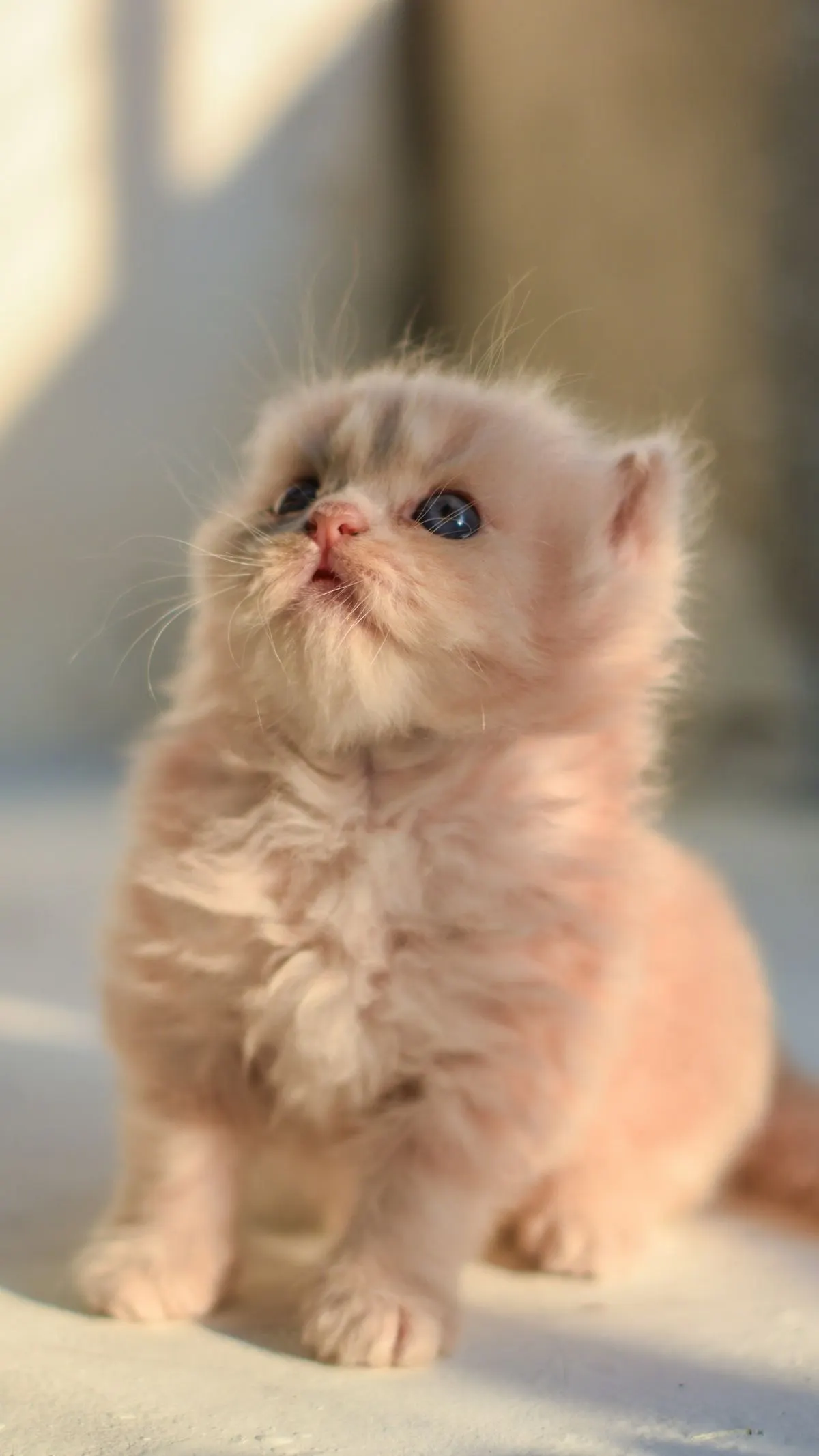
- Age to bring them home: kittens usually arrive in their new home between 8 and 12 weeks, and a bit later if they are purebred.
- Meals: between 8 and 12 weeks they need at least four meals a day.
- Vet: the first vaccination usually starts at 8–9 weeks; your vet will build the full plan. Ask whoever gives you the kitten which treatments against internal parasites and fleas they received, and ask the vet for products suitable for their age. Never use dog products. More detail in our guide on fleas in cats.
- Get them used to the comb early: it is essential with this breed. Start with a very soft brush, short sessions, and treats, without yanking mats.
- Teeth: brushing them is probably the most effective thing for oral health, and it is easier if you start young.
- Socialization: the first weeks of life are key; choose a breeder or shelter that has socialized the kittens well during their first two months.
How long does a Persian cat live?
There is no fixed number. The most solid figure is a median of 13.5 years in a study of 3,235 Persians in the United Kingdom, carried out by the Royal Veterinary College; the central half of cats that died did so between 9.9 and 16 years. In that country, the median for the general cat population was similar: 14 years.
The study used UK veterinary clinic records from 2013, so take it as a reference, not a promise. In that same study, the most frequent cause of death was kidney disease (23.4% of cases with a recorded cause).
Health: common Persian cat problems
Polycystic kidney disease (PKD)
It is an inherited disease in which fluid-filled cysts form in the kidneys; over time they grow and can lead to potentially fatal kidney failure. It is more common in Persians and appears occasionally in other breeds, such as the Himalayan and the British Shorthair.
- Signs: the same as any kidney disease: drinking more water and urinating more, less appetite, weight loss, nausea, vomiting, and lethargy. They are usually noticed around age 7, though it can be earlier or later.
- Genetic test: there is an accurate DNA test (with a blood sample or cheek swab). The test says whether the cat has the gene, but not how severely affected they are; that requires an ultrasound.
- Prevention: cats with the gene should not be used for breeding. Thanks to testing, PKD has been greatly reduced in many countries.
Brachycephaly (flat face)
International Cat Care explains that a very flattened face, when severe, causes several problems:
- Breathing: Persians often have small nostrils and a soft palate that is too long, which can cause serious respiratory problems. Brachycephalic obstructive airway syndrome is common in these cats.
- Eyes: their bulging eyes do not close fully, which leaves the cornea more exposed and promotes problems such as keratitis and corneal sequestrum.
- Tear staining: the tear ducts are short and deformed, so tears do not drain well and run down the face. This stains the fur and sometimes causes sores because the skin stays wet.
- Teeth: in short-nosed Persians, the teeth do not fit together well and they cannot bite or chew properly. Jaw deformities can cause dental disease and problems eating, drinking, and grooming.
- Skin: facial folds can promote bacterial or fungal skin infections.
Other problems described in the breed
International Cat Care also mentions hypertrophic cardiomyopathy (a heart disease) and progressive retinal atrophy, among others. It recommends veterinary check-ups at least once a year, because pedigree cats are more likely to have physical problems.
When to go to the vet
- At least once a year for a check-up.
- If they drink more water and urinate more, eat less, lose weight, vomit, or are lethargic: these are signs of kidney disease.
- If their eyes run more than usual: tearing can also be due to infections or ulcers.
- If you adopt an adult Persian and don’t know whether they have PKD: the definitive diagnosis is made with ultrasound.
Adoption or breeder
Whether you adopt or buy, keep these criteria in mind:
- Parents’ PKD test: if you go to a breeder, ask them to show proof that the parents tested negative.
- Test with identification: the result should be linked to a permanent ID for the cat, such as a microchip number, and the sample should be taken by a vet.
- Prefer less extreme features: International Cat Care considers that severe Persian brachycephaly should no longer be bred. Researchers in the British study propose moving toward less extreme types, such as doll face or classic.
- Socialization: a good breeder or shelter should hand over a well-socialized kitten.
- If you adopt an adult Persian: ask for their medical history and take them to the vet. If it is unknown whether they have PKD, remember that the definitive diagnosis is made with ultrasound.
Persian, Himalayan, Exotic, or Angora: differences
Turkish Angora
They are different breeds, though in Europe they were crossed in the past. According to the CFA:
| Persian | Turkish Angora | |
|---|---|---|
| Body | Compact (cobby), short legs | Long and fine, long legs; a cobby body disqualifies |
| Head | Round, short nose | Wedge-shaped, large upright ears |
| Coat | Long and dense, with a thick undercoat | Silky, single coat, not prone to matting |
| Combing | Daily | Two or three times a month in young cats |
| Temperament | Sweet, calm | Active and curious; loves to climb high |
| Point pattern | Yes (Himalayan division) | Not accepted |
Himalayan vs. Persian
It has the body and coat of the Persian, with the point pattern and blue eyes. In the CFA it is considered a point-colored Persian; in TICA, its own breed within the Persian Group.
Exotic vs. Persian
It has the same body and head as the Persian, but with a short, dense, plush coat. It is easier to care for: according to the CFA, most of the year weekly combing is enough, though during shedding it sheds more and may need a bath.
Frequently asked questions
How many years does a Persian cat live?
There is no fixed number: in a study of 3,235 Persians in the United Kingdom, the median was 13.5 years.
What is the Persian’s temperament like?
Sweet, affectionate, and calm. It likes cuddles more than racing around.
How often do you need to brush a Persian?
Every day, with a metal comb.
What is the difference between Persian and Himalayan?
The Himalayan is a Persian with a point pattern and blue eyes. The CFA considers it a Persian color division; TICA, its own breed in the Persian Group.
Is the Exotic a short-haired Persian?
Practically yes: it has the body and head of the Persian, but with a short, plush coat.
What health problems does the Persian have?
The most important are polycystic kidney disease (PKD) and flat-face problems: breathing, eyes, tearing, teeth, and skin.
What does a 2-month-old Persian kitten need?
At least four meals a day, their first vet visit (vaccines usually start at 8–9 weeks), and getting used to the comb with short, gentle sessions.
Why do my Persian’s eyes water?
Because of the shape of their face: their tear ducts are short and tears do not drain well. But tearing can also be due to infections or ulcers, so take them to the vet if you notice more tearing than usual.
Caring for a cat? Keep their health in your pocket
Register your cat on Nekolife to track vaccination history, weight, and get advice from loving cat parents.
- Vaccine & weight records
- Supportive cat community
- Earn Meow Points & badges
Related pages
Sources
- "Persian". The Cat Fanciers' Association (CFA). cfa.org
- "Persian". The International Cat Association (TICA). tica.org
- "Himalayan". The International Cat Association (TICA). tica.org
- "Exotic". The Cat Fanciers' Association (CFA). cfa.org
- "Turkish Angora". The Cat Fanciers' Association (CFA). cfa.org
- "Persian cats and brachycephaly". International Cat Care (iCatCare). Updated September 26, 2025. icatcare.org
- "Inherited disorders in cats". International Cat Care (iCatCare). Updated December 18, 2025. icatcare.org
- "Runny Eyes". International Cat Care (iCatCare). Updated September 26, 2025. icatcare.org
- "Polycystic Kidney Disease". Cornell Feline Health Center, Cornell University College of Veterinary Medicine. vet.cornell.edu
- O'Neill, D. G. et al. "Persian cats under first opinion veterinary care in the UK: demography, mortality and disorders". Scientific Reports 9, 2019. Royal Veterinary College and Royal (Dick) School of Veterinary Studies, University of Edinburgh. nature.com
- "Caring for your new kitten" (PDF booklet). International Cat Care (iCatCare). icatcare.org
Know someone who needs this?